

You might not have noticed, but kitchen trends are changing. More and more people are choosing built-in appliances that give their kitchen a clean and streamlined look. But that doesn't mean they're right for everyone. Making a freestanding oven the standout star of your kitchen is still a popular choice.
So if you're looking for a new oven, you've got a big choice to make - built-in oven vs freestanding. To help you decide which is best for your kitchen style and the way you cook, this guide will cover:
What a freestanding oven is
What a built-in oven is
The pros and cons of each oven type
The difference between built-in and built-under ovens
How to decide which oven suits you best
What is a freestanding oven?

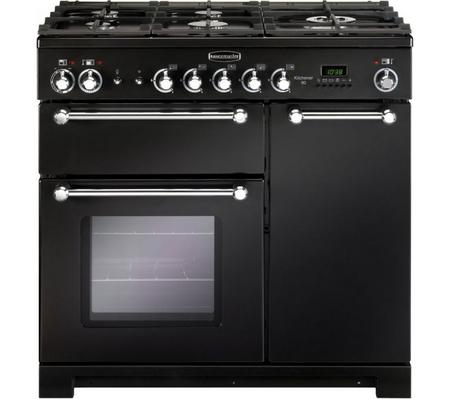
A freestanding oven is a self-contained cooker that combines an oven, grill and hob. It’s designed to slide neatly into a gap between your kitchen units. You don’t have to worry about installing a hob separately or doing any carpentry on your kitchen units. Just plug the oven in, slot it into position, and you’re ready to cook.
That convenience is a big part of the appeal. If you're renting, moving house or just want to avoid a full kitchen refit, freestanding ovens are far easier to install and swap out than their built-in counterparts. Standard widths run to 50cm or 60cm, although 90cm models are also available if you've got the space to spare.
You'll find them in gas, electric and dual-fuel options. If you’re not sure which fuel type suits you best, our guide to the difference between gas and electric ovens covers it in full.
Go even bigger with a range cooker
If you think that a standard freestanding oven won’t give you enough cooking space, a range cooker might be a better option. Most of them come with a larger cooking capacity, two or more ovens, and a wide hob with multiple burners.
They suit bigger kitchens and anyone who cooks regularly, especially if you usually cook a few dishes at once. You get the same easy setup as a freestanding oven, and a bit more space to unleash your inner Nigella.
What is a built-in oven?

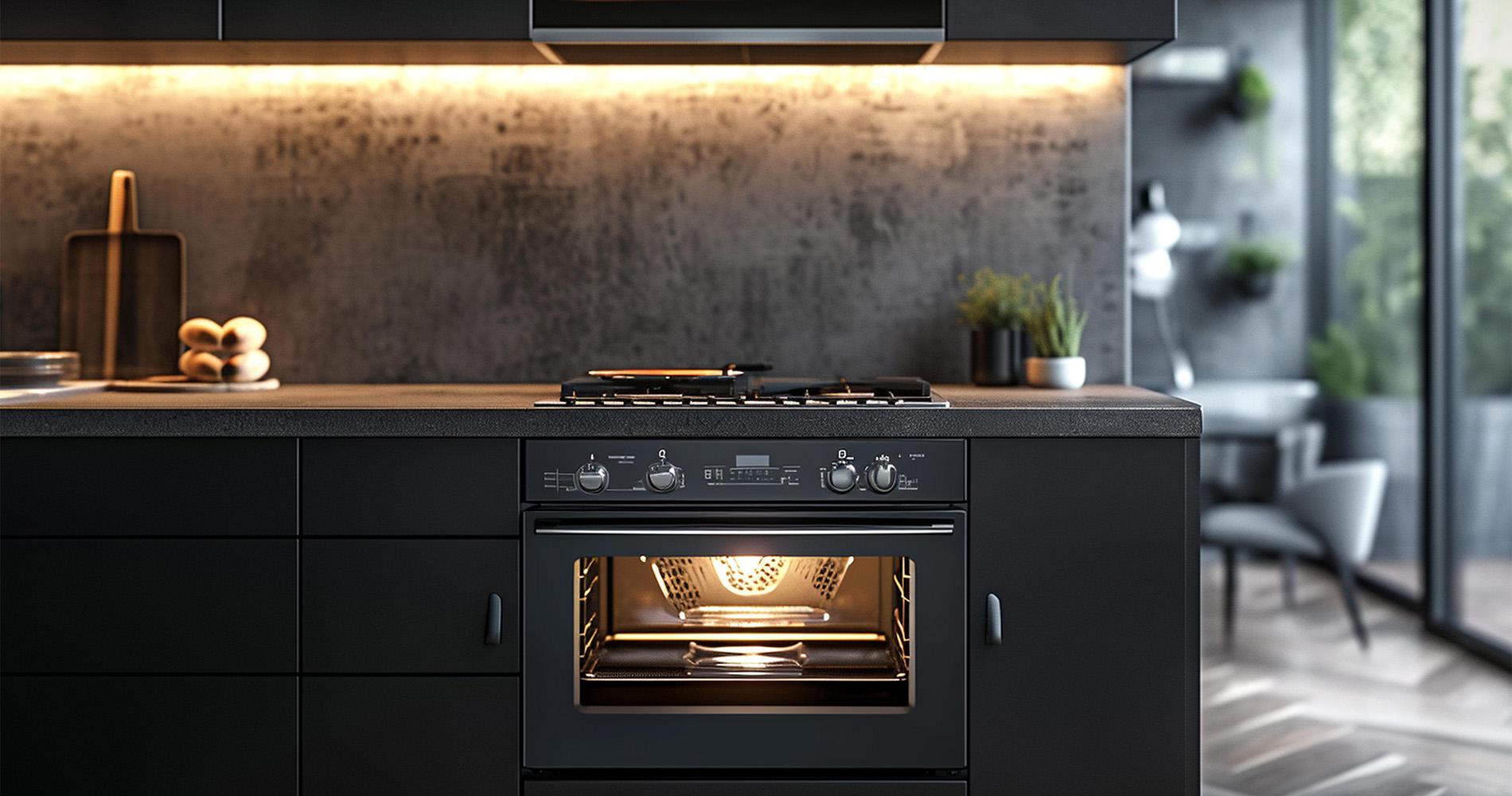
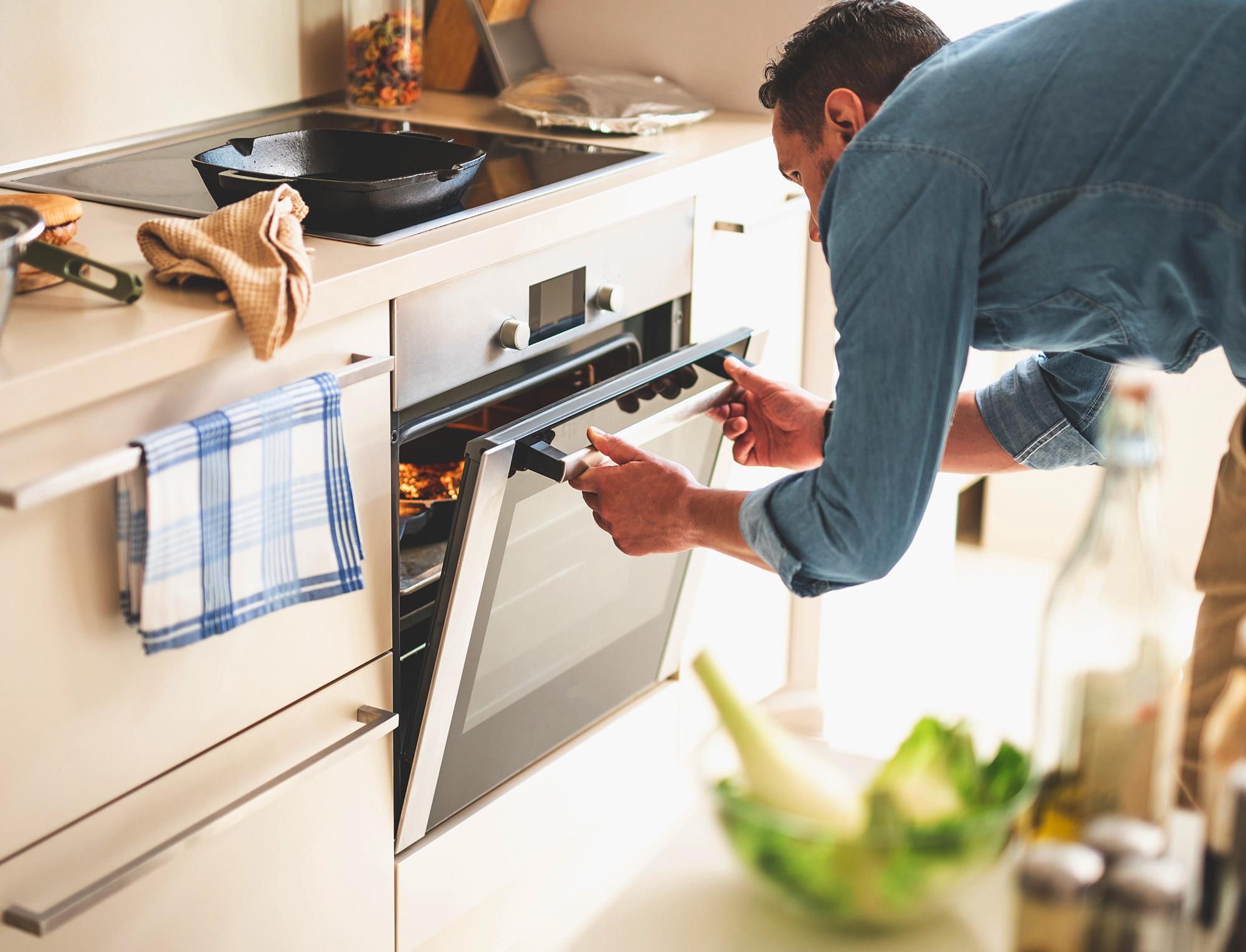
A built-in oven fits directly into your kitchen units. It becomes part of the cabinetry, rather than sitting as a standalone appliance.
Unlike freestanding ovens, it doesn’t include a hob. The hob is fitted separately into the worktop, so you’re free to pick a spot for your oven. That’s the main advantage here. You’re not locked into one fixed setup, so you can place the oven where you want it — under the counter or higher up in a tall unit, whatever suits you best.
It does take a bit more planning, especially around installation. Kitchen cabinets tend to follow the same UK standard sizing so you need to be exact with your measurements. Our guide to built-in oven dimensions walks you through exactly how to measure for a built-in oven so you know what to expect.
The key differences between built in and freestanding ovens
Both options cook your food just as well - the main differences are around how they fit into your kitchen. Here’s a side-by-side comparison:
| Feature | Freestanding oven | Built-in oven |
|---|---|---|
| Installation | Everything in one unit, making installation simple. | Needs more measuring and planning. |
| Flexibility | Easy to replace if you move or upgrade your kitchen. | More freedom to design your layout, since the hob and oven are separate. |
| Cost | Usually lower priced than built-in ovens. | Installation costs need to be considered. |
| Kitchen layout | Fits into most kitchen layouts without much planning. | Creates a clean, fitted look that blends into kitchen units. |
| Hob configuration | No separate hob installation needed. | Hob and oven can be positioned independently. |
| Everyday use | Less flexibility as the hob and oven are fixed together. | Can be installed at eye level for easier access. |
| Cleaning | Small gaps at the sides can collect crumbs. | Easier to clean around the edges. |
| Integrated look | Can feel less integrated in fitted kitchens. | Seamlessly blends with kitchen cabinetry. |
| Moving home | Easier to replace or take with you. | Less practical to remove and fit elsewhere. |
Built-in vs built-under ovens
Once you've settled on a built-in model, there's one more thing worth understanding: the difference between a built-in oven and a built-under oven. They’re both integrated into your kitchen cabinets, but they’re positioned differently:
A built-in oven is designed to sit inside a tall kitchen cabinet (a vertical kitchen unit that often goes from the floor to ceiling). The oven can be positioned anywhere from under-counter height all the way up to eye level.
A built-under oven is specifically designed to fit beneath a standard kitchen worktop, typically below an independent hob. Built-under double ovens are shorter (around 72cm high) to accommodate that lower installation position. A standard built-in double oven can be as tall as 90cm.
Need more help?
If you want to do a bit more research before you make your call, check out our cooker buying guide and built-in oven buying guide. And don’t forget, you can always pop in-store and chat to one of our expert colleagues. They’ll happily answer all your cooking questions.
FAQs
Are all freestanding ovens the same height?
No. Freestanding ovens come in different heights, though most standard models measure around 85–90cm to align with typical kitchen worktop height. Always check the dimensions before buying, as height can vary by brand and model.
Are built-in and built-under ovens the same?
Not quite. Both are integrated into kitchen cabinets, but a built-in oven can be positioned at various heights including eye level. Whereas a built-under oven is specifically designed to fit below a standard worktop. Built-under models are also typically shorter to suit that lower installation position.
Can a built-in oven be installed under the counter?
Yes, a built-in oven can physically be installed under the counter. But it's not the ideal setup. Built-in ovens are designed with flexible positioning in mind. For example, installing one at eye level makes checking on your cooking far more comfortable. If under-counter is your only option, a purpose-built built-under model is usually the better fit.