



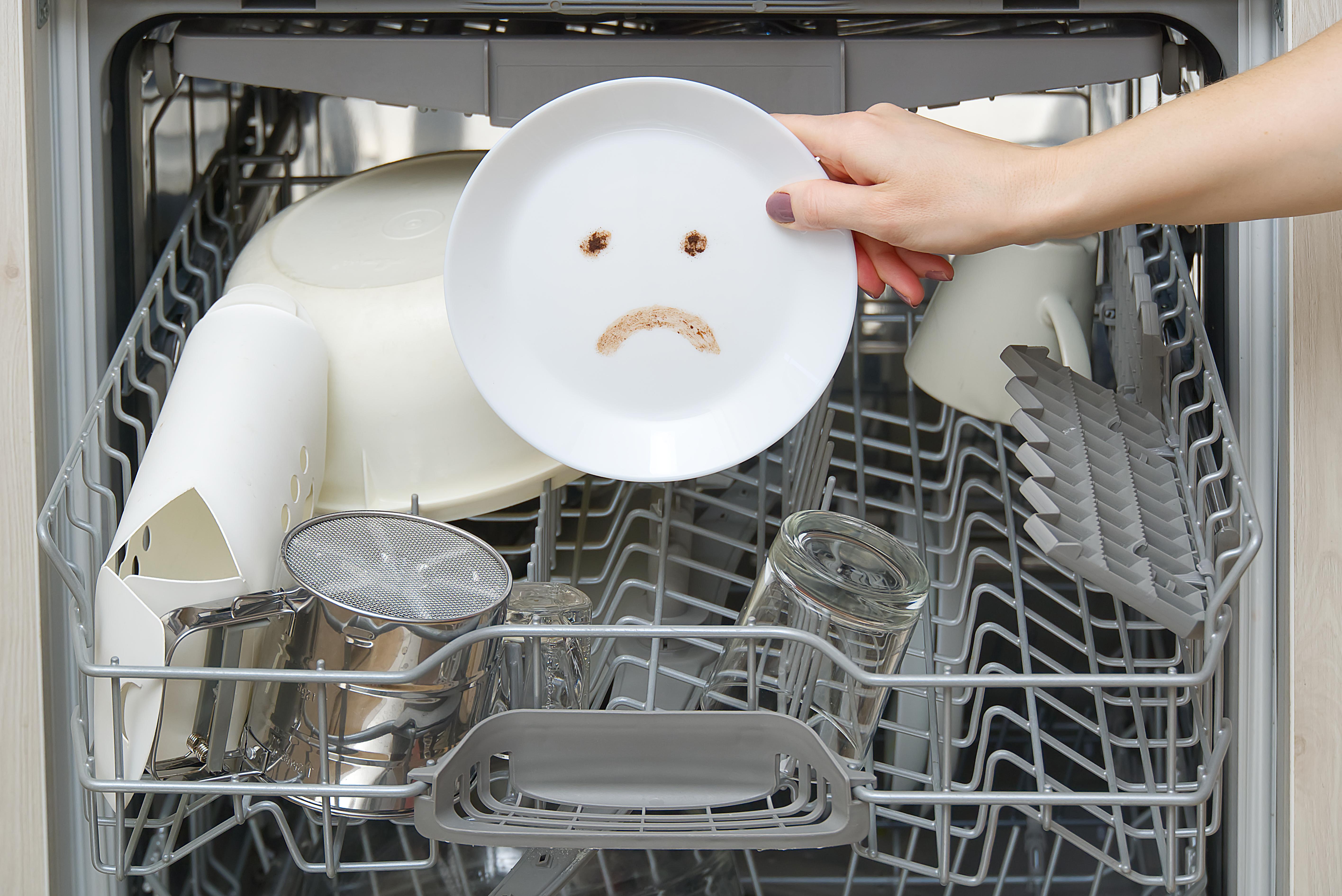
Are your dishes still coming up dirty after washing? Is your glassware covered in tell-tale water marks?
If you’ve taken the time to choose the perfect dishwasher, the last thing you want is food-speckled dishes or greasy pots and pans after a cycle. Luckily, if your usually hardworking dishwasher’s not doing its job, it probably just needs a little TLC.
What’s the best way to clean a dishwasher?
Giving your dishwasher the spa treatment will keep it running as it should, saving you from grabbing the marigolds after every cycle. After all, there’s not much point in a dishwasher that can’t wash dishes!
A clean dishwasher means cleaner dishes and a longer-lasting appliance. Here’s the ultimate method to keep yours sparkling inside and out.
1. Empty the dishwasher
Start with a blank canvas. Remove all dishes, racks, and utensil holders so you can access every corner.
2. Tackle the filter
Locate the filter at the bottom.
Remove it by twisting or unlocking.
Wash under warm water with a soft brush to remove food particles.
Check for clogs in the mesh and rinse thoroughly.
Reinstall securely.
3. Refresh the spray arms
Remove the spray arms (top and bottom) if possible.
Inspect holes for blockages.
Use a toothpick or thin wire to clear debris.
Rinse and scrub gently.
Reattach properly.
4. Wipe down seals and edges
Use a damp cloth with warm soapy water.
Pay attention to rubber seals and door edges.
For stubborn grime or mildew, use a vinegar solution (equal parts water and white vinegar).
5. Deep clean with vinegar
Place a dishwasher-safe bowl filled with 250 ml of white vinegar on the top rack.
Run a hot cycle with the dishwasher empty to break down grease and odours.
6. Deodorize with soda crystals
Sprinkle 2–3 tablespoons of soda crystals (or baking soda) on the bottom.
Run a short hot cycle to neutralize odors and freshen the interior.
7. Finish with a hot wash
Run a full hot wash cycle (empty) to flush out any remaining residue and leave the dishwasher sparkling.
Cleaning your dishwasher with vinegar
There’s a reason that so many people recommend cleaning your dishwasher with vinegar: it’s non-toxic, cheap and readily available. So before you resort to something stronger, why not give it a go first?
Here’s what you’ll need:
A toothbrush
Some cleaning cloths
A washing up brush
A few toothpicks
White vinegar
Bicarbonate of soda

Prepped and ready? Here’s how to clean your dishwasher with vinegar:
Unload your dishwasher. You don’t want plates and cutlery interrupting your deep clean!
Wipe round the seals thoroughly with a damp cloth to remove any gunk and grime.
Take out the racks and utensil holders and wipe them down with a damp cloth. If there’s any stubborn stains, use a toothbrush dipped in soapy water to shift them.
Remove the outer and inner filters and clean them under the tap. Grab your washing up brush to remove any food stuck in the inner filters. If you’re not sure how to remove your dishwasher’s filters, check the manual.
Check the spray arms and, using a toothpick, remove any food blocking the holes.
Replace the racks.
Pour some white vinegar into a small dishwasher-safe measuring jug, then place the jug on the top rack of the dishwasher.
Run the dishwasher for a full cycle at the highest temperature (yes, with the jug of white vinegar inside!).
Once that’s done, sprinkle some bicarbonate of soda around the bottom of the dishwasher and run it through a short cycle to freshen it up.
And voila! Your dishwasher’s now sparkling and ready to wow.
Did you know?
Adding dishwasher salt to your dishwasher will stop limescale build-up and improve cleaning performance. To maintain your dishwasher once you’ve cleaned it, make sure to top up the dishwasher salt dispenser at the back of your machine.
Want to find out more? Check out our helpful guide to dishwasher salt. Salted.
How often should I clean my dishwasher?
That depends on how much you use it. If you’re running your trusty dishwasher every day, you’ll want to regularly remove all that soap scum, gunk and grime – so opt for a deep clean once a month. If you use your dishwasher more sparingly, giving it a thorough clean once every two to three months should keep it running efficiently.

What is a dishwasher self-cleaning cycle?
There’s a tech solution for (almost) everything. If you don’t fancy going manual, some dishwashers come with self-cleaning filters. These come with a sprinkler inside the filter that makes sure it stays clean and prolongs filter life by up to 12 months. Nice!
For a deep clean though, we’d still recommend the vinegar method. It’ll really let you get into the nooks and crannies where old food (yuck) might be hiding.
Can I clean my dishwasher with soda crystals?
No, you shouldn’t use soda crystals to clean your dishwasher. Whilst they’re great for cleaning other appliances around the house, using soda crystals instead of dishwasher salt can stop your dishwasher from working well. Plus, soda crystals shouldn’t be eaten – so it’s best to avoid using them on your dishes!
Can I use baking soda to clean my dishwasher?
Yes, and it’s one of the easiest ways to keep your dishwasher fresh and odor-free. Here’s why it works and how to use it safely.
Why baking soda works
Baking soda is a natural deodoriser. It neutralises acidic and alkaline particles that cause unpleasant smells, leaving your dishwasher smelling clean. It also helps loosen light grease and food residue without harsh chemicals.
Safe usage
Sprinkle 2–3 tablespoons of baking soda on the bottom of an empty dishwasher.
Run a short hot cycle to dissolve the powder and refresh the interior.
Avoid using large amounts—too much can leave a chalky residue.
Baking soda + vinegar: a powerful duo
First, run a hot cycle with white vinegar (in a dishwasher-safe bowl on the top rack). Vinegar breaks down grease and limescale.
Then, follow with a baking soda cycle to neutralise any lingering odours and brighten the interior.
Never mix them in the same cycle—they’ll react and cancel each other out.
Quick tip
Do this once a month for a sparkling, fresh-smelling dishwasher.
Can I clean my dishwasher with apple cider vinegar?
Yes! If you don’t have any white vinegar to hand, apple cider vinegar works just as well. Pour some into a dishwasher-safe jug or cup, place it on the top rack of your dishwasher and run a full cycle.
How do I know when it’s time to replace my dishwasher?
If you’ve scrubbed your dishwasher again and again but are still left with dirty dishes, it might be time to think about replacing it. Look out for these four signs that it’s time to replace your dishwasher.
Decided it’s time? Enjoy squeaky-clean plates with our great range of dishwashers.
Need more advice?
If you’d like to talk to an expert, pop in-store or have a video chat using ShopLive.
?fmt=auto)