

Remote work and hybrid setups are still up for debate in 2025. While more Brits are being asked to return to the office, a lot of us are resisting the move. With half of us saying we’d look for a new job if asked to return full time.
But whether at the office desk or WFH setup, another controversial issue is sit or stand? Whether to stick with a traditional sitting desk or upgrade to a standing desk. Both have their perks, and choosing the right one can make a big difference to your comfort, health and productivity. But which one is right for you?
Let’s break down the pros and cons of each - and help you decide on your dream desk.
What is a standing desk?
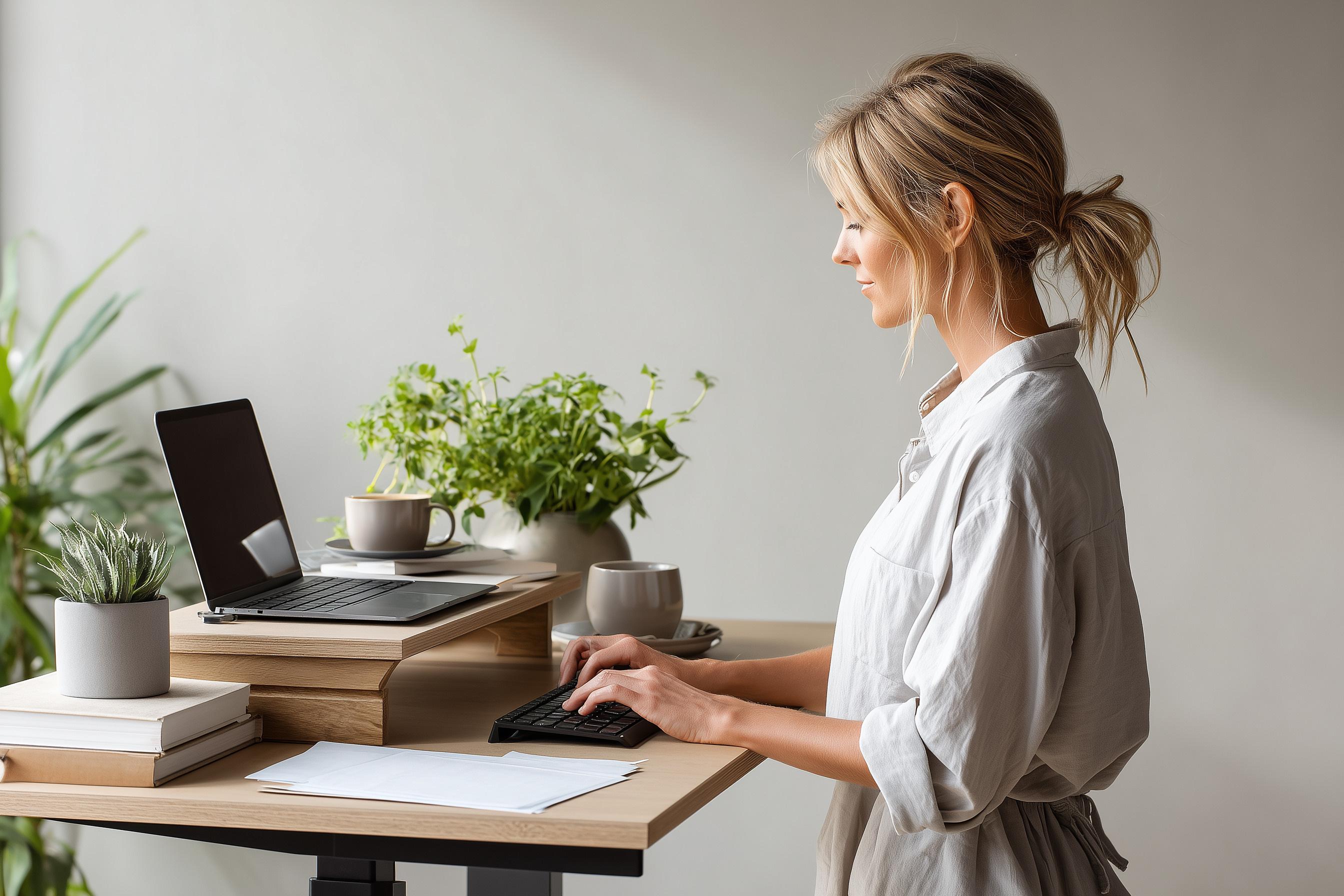
A standing desk is exactly what it sounds like: a desk designed for you to work while standing. But it’s not just about ditching your chair - it’s about flexibility.
There are several types of standing desks:
Manual: You adjust the height yourself, usually with a crank.
Electric: These use motors to raise or lower the desk with the push of a button.
Adjustable platforms: These sit on top of your existing desk and let you switch between sitting and standing.
Standing desks are popular for their ergonomic benefits, flexibility and modern designs. They’re especially useful for people who spend long hours at a computer and want to avoid the health risks of prolonged sitting.
Why standing desks are becoming the smarter choice
Standing desks aren’t just trendy - they’re backed by science. The University of Waterloo, Canada recommend you switch position from sitting to standing every 30-40 minutes. So that means having a desk that lets you do both.
What’s so good about standing desks? Let’s start with….
Better posture: Standing encourages a straighter spine and reduces slouching.
Less back pain: Alternating between sitting and standing can ease pressure on your lower back.
More energy: Standing boosts circulation and can help you feel more alert.
Calorie burn: You burn more calories standing than sitting - even if it’s just a small difference.
Improved productivity: Many users report feeling more focused and engaged when they’re not slumped in a chair.


The case for sitting desks
Let’s be honest - sitting desks are familiar, comfortable, readily available and basically always more affordable. They’re still a solid choice, especially if you’ve got a good ergonomic chair and practice healthy posture.
Affordability: Traditional desks tend to be cheaper and easier to set up.
Comfort: Great for long, focused tasks where you need stability.
Ergonomics: With the right chair and accessories, sitting can still be healthy.
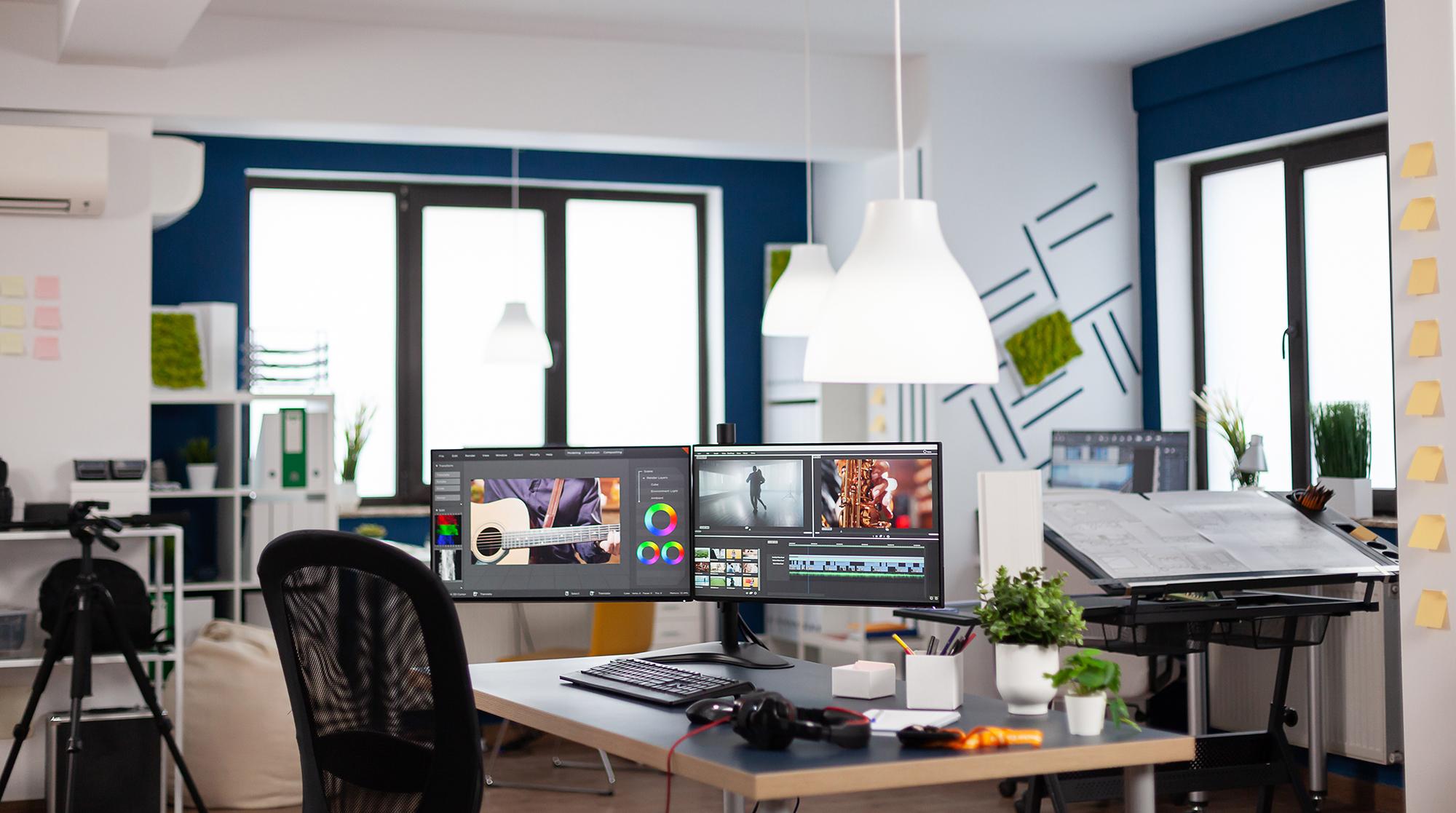
Traditional office desks come in all shapes and sizes too.
Standing vs sitting desk: side-by-side comparison
What is a standing desk converter?
If you’re not ready to fully commit to standing, a sitting desk with ergonomic upgrades might be the way to go. That could be something like a standing desk converter, which is a bit like an adjustable set of shelves that can raise your laptop, keyboard etc up to a comfortable standing height. Standing desk converters are:
Budget-friendly
Space-saving
Great for testing the waters before committing
So they’re perfect for small spaces or temporary setups. The only downside might be if you have multiple screens and lots of tech. Generally speaking, desk converters only have room for a monitor, keyboard and mouse.

Which desk should you choose in 2025?
Here’s the bottom line:
If you’re looking to improve your health, energy, and productivity - and you’re ready to invest - a standing desk is a smart, future-proof choice.
If you prefer comfort, simplicity, or have a tighter budget a sitting desk with an adjustable ergonomic chair and accessories can still serve you well.
And if you’re somewhere in between? A standing desk converter offers flexibility without the full commitment.
FAQs
Are standing desks healthier than sitting desks?
Yes – they can promote better posture, reduce back pain, and can boost energy.
How many hours should I stand at a standing desk per day?
Experts suggest alternating between sitting and standing every 30–40 minutes.
Do standing desks improve productivity?
Many users report better focus and energy levels.
Are sitting desks bad for your health?
Not necessarily - but prolonged sitting without breaks can lead to health issues.
What’s the difference between a standing desk and a height-adjustable desk?
Height-adjustable desks let you switch between sitting and standing - offering the best of both worlds.
Are standing desks worth the cost in 2025?
If you’re serious about your health and productivity, absolutely.
What’s next?
Hopefully that gives you a decent starting point. Check out our full range of Office furniture for more inspiration. And if you’re looking for office equipment for where you work, Currys Business is pretty much a one-stop shop!