

If you’re after a closer shave without the irritation, the secret goes beyond just buying a better shaver. Good preparation, the right technique and a little post-shave care can make a huge difference.
Our expert guide covers foil shavers and rotary shavers, so just follow these simple steps for a close and comfortable shave.
Step 1: Prep your skin properly
Before you even switch on your shaver, spend a minute preparing your skin.
Warm water softens skin and facial hair, making the hairs easier to cut. If you’ve ever had a really good shave after a shower, that’ll probably be why. A quick cleanse also removes oil, sweat and dead skin that can interfere with your shaver.
You can also apply a pre-shave oil if you use one. Not essential, but it can help the shaver glide more smoothly across the skin.
Why it matters: Proper preparation reduces drag on the skin, helps the shaver cut more efficiently and lowers the risk of irritation.
Step 2: Find the direction your beard grows

Before shaving, run your hand over your stubble. When your beard feels smooth, you're moving with the grain. When it feels rougher, you're moving against the grain.
Hair often grows in different directions across the face, particularly around the jawline and neck. So take a moment to figure out your own growth pattern.
A simple shaving order
First pass: shave with the grain
Second pass: shave across the grain
This time, only shave against the grain – as long as you find it comfortable
Why it matters: Going straight against the grain can increase the risk of razor burn, bumps and ingrown hairs - especially if you have sensitive skin.
Step 3: Let the shaver do the work
One of the biggest shaving mistakes is pressing down too hard.
Modern electric shavers are designed so the cutting elements do the work for you. Instead of forcing the shaver into the skin, use a light touch and let the weight of the device glide across your face.
You can also gently stretch the skin in areas such as the neck and jawline to help create a smoother shaving surface.
Remember:
Use light pressure
Work slowly and methodically
Avoid repeatedly going over the same area
Let the shaver's cutting system do the work
Step 4: Use the right technique for your shaver


Different electric shavers work best with different movements.
Foil shavers
Foil shavers use oscillating blades beneath a thin metal screen. They’re often a good choice for fine to medium facial hair and sensitive skin.
For the closest results:
Use straight, controlled strokes
Move up and down against the direction of growth where comfortable
Keep the shaving head flat against the skin
Rotary shavers
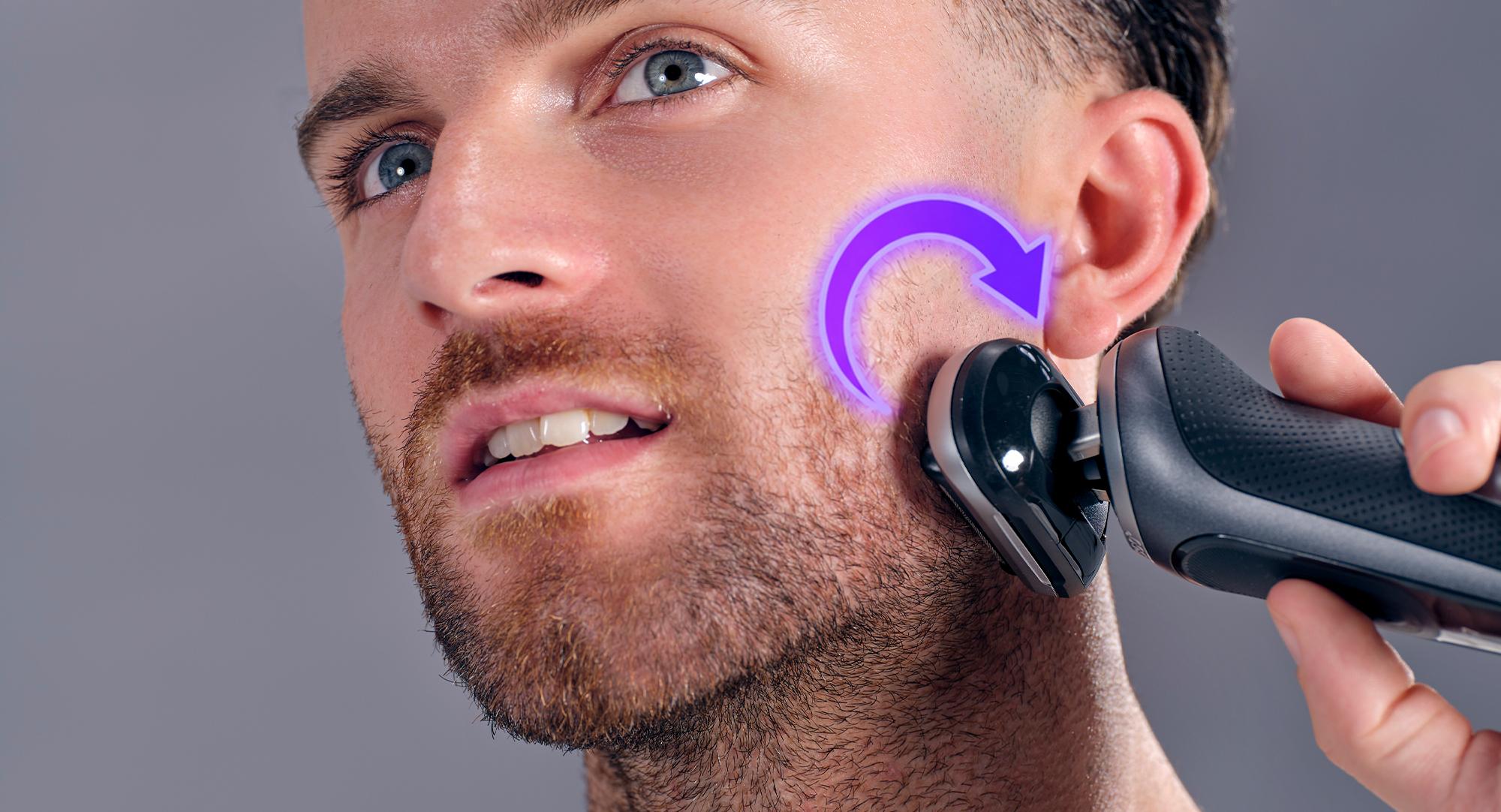
Rotary shavers use circular cutting heads that flex with the contours of your face. If you have thicker, coarser facial hair, rotary is the right choice.
For best results:
Use small circular motions
Allow the heads to follow the shape of the jaw and neck
Work methodically around areas where hair grows in different directions
Wet or dry?
Modern wet and dry electric shavers let you try different ways of shaving. You can even use some of them in the shower.
Wet shaving with foam or gel may feel more comfortable for sensitive skin.
Dry shaving is usually faster and more convenient.
There’s no right or wrong choice. Both ways can deliver a close shave, so it’s really just about what you prefer.
Step 5: Look after your skin after shaving

You’re not done yet! Once you've finished shaving:
Rinse your face with cool water.
Gently pat your skin dry with a clean towel.
Apply a soothing aftershave balm or moisturiser.
Try not to aggressively dry your skin with a towel, as this can increase irritation. Proper aftercare helps calm the skin and support its natural recovery process.
Step 6: Prevent razor burn and ingrown hairs

If you're prone to redness, bumps or ingrown hairs, a few simple habits can help.
Quick prevention checklist
Always start with clean, softened skin
Shave with the grain first
Avoid pressing hard
Use the correct technique for your shaver type
Replace shaving heads when recommended
Clean your shaver regularly
Moisturise after shaving
For a deeper dive into preventing shaving irritation, see our dedicated guide to razor burn and ingrown hairs.
When should you see a GP or dermatologist?
Occasional irritation after shaving is common. But it's worth seeking getting medical advice if you experience:
Persistent razor bumps that don't improve
Significant pain, swelling or discomfort
Signs of infection
Ongoing ingrown hairs that repeatedly return
Unexplained skin changes
A GP or dermatologist can help identify any underlying skin conditions and recommend appropriate treatment.
Choosing the right shaver still matters
Following the right technique can improve almost any shave, but the best results come from combining good habits with the right tool.
Foil shavers tend to suit fine to medium facial hair and sensitive skin.
Rotary shavers are often better for thicker, coarser beards and uneven growth patterns.
Check out our full range of men's shaving and grooming tech to find the right fit for your routine. Or get a shaver for virtually every job with our guide to the best electric shavers for men.
FAQs
What is the best way to get the closest shave at home?
Start with warm water prep or a post-shower shave. Use a shaver that suits your beard type, go with the grain on the first pass and apply a soothing balm afterwards. Technique and preparation matter just as much as the shaver itself.
Are foil shavers better for a close shave?
Foil shavers tend to cut closer on fine to medium hair and flat stubble. For thicker or coarser beards, a rotary shaver’s flexible heads can follow the face more effectively and deliver a better overall result. It depends on your beard.
Can electric shavers shave as closely as a razor?
Modern premium electric shavers can get very close - close enough that most people won’t notice a difference in day-to-day use. Wet and dry shavers used with gel or foam narrow the gap further. A straight razor or cartridge razor may technically cut slightly closer, but a good electric shaver is the practical choice for everyday shaving.
Is wet shaving better than dry shaving?
Wet shaving is generally more comfortable, especially for sensitive skin. Dry shaving is faster. If your skin handles it well, dry shaving works fine. But for consistently close and irritation-free results, wet shaving has the edge.
How often should I replace my shaver head?
Most manufacturers recommend replacing the shaving head every 12 to 18 months. If the shaver starts tugging, requires multiple passes or simply doesn’t cut as closely as it used to, the head is likely due for a change. Don’t always wait for the recommended date if performance drops noticeably before then.
Can I use an electric shaver in the shower?
Yes, provided your shaver is rated waterproof. Most wet and dry shavers, like the Philips Series 3000 and 5000 ranges, are fully waterproof and designed for shower use. Always check the IPX rating in the product specification before using any shaver near water.