

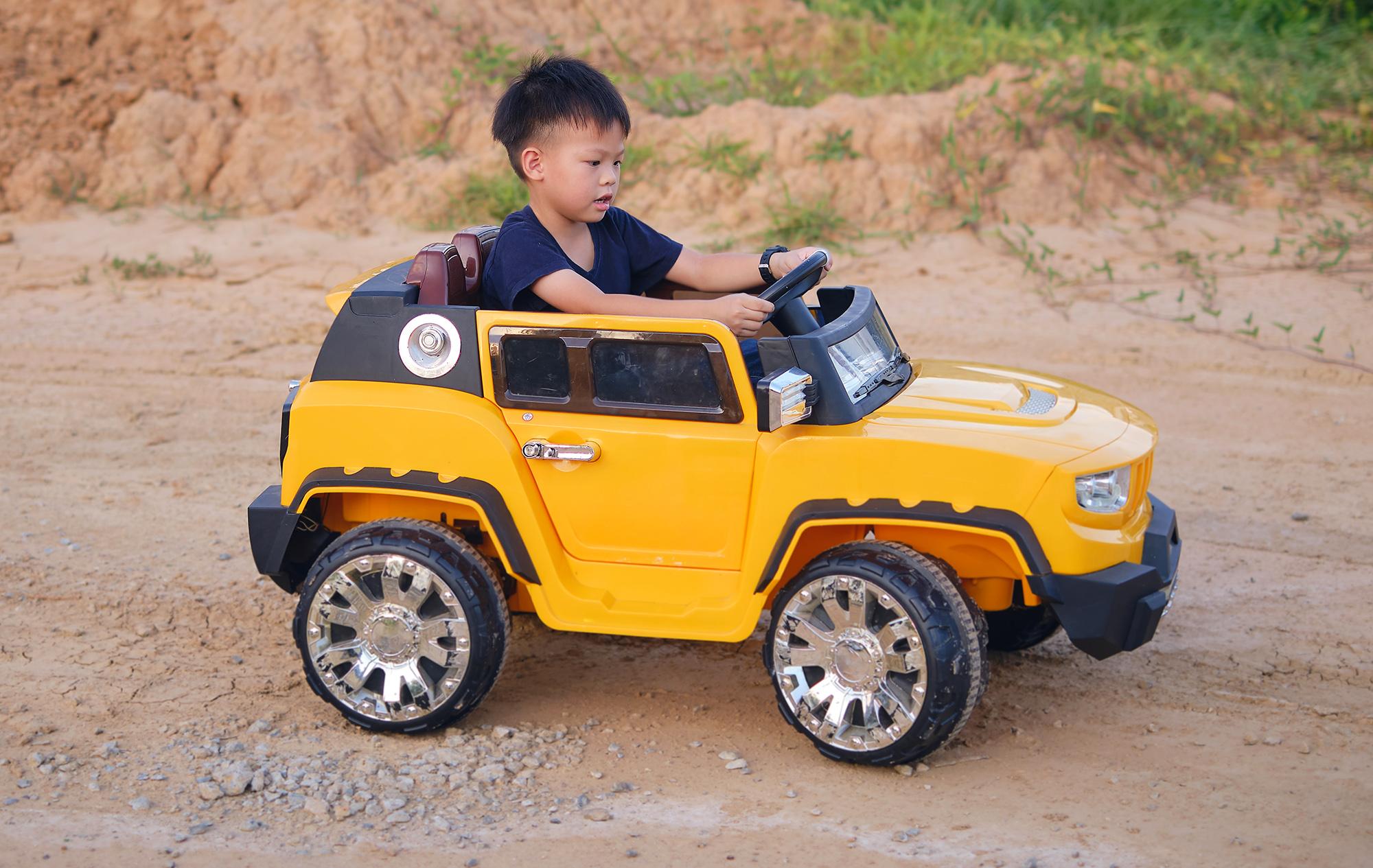
Kids ride-on toys can turn an afternoon in the garden into a mini adventure. They’re a chance for little one to take the driving seat and make their own fun, whether they’re at the wheel of an electric car or handling their first motorbike.
When you start researching ride-ons for kids, you’ll quickly come across vehicles listed as 6V, 12V and 24V models. These numbers tell you about the vehicle’s power - which can affect its speed, the surfaces it can handle and the age of child it suits.
To help you make the right choice, this guide explains all you need to know about the different voltages for ride-ons, how to choose the right one for your child, and what to look for when it comes to battery life, charging and safety. Let’s get on it!
What does voltage mean on a kids’ ride-on?
Voltage tells you about the electrical output of a ride-on’s battery. Along with the motor and other parts of the vehicle, it helps determine how much power the ride-on can deliver. Higher voltage means more potential power, which can help a vehicle handle grass or gentle slopes.
But voltage isn’t the whole story. The motor, gearing, tyres and weight of the vehicle all affect performance. So, a 24V model isn’t automatically faster or better on every surface than a 12V one.
Battery capacity is a separate issue. Measured in amp-hours (Ah), it tells you how much charge a battery can store and how long the ride-on runs between charges.
6V vs 12V vs 24V: the key differences
Voltage numbers can look a bit confusing at first, but they’re easy to understand when you know what to look for. Here’s how 6V, 12V and 24V ride-ons compare for power, speed, terrain, weight capacity and price.
| Feature | 6V | 12V | 24V |
|---|---|---|---|
| Typical user | Younger beginners | Pre-schoolers and some early school-age children | Older, more confident children |
| Speed | Generally lower | Generally moderate | Often higher |
| Terrain | Smooth, flat surfaces | Some models handle mixed garden surfaces | Some models handle rougher ground and gentle slopes |
| Weight capacity | Often lower | Varies by model | Often higher on larger vehicles |
| Price | Typically lower | Typically mid-range | Typically higher |
Which voltage is right for your child?
Every little driver is different, so it’s worth thinking about more than just age when choosing a ride-on. The right voltage depends on how confident your child is, where they’ll ride and how much power they need. Let’s find the right match.
| Your situation | What to consider |
|---|---|
| A toddler’s first ride-on for a patio or flat garden | A 6V model for a gentler introduction |
| A pre-schooler using mixed garden surfaces | A 12V model with suitable terrain guidance |
| An older, confident child wanting more performance | A 24V model with appropriate speed and safety features |
| A child likely to outgrow a basic model quickly | The age range and weight limit of 12V models |
| Two children sharing | Check that the vehicle has enough seats and an appropriate weight limit |
Think of the table as a handy starting point. The right ride-on is one your child can enjoy safely, with enough power for where they’ll be driving. Check the individual model’s age guidance, speed and weight limit, too, as these can vary even between ride-ons with the same voltage.
6V ride-ons: gentle first drives for toddlers

A 6V ride-on is a good starting point for a younger child who’s still learning to steer and stop. These models generally offer lower speeds, making them well suited to a flat patio or smooth garden path. But a potential drawback is that they can struggle on grass, slopes or uneven ground, particularly with a heavier rider.
Before buying, check the recommended age and maximum rider weight. A parental remote control is worth considering, too, as it lets an adult help steer or stop compatible models.
Best for: younger beginners riding on smooth, flat surfaces.
12V ride-ons: the popular all-rounder
A 12V ride-on car gives mini Lewis Hamiltons the power to take their garden adventures a bit further. Some models can tackle grass and mixed surfaces, so there’s more scope to go motoring safely beyond the patio. They’re popular with pre-schoolers and some early school-age children, with everything from mini buggies to pint-sized bikes to choose from.
Best for: children ready for a little more power and families with suitable space for garden driving.
Remember, you can choose between ride-on cars and bikes, so make sure you know which type of transport your little one prefers. Here are a couple of great 12V choices:
Xootz Kawasaki Teryx KRX 1000 12V kids ride-on car – green & black

With its buggy-style design, this Xootz Kawasaki Teryx KRX 1000 lets little drivers imagine they’re heading off on their own mini adventures. It comes with parental remote control, has a range of up to 3.1 miles and takes eight hours to charge. It’s designed for children aged 3 and up, with a maximum rider weight of 30kg. It’s also available as a green and black ride-on.
Xootz Aprilia 12V kids electric ride-on bike – white

For little ones (aged 3 and above) who’d rather ride a bike than drive a car, this Xootz Aprilia 12V gives them a different kind of adventure. It reaches a maximum speed of 3.7mph and has detachable stabilisers to help with balance.
24V ride-ons: more power for older children
A 24V ride-on can deliver more electrical power than a comparable lower-voltage model. These vehicles are often larger and designed for older or more confident children. Some are better suited to rougher ground or gentle slopes, depending on their design.
Before choosing one, check its maximum speed, terrain guidance and safety features. Follow the manufacturer’s age and weight limits, and supervise your child throughout their ride. And don’t forget to measure your storage space. Bigger ride-ons need somewhere to live when the adventure’s over!
Best for: older, confident children who are ready for a more powerful model.
Ride-on battery, charging and safety tips
A little battery care goes a long way. Follow the manufacturer’s charging instructions and use the supplied charger or a replacement explicitly approved for your model. Charge the vehicle in a dry, well-ventilated place, and check the manual before the first ride.
Need a replacement? Don’t buy a battery just because it looks the same. A 12V battery for a ride-on car must match the original specifications, including voltage, chemistry, connector and physical size. The same goes for a 24V battery for a ride-on car. An incompatible battery or charger can damage the vehicle and create a safety risk.
Before each ride, check the tyres, steering, controls and bodywork for damage. Make sure your child is within the weight limit and any seat belt or restraint is fastened correctly.
Always supervise children while they ride. Choose a safe, enclosed area away from traffic, steps, drops and water. Keep hands, feet and clothing clear of moving parts, and follow the manual’s advice on battery storage and maintenance.
Need more help?
If you’re on the hunt for more gifts for kids, check out our article on RC cars – Toy grade vs hobby grade. You can also browse our full range of ride-ons and wheelers and other toys and hobbies.
Ride-on voltage FAQs
How long does a ride-on car battery last before it needs replacing?
A ride-on battery’s lifespan depends on its type, use and care. Running time per charge varies with the rider’s weight, terrain and speed. Charging habits and storage conditions also affect battery life. Follow the manual and consider a replacement if the battery no longer holds charge properly.
Do ride-on cars come with parental remote control at every voltage?
No, parental remote control isn’t available on every ride-on, regardless of voltage. It’s a feature of individual models, so check the product specifications before buying. A remote can help an adult steer or stop a compatible ride-on, but it doesn’t replace supervision. Keep children within sight while they drive.
Can I use a different charger or battery on my ride-on car?
Only use the supplied charger or a replacement explicitly approved for your model. The battery and charger must match the vehicle’s requirements, including voltage and battery type. An unsuitable charger or battery can cause damage or create a safety risk. Check the manual before ordering replacement parts.
Can ride-on cars be used on roads or pavements?
Children’s electric should only be ridden on private land (with the landowners permission), not public roads or pavements. Check the rules for your local area to be certain. And always choose a safe, enclosed area away from pedestrians, driveways and any other hazards.