

Padel is played on an enclosed court where the walls are part of the game, while pickleball is played on an open court with simpler rules and scoring. Both are beginner-friendly, sociable and easy to get started with.
But if you've heard people raving about padel or pickleball but were too afraid to ask what they were, you're in the right place. Both have surged in popularity over the last few years. And from the outside they look remarkably similar: two players either side of a net, smallish rackets, a ball that bounces and both begin with p. It's easy to mix them up.
So, here’s our beginner-friendly comparison. We'll look at how the two sports differ in equipment, rules and scoring. We’ll then walk through how to get started with either one. Read on and you'll quickly see which one sounds more like your thing.
At a glance
| If you want... | Choose |
|---|---|
| The easiest sport to learn | Pickleball |
| Longer rallies | Padel |
| Tennis-like gameplay | Padel |
| Less running | Pickleball |
| Fast, social games | Either |
| A sport most tennis players adapt to quickly | Padel |
What are padel and pickleball?
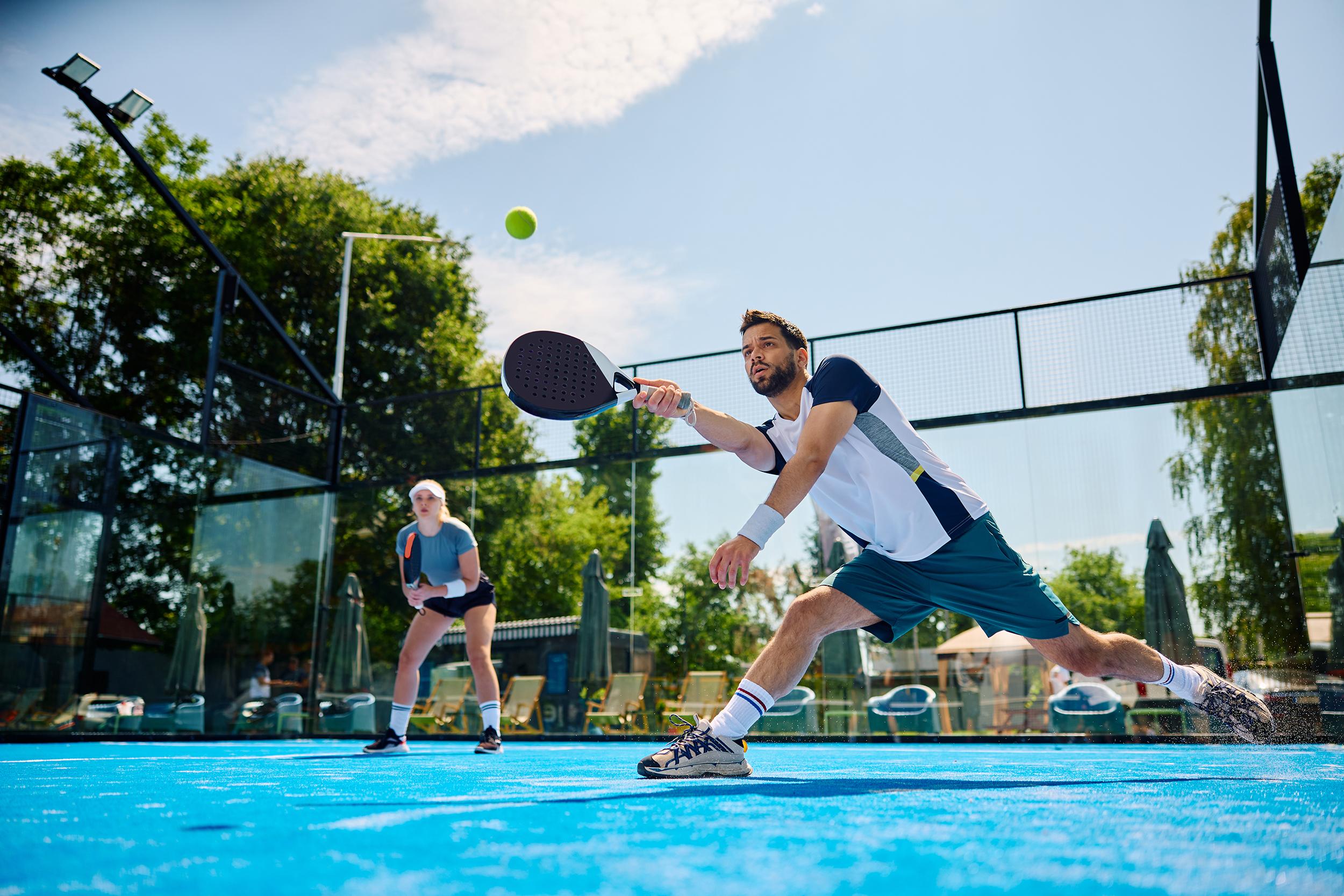
Padel is a doubles racket sport played on an enclosed court surrounded by glass and mesh walls. Invented in Mexico in 1969, it's often described as a mix of tennis and squash. The walls aren't just there to keep the ball in play. You can use them during rallies, which creates longer exchanges and a more tactical style of play.
Pickleball is played on a smaller open court using solid paddles and a lightweight plastic ball. Created in the US in 1965, it's known for its simple rules, quick learning curve and social atmosphere. A "kitchen" area near the net prevents players from volleying too close to the net - helping keep rallies controlled.
Both sports appeal to beginners because the learning curve is gentle compared to tennis. The courts are smaller, the equipment is forgiving and most people can start a rally within minutes of picking up a racket or paddle. They're also both genuinely social - nearly all padel is played as doubles, and pickleball is often played that way too.
How do padel and pickleball differ?
Padel feels more like tennis
If you've played tennis before, padel will feel immediately familiar. You serve underarm, play on a similar scoring system and spend much of the game trying to create angles and force mistakes.
The biggest difference is the enclosed court. After the ball bounces, it can rebound off the glass walls and stay in play. This creates longer rallies and introduces an extra tactical element that many players find addictive.
Pickleball is easier to pick up
Pickleball tends to be the quickest racket sport for beginners to learn. The court is smaller, the plastic ball travels slower than a tennis ball and the rules are relatively straightforward. You can even buy a net and play it at home.
Don't mistake simple for easy though. The best pickleball players are incredibly skilful, but beginners can usually get a decent rally going within their first session. That's one reason why it's become particularly popular with families and community clubs.
Padel vs pickleball: key differences
| Feature | Padel | Pickleball |
|---|---|---|
| Court | Enclosed court with glass and mesh walls | Open court with no walls |
| Equipment | Solid padel racket and pressurised ball | Paddle and perforated plastic ball |
| Scoring | Tennis scoring (15, 30, 40, game) | Usually played to 11 points |
| Playing style | Tactical rallies using the walls | Fast exchanges and quick reactions |
| Learning curve | Easy to learn | Very easy to learn |
| Typical format | Almost always doubles | Singles or doubles |
Which sport is more physical?
Neither sport requires the same level of fitness as singles tennis, but they challenge players in different ways.
Padel generally involves more movement, as rallies tend to last longer and players cover more ground around the court. Pickleball is played on a smaller court, so there's less running overall, although quick reactions and sharp reflexes still help.
For most beginners, both sports offer a fun way to stay active without feeling overwhelming.
Which sport is right for you?
The good news is there's no wrong choice. You’ll have a good time playing either. It just depends on what you look for in a sport...
Choose padel if...
You've played tennis or squash before and want something familiar.
You enjoy longer rallies and more tactical play.
You like learning new skills and strategies.
You're happy with a slightly steeper learning curve with more gameplay variety.
You enjoy doubles sports where teamwork and positioning matter.
The enclosed court and playable walls add an extra layer of strategy that keeps padel interesting as your skills improve.

Choose pickleball if...
You've never played a racket sport before.
You want the quickest route from beginner to competent player.
You're looking for a sport that's easy to drop into casually.
You prefer straightforward rules and scoring.
You want a lower-impact activity with less court running around.
Many people find pickleball less intimidating because they can start rallying and enjoying competitive games almost immediately. It’s also got a funnier name.

Rules and scoring explained
You don't need to memorise a rulebook before stepping onto the court, but there are a few key differences worth knowing.
Padel rules in a nutshell
Padel is usually played as doubles on an enclosed court. Serves must be hit underarm after the ball bounces, and the ball can rebound off the surrounding walls after it has bounced on the court.
Scoring follows the same format as tennis: 15, 30, 40 and game, with matches played over sets.

Pickleball rules in a nutshell
Pickleball can be played as singles or doubles. Players serve underarm and the ball must bounce once on each side before volleys are allowed.
A marked area near the net, known as the "kitchen", prevents players from volleying close to the net.
Like table tennis, games are typically played to 11 points and players must win by at least two points.

Still can't decide?
If you've played tennis or squash before, padel will feel familiar — the scoring is the same as tennis and the wall play echoes squash. If you're completely new to racket sports, pickleball's smaller court and straightforward scoring make it the quicker route to a decent rally.
The best way to decide is to book a taster session of each before committing to either. Most clubs and courts offer beginner sessions where you can borrow kit and learn the basics.
What do you need to start playing?
Padel starter kit
The good news is you don't need much.
Padel racket
Court shoes with good grip
Comfortable sportswear
Many clubs let you hire rackets and buy balls on site, so you can try a few sessions before investing in your own equipment.


Pickleball starter kit
Getting started with pickleball is similarly straightforward.
Pickleballs
Pickleball net (if you want to play at home)
Court shoes
Comfortable sportswear
Like padel, many venues offer equipment hire for beginners.
Our padel & pickle picks


Where can you play padel and pickleball in the UK?
The easiest way to find a local court is through the national governing bodies.
Find a padel court
The Lawn Tennis Association (LTA) oversees padel in Britain and maintains a court finder covering venues across England, Scotland and Wales.
Find a pickleball court
Pickleball England provides a club and venue finder, helping you find your nearest place to play.
Both organisations also offer beginner guides, coaching information and details of local competitions if you decide to take the sport further.
FAQs
Is padel or pickleball easier for beginners?
Pickleball is generally considered easier for beginners. The smaller court, simple scoring system and lightweight plastic ball help new players get rallies going quickly. Padel is still beginner-friendly, but the use of walls adds an extra tactical element that takes time to master.
Is padel more like tennis than pickleball?
Yes. Padel shares more similarities with tennis, including the scoring system, court layout and style of play. Many tennis players find they adapt to padel quickly, while pickleball tends to feel like a distinct sport with its own tactics and rules.
Which sport gives a better workout?
Padel typically involves more movement because rallies last longer and players cover more ground around the court. Pickleball is played on a smaller court and generally requires less running, although both sports can provide a good cardio workout.
Do you need special equipment to play padel or pickleball?
Yes, each sport uses different equipment. Padel is played with a solid racket and a tennis-style ball, while pickleball uses a paddle and a perforated plastic ball. Many clubs offer equipment hire, making it easy to try either sport before buying your own gear.
Can children play padel and pickleball?
Yes. Both sports are popular with families because they're relatively easy to learn and can be adapted for different ages and abilities. Many clubs run beginner sessions and junior coaching programmes for children who want to develop their skills.
Why are padel and pickleball becoming so popular?
Both sports are easier to learn than many traditional racket sports and have a strong social element. Short learning curves, doubles play and welcoming local communities have helped attract players who might never have considered taking up tennis or squash.