

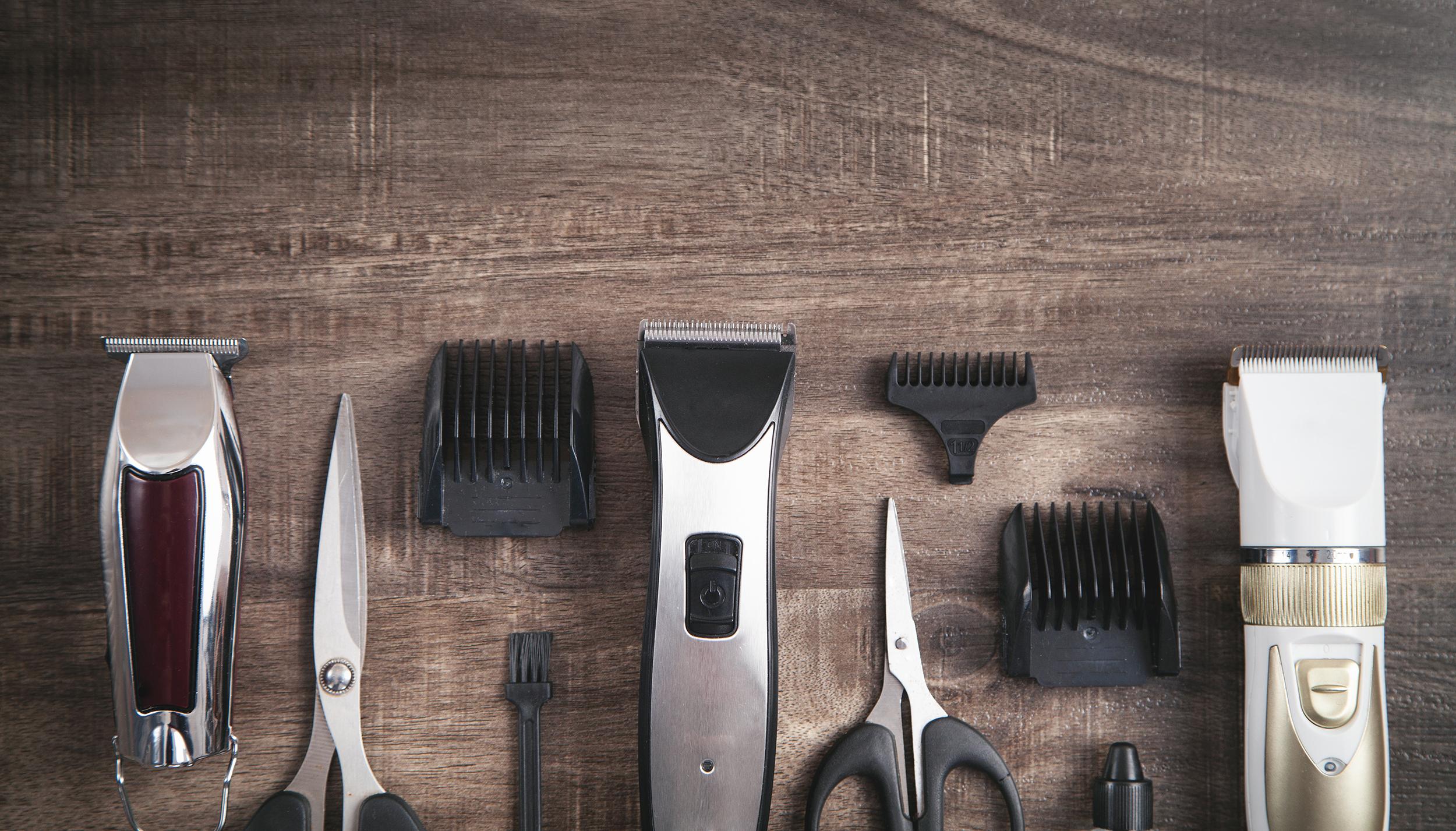
Beard trimmers and hair clippers have different blade widths and motor powers – so they’re designed for different jobs. If you want to maintain your facial hair and head hair, then having both is the perfect balance.
Did you know that about half of British men have some kind of facial hair? Unsurprisingly, that’s led to a growth in beard trimmers. And it’s pretty common to find hair clippers in the bathroom too. Much of this goes back to lockdown where 70% of Brits were happy to try home haircuts.
But can a beard trimmer double up for a DIY haircut? And can clippers keep stubble looking sharp? The difference between a beard trimmer and hair clippers isn’t always obvious from the outside. But use the wrong one for the wrong job and you’ll know about it quickly.
To clear things up, here’s our expert guide to the clipper vs trimmer question, so you can figure out what’s actually worth buying.

What’s the difference between a beard trimmer and hair clippers?
The short answer: it’s all about blade width, motor power and what the tool was designed to cut.
Beard & stubble trimmers have narrower blades - typically around 32–40mm wide - and are built for precision. They’re designed to follow the contours of your face and navigate tight spots like the philtrum, above your lip. The result should be clean, sharp edges along your cheekbones and neckline. The motors are calibrated for fine, precise cutting rather than bulk removal.
Hair clippers have wider blades - often 45mm or more - and stronger motors built to power through larger volumes of thicker head hair quickly. That extra width and torque is exactly what you need for a buzz cut or a grade-two all over. But it makes precise beard edging tricky. The wider blade can’t follow the curve of your jaw the way a narrow trimmer blade can.
In short: the trimmer and clipper difference comes down to precision vs power. Each device has its own specific job to do.
When should you use a beard trimmer?
A beard trimmer earns its place any time accuracy matters more than speed. That covers:
• Maintaining stubble: keeping it at a consistent 2mm or 3mm without patchy bits
• Shaping a short-to-medium beard: tidying the edges, defining your neckline and cheek lines
• Trimming a moustache: getting into tight spaces above your lip without taking off too much
• Creating sharp beard edges: the narrow blade gives you far more control than a clipper
Most beard trimmers come with precision guards and adjustable length settings, so you use the same device for both heavy stubble or a well-kept beard. But they can handle other grooming tasks too. Take a look at our guide on how you can trim body hair with a beard trimmer.


When are hair clippers the better option?
Hair clippers are built for moving through volume efficiently. If you’re doing your own short back and sides, going for a buzz cut or keeping a fade looking fresh between barber visits, clippers are the tool for the job.
Their wider blades and stronger motors cut through thick, dense head hair without snagging — something a beard trimmer would struggle with consistently across a full head. Can you use beard trimmers for a full haircut? Technically yes, for a very short all-over cut. But it’ll take three times as long and the finish won’t be as clean.


3 tips that only a barber will tell you
1. Your beard isn't the same thickness everywhere
Many men assume they can use one guard length across their entire beard. In reality, beard density often varies significantly between the cheeks, jawline and moustache area. Professional barbers regularly use different lengths in different areas to create a fuller-looking beard. If your cheeks grow patchier than your chin, trimming everything to the same length can actually make the beard look less dense.
2. Most DIY grooming mistakes happen at the edges
For most men, the problem isn't trimming the bulk of the beard or hair. It's defining the boundaries. Taking a neckline too high or a cheek line too low can completely change how a beard looks and often takes weeks to grow back. That's why professionals rely on precision trimmers for detailing work, even when clippers are used for removing bulk.
3. Why clippers feel worse on beards
Beard hair is often coarser, drier and more irregular than the hair on your head. That's one reason beard trimmers are designed for slower, more precise cutting. While a clipper motor may be more powerful, the wider blade can make it harder to maintain symmetry and definition around the face.
Can one device do both jobs?
Multi-grooming kits have come a long way. For example, the BRAUN All-in-One Series 7 AIO7580 15-in-1 Grooming Kit comes with interchangeable heads that handle beard edging, head hair, nose and ear grooming and body trimming - all from one device.
The trade-off is that a multi-groomer is generally a compromise in both directions. It won’t match the precision of a dedicated trimmer for beard work or the raw power of a proper clipper for a full head of hair. But if you’re just after tidy stubble or the occasional trim between haircuts, an all-in-one kit is genuinely good enough.
Tech tip: get your neckline right every time
The neckline is where most DIY beard shaping goes wrong - and it’s almost always because people use too wide a blade. When defining your neckline, find a point roughly two finger-widths above your Adam’s apple and use a narrow-bladed trimmer to work outward from there in smooth, even strokes. Work against the grain first to catch longer hairs, then go with the grain to tidy the finish. Using a wide clipper blade for this job is one of the most common grooming mistakes. It’s surprisingly easy to take off more than you intended.
Do you really need both?
It depends on what you’re actually trying to achieve. Here’s a quick way to think about it:
| Your goal | Best option |
|---|---|
| Beard-focused, no home haircuts | ✅ A quality beard trimmer is all you need |
| Short hair maintained at home, clean-shaven or very light stubble | ✂️ A clipper covers you |
| Both a beard and regular home haircuts | 🎯 You'll get the best results from separate, dedicated tools |
| Travelling light or short on bathroom space | 🧳 A good multi-grooming kit does the job without the clutter |
Whether you go for separate tools or a single all-rounder, it’s worth spending a bit of time thinking about what your actual routine looks like before you buy.
Browse the full range of men’s shaving and grooming to find the right fit.
FAQs
What’s the difference between a beard trimmer and hair clippers?
Beard trimmers have narrower blades and are designed for precision facial grooming. Hair clippers have wider blades and more powerful motors built for cutting larger volumes of head hair efficiently. The key difference is precision vs power.
Can I use hair clippers on my beard?
You can, but the results are rarely as clean. A clipper’s wider blade makes it difficult to create sharp edges or follow the curves of your face — especially around the neckline and cheekbones.
Can a beard trimmer cut head hair?
For a very close, uniform all-over cut it’s possible, but a beard trimmer will be slower and will struggle with the volume and thickness of head hair. A dedicated clipper will do it faster and with a cleaner finish.
Do I need both a beard trimmer and hair clippers?
If you regularly style a beard and do your own haircuts at home, then yes — separate tools will give you significantly better results. If you only do one or the other, a single dedicated tool is enough.
Are multi-grooming kits as good as separate tools?
For everyday grooming, they’re a great option — especially if you’re tight on space or budget. For detailed beard shaping or a professional-finish haircut, dedicated tools still have the edge.
Can hair clippers create beard lines and edges?
Not as reliably as a beard trimmer. The wider blade makes it harder to achieve the precise lines that define a well-shaped beard. For sharp cheek lines and neckline edging, a narrow-bladed trimmer is the better tool every time.