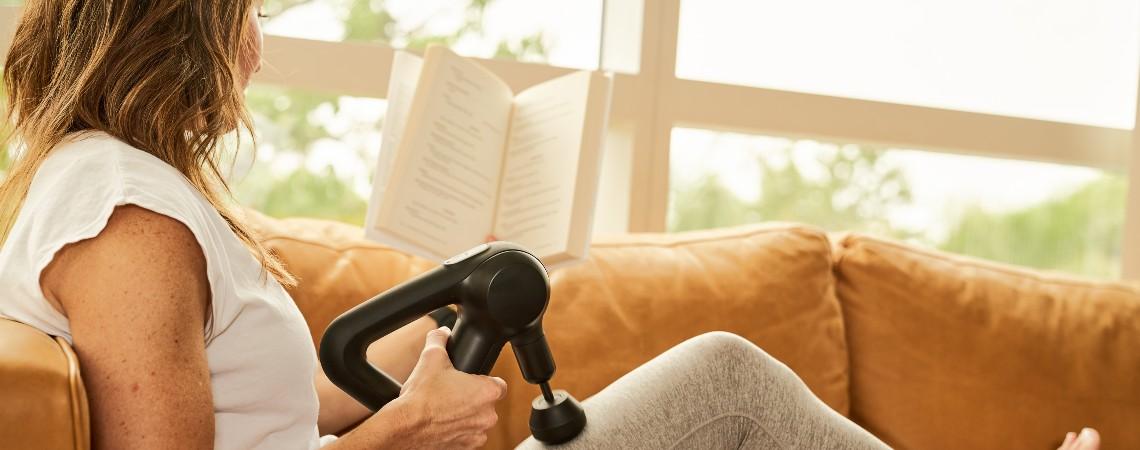


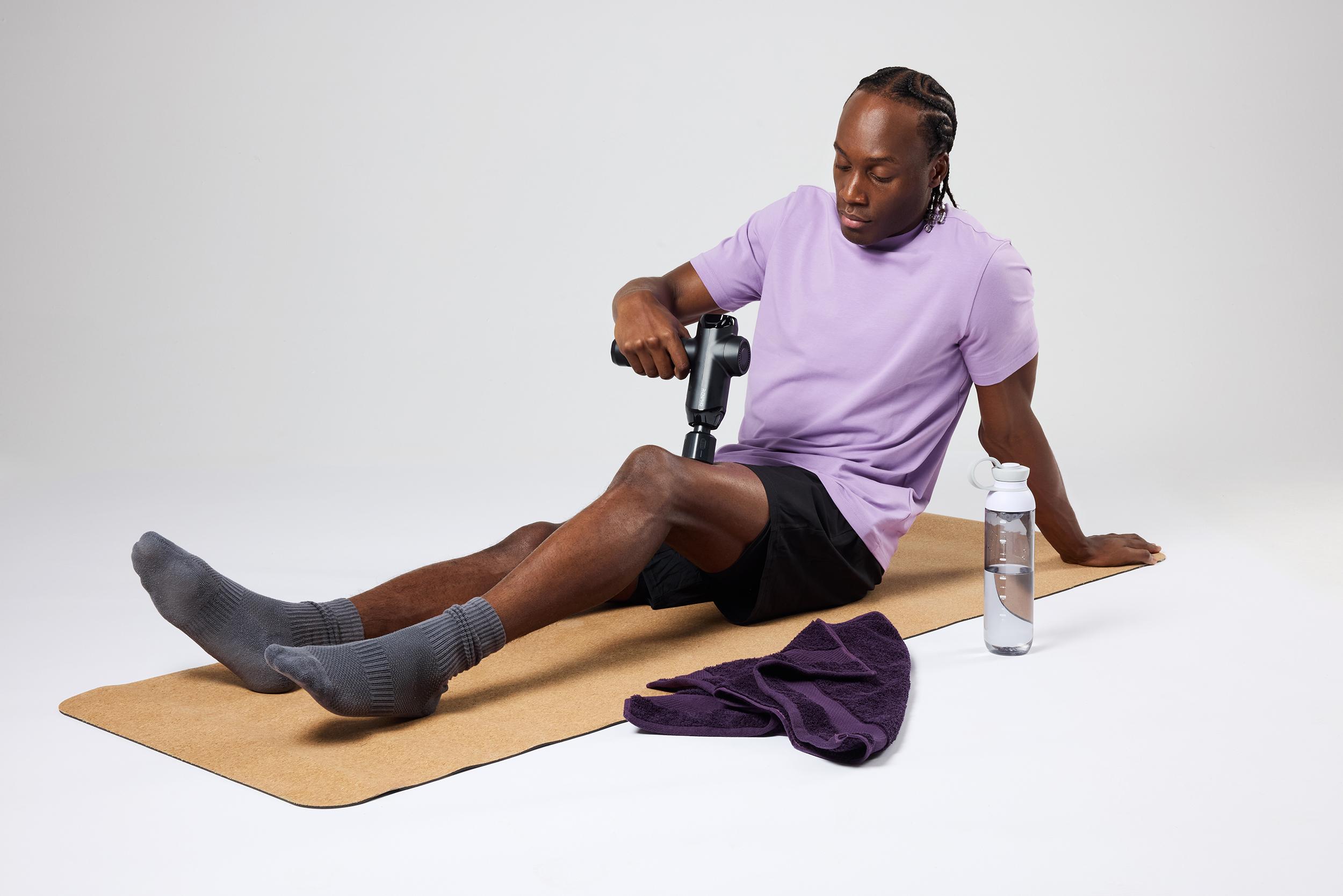
To use a massage gun, you choose your intensity level, press the tip of the gun gently against the muscle and glide the gun carefully over the muscle, spending about 1-2 minutes on each area. But there’s a lot more to it than that, and we’ll go into detail.
With a new massage gun, you can tackle any post-exercise aches and pains, recover faster and get back to more comfortable movement. And with a lot less creaking!
But what does a massage gun actually do for you though? And how do you use one safely? Well, we’ve got the answers right here.
What is a massage gun and how does it work?
A massage gun is a handheld gadget that looks a bit like a power drill. But you won’t be using it for DIY. It uses percussive therapy to massage your muscles. Which basically means it releases rapid, repetitive bursts of pressure straight into the tissue.
Doing this helps to improve blood flow, stops you feeling sore, and increases your range of motion. It’s kind of like having a personal masseuse - but without the expensive repeat fees!
Step-by-step guide to using a massage gun

Here’s how to use a massage gun and get the most out of it:
Turn it on – Start by turning on your massage gun. Most have a switch or a power button.
Choose your setting – Choose your speed or intensity level. If you haven’t used one before, we’d recommend starting on a lower setting. It’ll let your muscles get used to the feeling. And you won’t accidentally hurt yourself before you’ve even got started.
Apply to the muscle – Hold it firmly and press the tip of the gun gently against the muscle you want to target. Don’t push too hard though. The gun should do most of the heavy lifting here.
Move slowly – Glide the gun carefully over the muscle, spending about 1-2 minutes on each area. If you’re doing it properly, you’ll feel the vibrations deep in each spot.
Adjust as needed – If a particular area feels tight, spend a little extra time working around the muscle. Keep the gun moving slowly and stop if you feel any discomfort.
Choosing the right attachment and settings

Most massage guns come with a full set of attachments and speed settings. And each of these are made for different parts of your body. So, make sure you’re using the right tool for the job…
Attachments:
Round head – Great for those bigger muscle groups, like your thighs, calves and glutes.
Flat head – A good all-rounder that’s designed for smaller areas but will work well on most body parts.
Bullet head – Ideal for targeting any sore deep tissue, knots or pesky trigger points.
Fork head – Made for the spots near the spine and neck, as it fits around the bony areas. Be careful while you use it though.
Speed settings:
Low speed – Perfect for sensitive areas (and if it’s your first time using a massage gun).
Medium speed – Kind of what it says on the tin. A sweet spot that strikes a balance between the two other speeds.
High speed – Best for deep tissue relief, or right after you’ve finished an intense workout.
Start with a lower speed and a general-purpose attachment, then experiment as you become more comfortable using the device.
Using the massage gun on different areas

It takes a bit of technique (and the right settings and attachments) to really feel the effects of your massage gun…
Neck and shoulders – Try a low setting with gentle pressure. But don’t push on the front of your neck – trust us, it hurts.
Back – Take a fork attachment and glide the gun along your upper and lower back (while avoiding your spine).
Arms – Focus on your biceps, triceps and forearms with some light pressure.
Legs – You can use a higher setting on your quads, hamstrings, calves or glutes. Go for a ball or flat head attachment here.
Feet – Use a lower setting and a softer attachment for the soles of your feet. This can be really soothing if you’ve been walking around all day.
Benefits of using a massage gun
Why bother with a massage gun in the first place? Well, there are plenty of good reasons to use one regularly. Here are a few massage gun benefits that are worth knowing about…
Relieving sore muscles – After a big session down the gym, they’re great for your post-workout recovery.
Reducing stress and tension – When you need to unwind after a long day, massage guns can work wonders. Just kick back and relax.
Improving blood flow – Better circulation can speed up healing, getting you back on the pitch even faster.
Boosting flexibility – You might not be doing the splits anytime soon, but the gun can loosen up tight muscles. And in theory, that means a better range of motion for you.
Preventing injuries – By keeping your muscles healthy and loose, you’ll be less likely to strain them. So, if you’re injury prone, you should spend less time on the physio table.
When to use a massage gun

If you’re not sure when to use your massage gun, here are the best times to do it…
Before a workout – This’ll warm up your muscles and increase blood flow, which will improve your performance.
After a workout – Once you’re through with a tough workout, tackle any muscle soreness and speed up your recovery.
Whenever you’re feeling sore – Been sat at your desk for too long? Get the gun out and relieve that muscle tension right away.
Anytime you feel tight – Whether that’s caused by stress or poor posture, a quick session can help you feel a bit more comfortable.
Before bed – It’ll help to relax your muscles, which can boost the quality of your sleep.
When should you avoid using a massage gun?
Massage guns can be a great way to ease muscle tension, but they're not suitable for every situation. If you're dealing with an injury or a medical condition, it's worth checking with a healthcare professional before using one.
Avoid using a massage gun on:
Acute injuries such as recent strains, sprains or bruises. Percussion therapy could increase irritation and discomfort.
Sprains and torn muscles, especially during the early stages of recovery when the affected area needs time to heal.
Broken bones or suspected fractures, as a massage gun should never be used on damaged bone or surrounding injured tissue.
Varicose veins, as the pressure and vibration may aggravate the area.
Areas with severe inflammation, swelling or pain, where additional stimulation could make symptoms worse.
You should also take extra care if:
You're pregnant. Massage guns may not be suitable for certain areas of the body, so it's best to seek medical advice before use.
You use a medical device, such as a pacemaker or other implanted electronic device. Speak to your doctor or the device manufacturer to make sure percussion therapy is safe for you.
If you're ever unsure, stop using the massage gun and seek professional medical advice. When used correctly, a massage gun should help your muscles feel better, not cause pain or discomfort.
7 common massage gun mistakes beginners make

A massage gun is simple to use, but a few common mistakes can make your sessions less effective or even leave you feeling sore. Here's what to avoid when you're getting started.
1. Jumping straight to the highest speed
More power doesn't always mean better results. Start on a lower setting and gradually increase the intensity if needed. This gives your muscles time to adapt and helps you find a comfortable level of pressure.
2. Staying on one spot for too long
It's tempting to focus on a particularly tight area, but holding a massage gun in one place for too long can irritate the muscle. Keep the device moving slowly across the treatment area and spend no more than a minute or two on any single muscle group.
3. Using it directly on bones and joints
Massage guns are designed for soft tissue, not hard surfaces. Avoid using one directly over bones, joints or sensitive areas where there's very little muscle coverage.
4. Pushing through pain
A massage gun should feel relieving, not painful. If you experience sharp pain, increased discomfort or unusual tenderness, stop and move to a different area or reduce the intensity.
5. Overusing it every day
A few minutes can go a long way. Using a massage gun excessively, especially on the same muscles, may lead to soreness rather than recovery. Give your body time to rest and respond to treatment.
6. Choosing the wrong attachment
Most massage guns include heads for different muscle groups. Using the right attachment can improve comfort and help you target muscles more effectively.
7. Forgetting about your own posture
Awkward twisting, reaching or hunching over can put unnecessary strain on your back, shoulders or wrists. Try to stay relaxed and supported while using your massage gun, or ask someone to help with hard-to-reach areas.
By keeping these tips in mind, you'll get the most from your massage gun while making your recovery sessions safer and more comfortable.
How long should you use a massage gun for?
| Area | Recommended Duration |
|---|---|
| Neck | 20-60 seconds |
| Shoulders | 30-90 seconds |
| Upper back | 1-2 minutes |
| Lower back (avoiding spine) | 1-2 minutes |
| Arms | 30-60 seconds per muscle group |
| Quads | 1-2 minutes |
| Hamstrings | 1-2 minutes |
| Calves | 30-90 seconds |
| Glutes | 1-2 minutes |
| Feet | 30-60 seconds |
These timings are intended as a guide. If you're new to massage guns, start with shorter sessions at a lower intensity and increase gradually as your muscles become accustomed to the treatment.
So, now you know how to get the most from your massage gun. But what other healthy home tech is there? You’re in luck. We’ve rounded up the best health monitoring tech you can use at home. And if it’s raining outside – and you don’t fancy getting soaked on your run – you can always try out our top fitness and gaming gadgets instead.
FAQs
Are massage guns good for you?
They sure are. Like we’ve mentioned already, massage guns can help with making sore muscles feel better, boost your circulation and relieve any tension. If it’s recovery and relaxation you’re after, you can’t really go wrong.
How often should you use a massage gun?
You can use a massage gun every day if you want. But we’d recommend limiting your sessions to about 10-15 minutes. That way, you’ll get the best results and won’t overstimulate the muscles.
Can you use a massage gun every day?
Yes, but moderation is key. Most people can safely use a massage gun as part of their daily recovery routine. Short sessions of around 10-15 minutes are usually enough to help ease muscle tension without overworking the area. If you notice increased soreness or sensitivity, give the muscle time to recover before using the device again.
Should a massage gun hurt?
No. You might feel some mild discomfort when working on a particularly tight muscle, but a massage gun shouldn't cause sharp pain. If it does, reduce the speed setting, switch attachments or stop using it on that area. The goal is to help your muscles recover, not make them feel worse.