

Imagine powering your TV, laptop and Wi-Fi using nothing more than sunshine. That's exactly what plug-in solar panels are designed to do, and they’re now legal in England, Scotland and Wales.
The Energy Saving Trust estimates a typical plug-in solar system could save between £70 and £100 a year on electricity bills - although actual savings obviously depend on your home and how much electricity you use. If you like the sound of this, here’s what plug-in solar is, how it all works, and what to consider before buying.
What are plug-in solar kits?
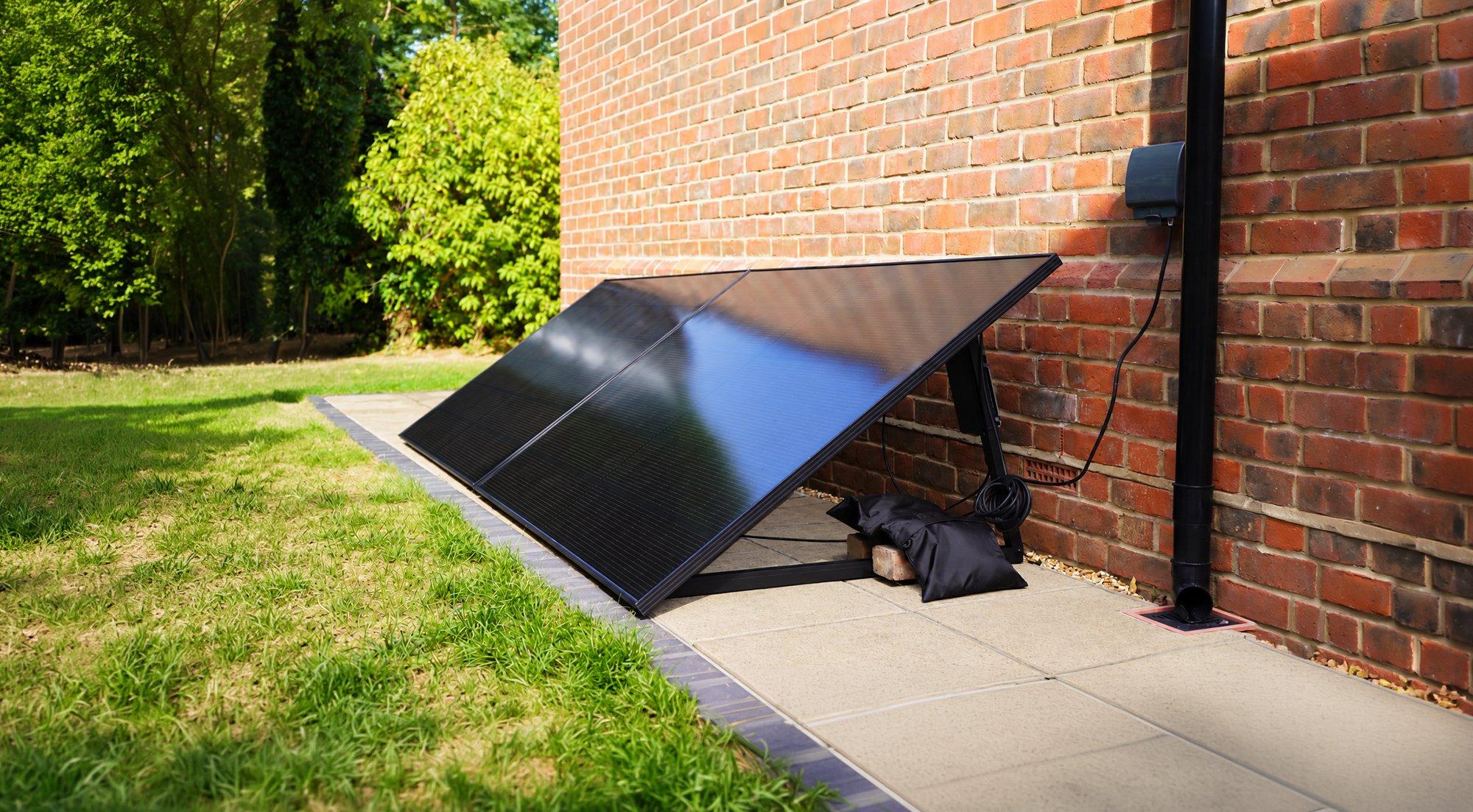
Plug-in solar kits (consisting of a solar panel, mounting system and microinverter) are small solar systems that you can install yourself. They’re designed to connect directly to your home through a standard UK plug. And they’re different from traditional rooftop solar, which normally involves panels being fixed to your roof by professional installers. Plug-in systems are much smaller and simpler to set up.
How do plug-in solar kits work?

The basic idea is the same as other solar panels. Solar cells absorb sunlight and turn it into electricity. This starts out as DC electricity, while the appliances and sockets in your home use AC.
A microinverter converts the electricity into AC power your home can use. From there, the electricity goes into your home through the plug. When the panels are generating power, your appliances can use that electricity instead of drawing as much from the grid. So, if your fridge, TV or Wi-Fi router is running while the panels are producing electricity, some of that power can come from the sun!
What can you power with plug-in solar panels?
Plug-in solar won’t run your whole home around the clock. The idea is simpler - you use the electricity you generate while the sun is out. Which means you buy less from the grid.
Under the current rules in Great Britain, a plug-in solar system can have a maximum inverter output of 800W. In good sunlight, an 800W system can help power everyday things such as a fridge, TV, Wi-Fi router, laptop and phone charger.
You don’t need to decide which appliance gets the solar power, either. Once it’s feeding electricity into your home’s circuit, whatever’s running can use it.
Your actual savings will depend on how much electricity the panels generate and how much power you're using at the time. Solar generation also drops on cloudy days and during the shorter winter months.
Plug-in solar vs rooftop solar
The biggest difference is scale. Rooftop solar uses more panels and a larger system, so it can generate much more electricity. If you own your home, have a suitable roof and want to generate as much of your own power as possible, it’s definitely an option.
Plug-in solar is smaller and easier to fit into your home. You don’t need a suitable roof or a full rooftop installation, and a balcony, garden or terrace could be enough. It could also suit people who rent or live in a flat, although you’ll need to check whether you have permission to install one.
Benefits of plug-in solar panels

There are lots of good reasons for choosing plug-in solar:
Can cut your electricity use: The electricity you generate can replace some of the power you’d otherwise buy from the grid. Energy Saving Trust estimates typical savings of £70–£100 a year. That depends on how much electricity you use while the panels are generating, so it’s an estimate rather than a guarantee.
You can start small. If you like the idea of solar but don’t want to commit to a full system, plug-in solar lets you generate some of your own electricity without making a major change to your home.
Lower upfront cost. A plug-in system is much smaller than a full rooftop installation.
Works in smaller spaces. You don’t need a suitable roof. A balcony, garden or terrace could be enough.
Simple setup. Compliant systems are designed to connect through a suitable wall socket. And you can take them with you when you move house.
Things to consider before buying
A few simple checks can help you find a system that suits your home:
| Check | What you need to know |
|---|---|
| Where you live | Plug-in solar can be used in England, Scotland and Wales. It’s not currently permitted in Northern Ireland. |
| Permission required | Renting or living in a flat? Then you need permission from your landlord, freeholder or building manager. It’s also worth checking local planning rules and your home insurance. |
| One device per home | Current rules allow one plug-in solar device per property. |
| Finding the right spot | A sunny, unshaded spot is best. South-facing usually gives the strongest results, while east- and west-facing locations can still work well. You’ll need to measure the distance from your plug socket to the location of your kit to make sure the cable is long enough. |
| Your socket | Your system needs to plug directly into a suitable mains socket. Don’t use extension leads or adaptors – they’re a safety hazard. Outdoor sockets should be weatherproof and installed by a qualified electrician. |
| Registration | You’ll need to register your device at myplugin.solar before using it. This is a legal requirement. |
How to install plug-in solar safely
Once you’ve found the right system for your home, installation should be simple and straightforward. The exact steps vary between products, so always follow the manufacturer’s instructions – but here’s what you should expect to do:
Choose a secure mounting position that’s suitable for the panels’ size and weight.
Keep cables tidy so they don’t become a trip hazard.
Install in calm, dry weather.
Some kits need two people to lift and position the panels safely.
Plug the system directly into a suitable mains socket using the supplied cables.
Unsure about the socket, wiring or electrics? Speak to a qualified electrician first.
The best plug-in solar panels
If plug-in solar sounds right for your home, here are a couple of options to get you started. The panels are the same type InstaGen uses in its full roof installations, and the company offers UK-based technical support.
InstaGen ONE plug in solar kit – one panel

This InstaGen ONE plug in solar kit comes with one bifacial panel that captures direct and reflected sunlight, making it a good option for homes with less space. It includes an 800VA microinverter and flexible mounting kit, so you can install it in a garden or on a balcony, railing or wall.
InstaGen ONE plug in solar kit – two panels
The InstaGen ONE plug in two panel solar kit is perfect for anyone with the space to generate more electricity. It comes with two 435W bifacial panels, an 800VA microinverter, and a flexible mounting frame. You can adjust the angle of the panels to make better use of the sunlight you get, rather than being stuck with one fixed position.
Plug-in solar FAQs
What are plug-in solar panels?
Plug-in solar panels are small systems that connect to a home through a standard wall socket. They usually combine one or more panels with a microinverter and can be used in spaces such as gardens, terraces and balconies. They’re designed to generate electricity without the full installation needed for rooftop solar.
How do plug-in solar panels work?
Solar cells turn sunlight into DC electricity. A microinverter then converts this into AC electricity that your home uses. The system feeds the electricity into your home through a suitable wall socket. You can then run your appliances on this electricity generated by solar power, rather than from the electricity grid.
Are plug-in solar panels legal in the UK?
Plug-in solar panels became legal in England, Scotland and Wales from 27 August 2026. They aren’t currently permitted in Northern Ireland. You must register your device at myplugin.solar before you start using it.
Can plug-in solar panels reduce electricity bills?
Yes. They can reduce the amount of electricity you buy from the grid while they’re generating. Energy Saving Trust estimates typical savings of £70–£100 a year. Your actual saving depends on the system, its position, the weather and how much electricity you use during the day.
Do plug-in solar panels work on cloudy days?
Yes, solar panels work on cloudy days. They don’t need bright sunshine to produce power, but output is highest on clear and sunny days. You’ll also generally generate less during winter, because there are fewer daylight hours and the sun is lower in the sky.
Can I use plug-in solar panels in a flat or apartment?
A balcony or other suitable outdoor space can be used for plug-in solar, but you’ll need to check the permissions that apply to your property. Renters should ask their landlord, while people living in flats will need permission from the building owner or freeholder.
Do I need a battery with a plug-in solar panel system?
No, you don’t need a battery with a plug-in solar system as you can simply plug in to a mains socket. Also, you can’t legally install a battery yourself. This work would have to be carried out by a qualified electrician.
Can I have more than one plug-in solar system?
You can’t have more than one plug-in solar system. Current rules allow one plug-in solar device per property. That means one microinverter with its connected solar panels.
Do I need to register my plug-in solar panels?
Yes, you legally need to register the device at myplugin.solar before you use it. You’ll need to enter personal details including your name, postcode and the device make and model.
Can I sell electricity I don’t use?
No. You use it or lose it. A plug-in solar system is designed to help cover some of your daytime use – nothing else.
Can I take the system with me if I move?
You should be able to take compatible plug-in solar systems with you when you move. The mounts that come with the kits available from Currys allow them to be taken down and moved to a new location. Follow the manufacturer’s instructions and check the new property permissions before reinstalling it.
How do I dispose of plug-in solar equipment?
Solar panels and microinverters are electrical equipment, so don’t put them in general waste. Contact the manufacturer, a specialist recycler or your local recycling provider for the correct WEEE recycling steps.