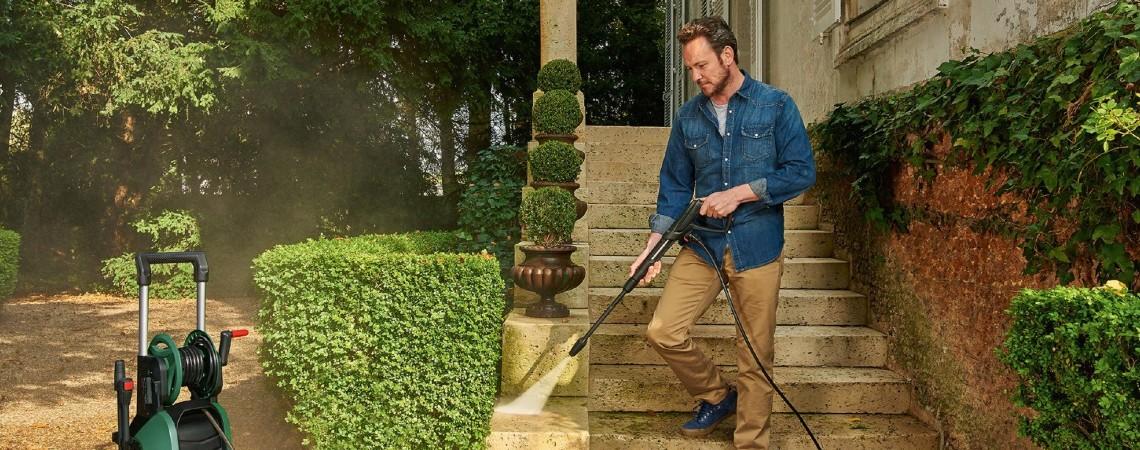


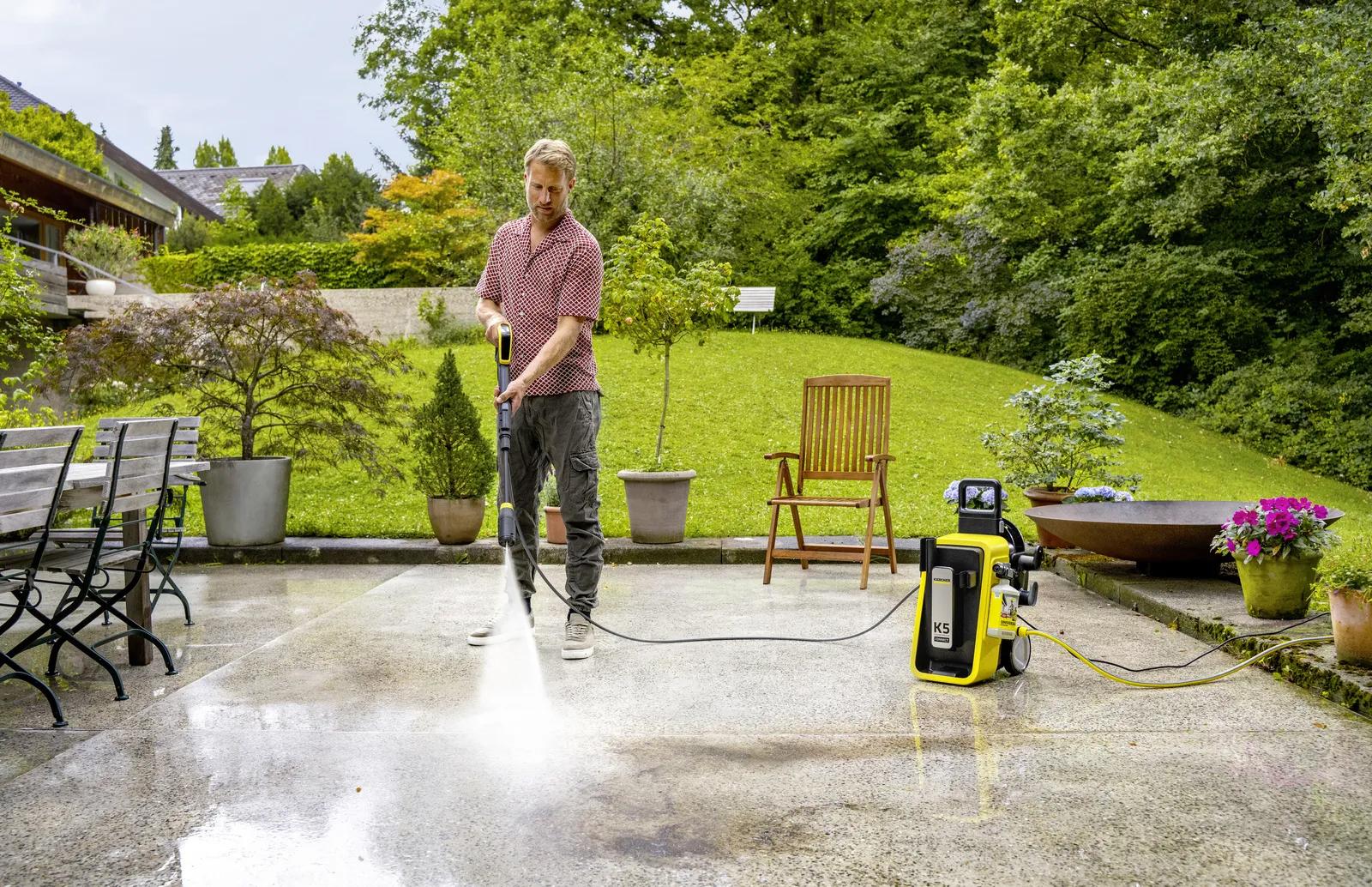
Lots of people prefer to pave - whether that’s garden paths, drives or sitting areas. The upside is that maintenance is a lot lower. No trimming, no mowing, no watering! The downside… paths and paved area get dirty and can ruin an otherwise presentable garden.
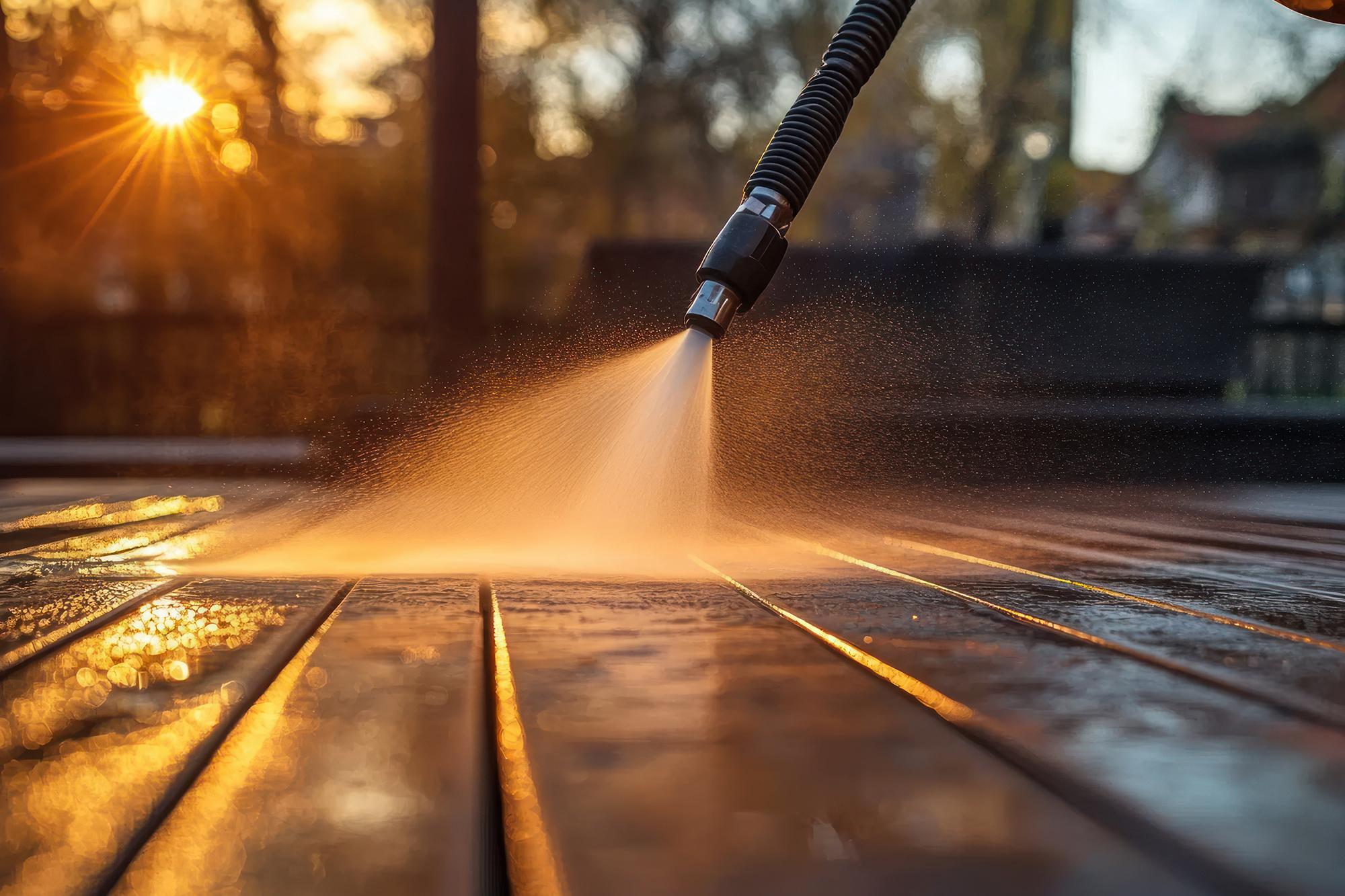
Whether you’re dealing with a mossy flagstone path or a grimy block paving driveway, a pressure washer makes the job considerably faster and more effective than a scrubbing brush. In fact, picking the right pressure washer can take far longer than cleaning your path with it. That’s why we’re here to blast away the myths and focus on what’s important.
This guide explains what to look for in a pressure washer. Also, how to match pressure levels, water flow, power type and accessories to your specific garden surface so you get great results without causing damage.
What type of garden path are you cleaning?
It’s a great idea to find out what your path is made of. Too much pressure can damage softer surfaces like sandstone or lift the jointing sand out of block paving. Too little and you will not shift ingrained moss or algae.
Concrete and tarmac can handle higher bar ratings without risk of surface damage
Natural stone and sandstone need a lower, more controlled pressure
Block paving requires a moderate pressure and, ideally, a patio cleaner attachment to protect the sand between joints
Brick paths sit somewhere in between — go steady and test a small area first
Think about whether you want a machine purely for paths or something versatile enough to clean the car, garden furniture and exterior walls too.
Understanding pressure levels (bars) for safe cleaning
Bar is the unit used to measure water pressure. For most garden paths, 110 to 140 bar is the sweet spot — enough power to remove dirt, moss and algae without risk to the surface. Higher pressures (150 bar and above) are better suited to tough concrete or heavily soiled driveways that have been left for years.
Many of the best pressure washers include variable lances so you can adjust on the go. So whether you’re looking at a BOSCH pressure washer, KARCHER pressure washer or a NILFISK pressure washer, adjustable pressure is worth prioritising. That’ll make your pressure washer way more versatile.
Why water flow rate matters as much as pressure
Flow rate - measured in litres per hour (l/h) - determines how quickly loosened dirt is rinsed away. For garden paths, 400 to 470 l/h is a solid starting point. A machine with high pressure but a low flow rate will detach dirt without clearing it efficiently. So, you’ll find yourself having to go over the same patch repeatedly. If you’re looking to remove moss in particular, a good flow rate is essential.
Corded vs cordless pressure washers for garden use
Corded pressure washers deliver more sustained power. That makes them the better choice for large gardens and tougher jobs. You’ll need access to an outdoor socket and will need to manage a power cable, but in return you get consistent performance.
Cordless models are generally less powerful, but you won’t be tied to one spot. Most run for around 15 to 30 minutes per charge, which should be enough for smaller patios and quick path clean-ups. They’re particularly useful if access to a nearby socket is an issue. And they’re definitely becoming the popular choice. Find out why more gardeners are switching to battery powered tools.
Must-have accessories for cleaning garden paths
You might think of them as extras, but the right attachment actually makes a big difference to the quality of your clean.
Use a patio cleaner attachment rather than a standard lance on flat surfaces. They differ from model to model but the principle is much the same. Usually they’re a dome shaped attachment (sometimes with two spinning nozzles inside) that you hold to the floor so spray is contained and consistent. They clean evenly, prevent splash-back and — critically for block paving — avoid blasting out the jointing sand.
Foam sprayers are worth having for pre-treating algae and heavily soiled areas before you start washing. Detergents break down the organic bonds in moss and lichen, which means less effort from you. For a deeper hygienic finish you can also pair your washer with a Sanitising Fogger & Disinfectant.
Choosing the right pressure washer size for your garden
Match the type of machine to the size of the job:
Small patios and short paths — a compact model is more than adequate and easier to store
Longer garden paths and mid-size patios — look for a longer hose (6 m or more) so you’re not constantly repositioning
Driveways and large outdoor areas — go for a higher bar rating and flow rate to cut down cleaning time
Storage is worth factoring in too. Larger corded machines can be bulky, while cordless and compact models tuck away easily.


Best pressure washers for patios, paths and driveways
Here are our top picks for different jobs:
Small paths and quick clean-ups: Ryobi ONE+ RY18PW22A-0 Cordless Pressure Washer is battery powered with a 6 m siphon hose. Ideal if you want to skip the cable entirely.
Garden paths, bikes and furniture: Bosch UniversalAquatak 125 hits 125 bar and comes with an adjustable lance, rotary nozzle and foam sprayer — a great all-rounder.
Patios and larger garden paths: KARCHER K4 Power Control steps up to 130 bar with an 8 m hose and includes a dirt blaster lance and Vario spray lance.
Deep cleaning patios and paving: NILFISK Core 140-6 PowerControl reaches 140 bar and 474 l/h flow rate. It includes a patio cleaner, foam sprayer and adjustable lance.
Heavy-duty paths and driveways: NILFISK Excellent 160-10 runs at 160 bar with a 10 m hose and 3-in-1 nozzle. Built for serious grime on concrete and large driveways.
Pressure control: KARCHER K5 Power Control - 145 bar gives you really precise pressure adjustment across a wide range of surfaces.
Budget all-rounder: KARCHER K3 Classic - 120 bar covers most domestic path and patio jobs without the hefty price tag.
Ultra-portable: JET HAWK Portable Cordless Pressure Washer is a compact, affordable pick for light rinsing and spot cleaning.
What’s next?
Once you’ve spruced up your outside space with a pressure washer, why not put it to good use? Check out our Garden & Outdoors tech for everything from BBQs to swimming pools!

FAQs
What pressure washer is best for cleaning garden paths?
It depends on your surface. For most standard paving a 110 to 130 bar machine works well — the KARCHER K2 and K4 are both popular choices. If you have heavily soiled paths or concrete driveways, step up to 140 bar or above.
Can a pressure washer damage paving slabs?
Yes, if used incorrectly. Holding the nozzle too close or using too high a pressure on natural stone can cause pitting or surface erosion. Start on a lower setting and always use a patio cleaner attachment on flat surfaces.
Is 130 bar enough to remove moss and algae?
Yes. 130 bar is more than sufficient for moss and algae removal. Combining it with a good flow rate and a pre-treatment detergent will get the job done faster and more thoroughly.
Do I need detergent to clean garden paths effectively?
Not always, but it helps. A dedicated patio or stone detergent breaks down stubborn lichen, algae and greasy residue more effectively than water alone. It can also slow the regrowth of moss.
Are cordless pressure washers powerful enough for patios?
For smaller patios and regular maintenance, yes. They will not match the sustained power of a 160 bar corded machine, but they are genuinely capable for everyday path and patio upkeep.