

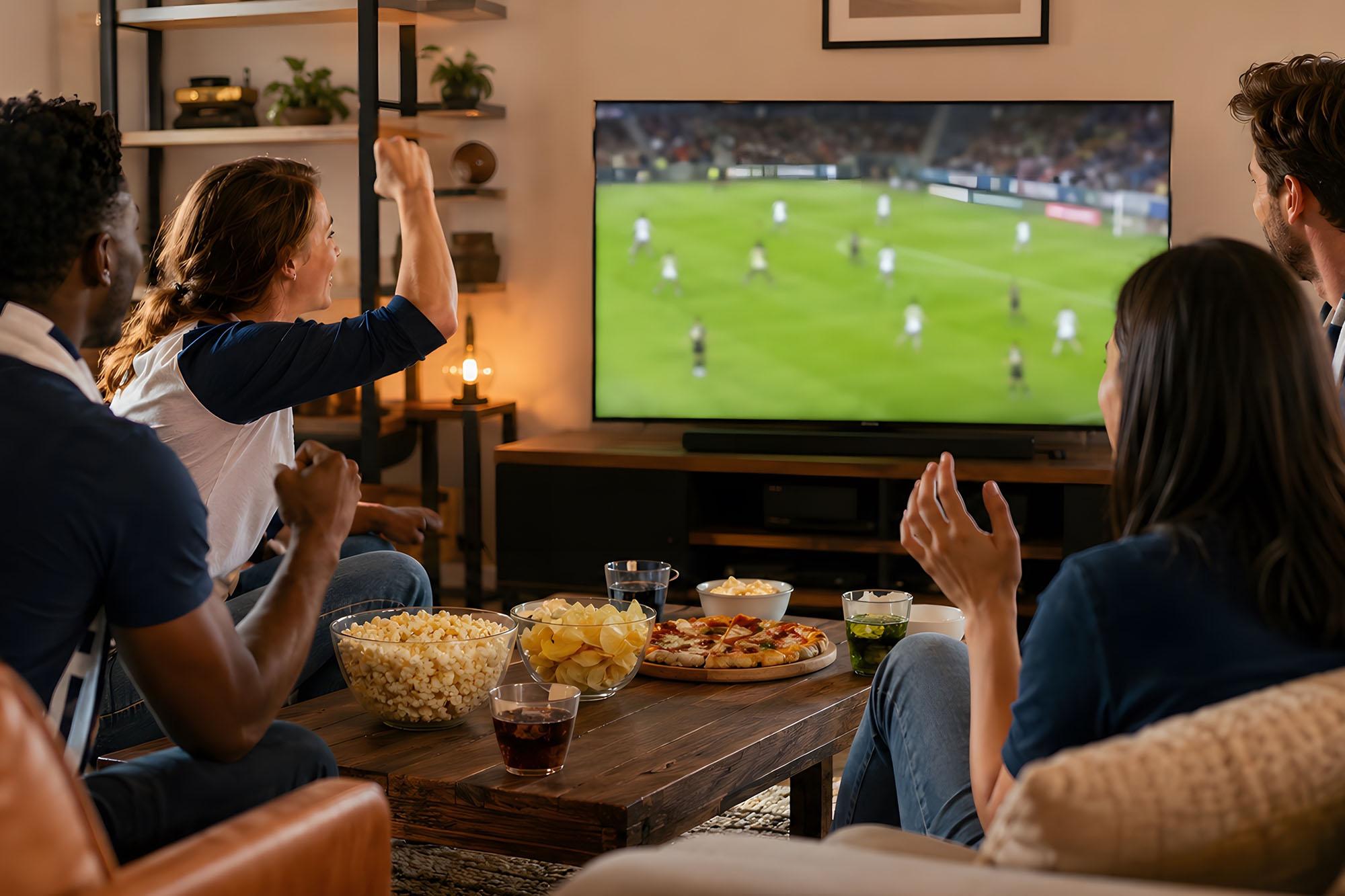
Unless you’ve sold your car for stadium tickets, you’re probably watching this summer’s football tournament at home. And if your TV isn’t ready for the beautiful game, it could be time to upgrade.
Football is one of the toughest tests for any TV and can quickly expose a bad picture. Fast-moving action, sunlight and multiple viewing angles pose real challenges that less advanced TVs struggle with.
OLED and QLED TVs are both great options, but are better suited for different situations. If you're not sure which one is best for you, here's what you need to know.
OLED vs QLED for football
Let’s tackle the basics first. What are OLED and QLED TVs? And what’s the difference between them?
OLED – A type of TV where each pixel creates its own light. This gives you really deep blacks, sharp contrast and a picture that looks great from almost any angle. This makes them ideal for hosting watch parties.
QLED – Uses a special layer of Quantum Dots to boost brightness and colour. They’re well suited for watching football in the daytime or in rooms that get lots of natural light.
For a more in-depth comparison, check out our guide to OLED vs QLED.
What football reveals about your TV
Football games are fast, bright and full of action, so they’re the best test of what your TV can handle.
Motion handling
Poor motion handling can results in a blurry ball and makes it hard to keep track of the play. A TV with strong motion processing and a 120Hz refresh rate is key if you watch loads of sport. A 120Hz refresh rate means the TV can update the picture 120 times per second. This helps football look smoother during fast moments and long camera pans across the pitch.
Brightness and glare control
Sunlight on your TV screen can wash out the picture and make it look dull. TV brightness is measured in nits – the higher the number, the brighter the screen. TVs with higher brightness levels and anti-glare technology makes sure the image stays clear and vibrant. It’s best to aim for TVs with between 1,000-1,500 nits for bright indoor rooms. But, for outdoor TVs, 2,000-3,000+ nits is a better fit.
Viewing angles
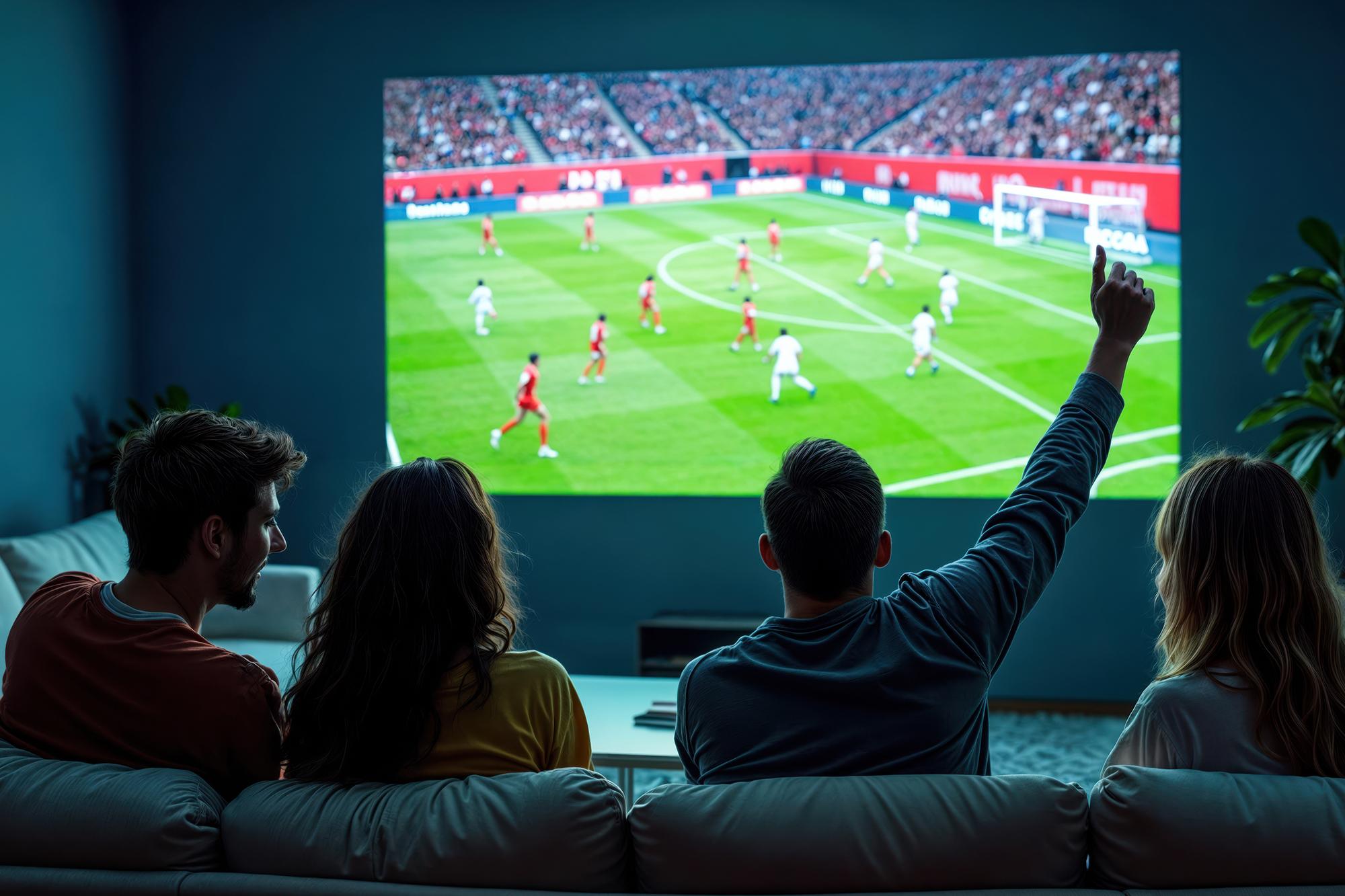
Some TVs lose colour accuracy if they’re watched from an angle. If you plan on having lots of people round to watch the games, OLED TVs make sure all viewing angles are clear. Every pixel creates its own light and colour, instead of relying on a separate backlight. That means the picture holds onto its contrast and colour accuracy, no matter where you’re viewing from.
For more advice on how to kit out your viewing parties, check out our guide on TV tech for watching sport.

OLED for football: when it's the best buy
OLED TVs have sharper colours, look great from all angles, and make evening games look more striking. They use self-lit pixels, which gives them better control over the colours. The result is stronger contrast, with deep blacks, bright highlights and high detail in darker areas of the picture.
And the self-lit pixels mean you won’t miss out on any details when everyone’s crammed into the lounge. You’ll get clear colours and details whether you're sat directly in front of the screen or off to one side.
Check out our range of OLED TVs to find your match.
QLED for football: when it's the smarter choice
QLED TVs are the better option if your home gets lots of natural light. They have high brightness levels, which helps the picture stay clear, even in direct sunlight. While that might not be as much of an issue with this summer’s later kick-offs, it’ll make all the difference when weekend fixtures return.
Many of the best sport-focused TVs use Mini LED technology, also known as Neo QLED. These combine the brightness of QLED with more advanced backlighting, which helps improve contrast and picture precision.
Browse our range of QLED TVs to get a proper look at what’s on offer.
Recommended picks: OLED and QLED TVs for football
Best OLED all-rounder - LG C5 55" OLED evo
The LG C5 has self-lit pixels which have a seriously fast 0.1ms response time. This means no motion blur, so you can clearly follow every quick pass and rocket-powered shot.
Plus it’s advanced α9 AI Processor improves the picture quality while you watch. Resolution, colours and on-screen text are all adjusted in real time, meaning you’ll get the best view of what’s going on.
Best OLED for watch parties – Samsung S90F 55"
The Samsung S90F has wide-viewing angles, making it perfect for watching with a bigger group. You won’t notice any difference in colour or brightness if you’re sat to the side, so everyone gets a great view of the game.
AI Motion Enhancer Pro detects and fixes motion blur in real time. It picks up when a ball or player is moving quickly and smooths it to prevent stutter and make it look more natural.
Best QLED for bright rooms – Samsung QN90F 50" Neo QLED
If your room gets lots of light, Samsung QN90F’s strong Glare Free technology keeps the screen bright. It reduces annoying reflections even when exposed to direct sunlight. Paired with powerful brightness that cuts through harsh sunlight, you won’t need to close the curtains to get a good picture.
Best big-screen bright-room option – Sony BRAVIA 9 75" Mini LED
The Sony BRAVIA 9’s Mini LED backlight is seriously bright which helps the picture stay vibrant even during daytime viewing. Sony's advanced picture processing makes fast-moving football action look smooth and detailed, so it’s great for bigger living rooms with lots of people.
Need more info?
For more helping choosing the perfect telly, check out our TV buying guide.

FAQs
Is OLED or QLED better for watching football?
Both are great options. OLEDs generally have better contrast and are better for wide angle viewing. QLEDs are better for keeping a clear picture in sunny rooms. The right choice mainly depends on the room you’re watching in.
If you watch football in a bright room, should you avoid OLED?
Not necessarily. Modern OLED TVs can still produce a great picture in bright spaces. However, if you plan on watching mostly during the daytime, a bright QLED or Mini LED model gives you a more comfortable watch.
Do OLED TVs reduce motion blur in fast sport?
OLED TVs are known for their excellent motion performance thanks to fast pixel response times. Combined with good motion processing, they make watching sports incredibly clear.
What refresh rate do you need for football: 60Hz or 120Hz?
A 120Hz panel is generally better for sport. There’s smoother movement, particularly during rapid camera pans and fast-paced moments of play.
Does screen size matter more than OLED vs QLED?
In many cases, yes. Moving from a 55-inch TV to a 75-inch TV will make matchday way more immersive.
How do you set up your TV picture for football?
Start by turning on your TV's Sport mode (if it has one). Adjust the brightness to suit your room conditions and switch off any unnecessary picture processing if the motion looks unnatural.
Is a Mini LED or Neo QLED a good alternative to OLED for sport?
Absolutely. Mini LED and Neo QLED TVs combine high brightness with improved contrast control, making them some of the best options to watch in bright rooms.