

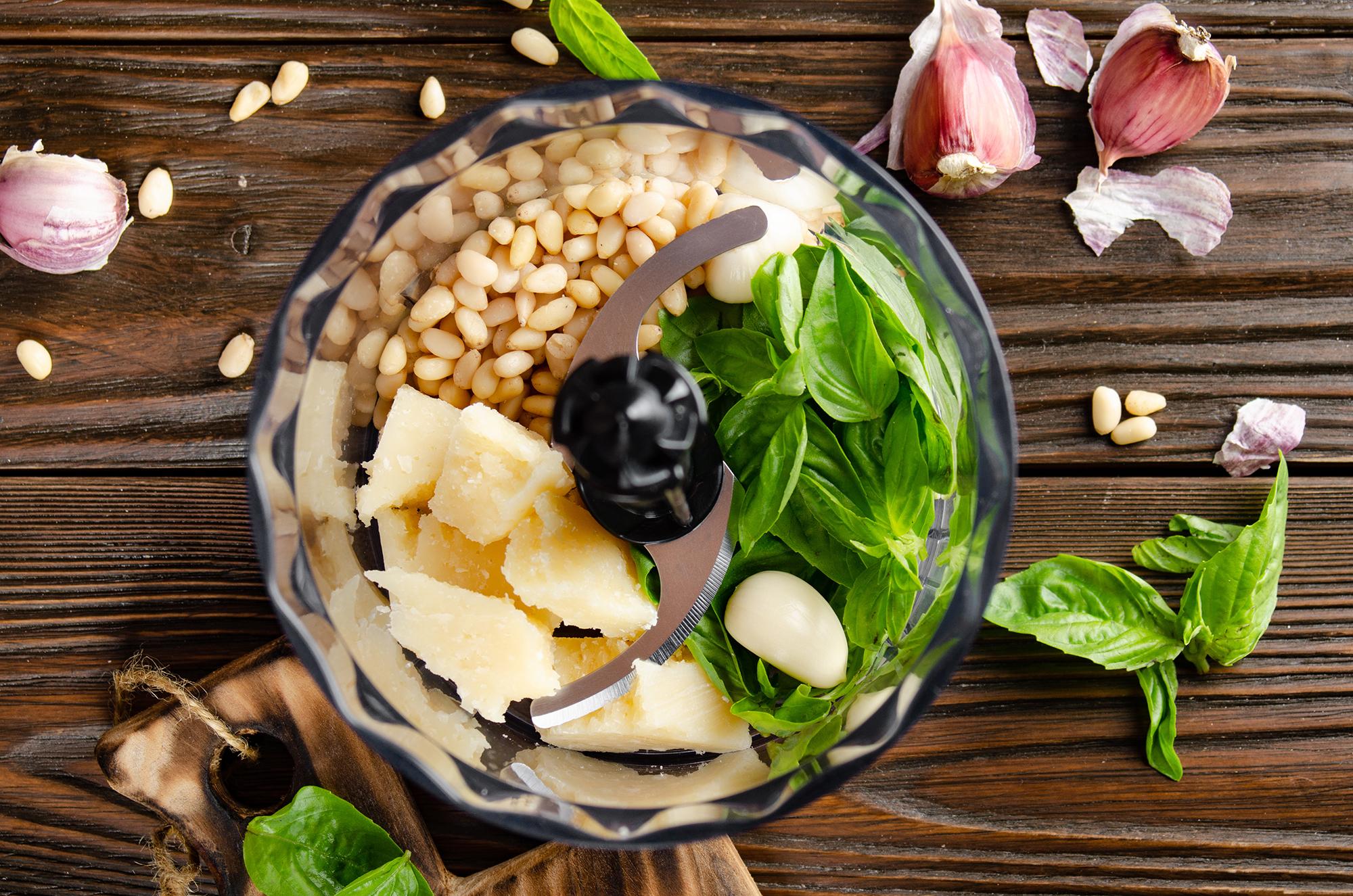
A food processor is a must-have kitchen appliance that takes the slog out of prep – from slicing veg to whisking eggs. Evening time is in short supply and chopping, slicing and grating ingredients by hand can easily add 15–20 minutes to dinner prep. A food processor takes care of the repetitive bits so you can get food on the table faster.
So, here’s our quick guide to what they do and how to use one.
What is a food processor?
A food processor is a motorised kitchen appliance that automates labour-intensive food prep, like dicing onions, pureeing tomatoes and even kneading dough. Here are the parts you need to know…
Base unit - motor with speed controls and pulse button
Work bowl - clear container locking onto the base
Feed tube - chute for adding ingredients
S-blade - flat, double-edged attachment for chopping
Disc attachments - removable blades for slicing and grating
What does a food processor do?
It chops vegetables, onions, herbs and nuts in seconds. Food processors dice vegetables with a dicing blade and can shred cheese and chicken. They can mince small amounts of boneless meat, although dedicated meat grinders produce more consistent results. They’re pretty good at blending thick mixtures, but for silky smoothies a blender is better. See our guide on a blender or food processor for a smoothie.
Some food processors can whisk eggs, whip cream and crush ice when fitted with the appropriate attachment. But a blender often does it better.
| Task | Can it do it? |
|---|---|
| Chop onions | ✅ Yes |
| Slice vegetables | ✅ Yes |
| Grate cheese | ✅ Yes |
| Shred chicken | ✅ Yes |
| Make pastry | ✅ Yes |
| Knead dough | ✅ Yes |
| Blend smoothies | ⚠️ Sometimes |
| Crush ice | ⚠️ Some models |
| Juice fruit | ❌ No |
| Grind coffee beans | ✅ Occasionally |
What’s the difference between a food processor and a blender?
Food processors aren’t the same as a blender. Food processors have wide work bowls, flat S-blades and slicing discs. Jug blenders have narrow pitchers with small bottom blades that rely on a liquid whirlpool for silky-smooth textures.
| Feature | Food processor | Blender |
|---|---|---|
| Bowl shape | Wide and shallow | Narrow and tall |
| Blade type | Flat S-blade plus discs | Small fixed blades at base |
| Best for | Chopping, slicing, grating, kneading | Smoothies, soups, liquid blends |
| Needs liquid? | ❌ No | ✅ Yes |
Can you use a food processor as a blender?
Yes, for thick pestos and hummus, but not for smoothies.
Can you use a blender as a food processor?
No. The narrow base turns vegetables into mush rather than giving you even, textured cuts.
Food processor vs blender
Use a food processor when the job involves:
Preparing lots of vegetables
Making pastry dough
Grating large amounts of cheese
Batch cooking sauces
Making dips such as pesto or hummus
Use a blender when:
Making smoothies
Blending soup smooth
Crushing ice for drinks
Mixing liquid ingredients
Does an immersion blender or stand mixer work like a food processor?
Not quite. An immersion blender purees soups and a stand mixer kneads dough, but neither replaces the slicing or grating discs.
How to assemble a food processor: step-by-step
Place the base on a flat surface, switched off and unplugged, then lock the work bowl onto the base. Most click into place with a twist.
Insert the drive shaft, then slot your blade or disc onto it.
Add ingredients through the feed tube before locking the safety lid. The machine won’t start until secured.
Process your food. Use pulse for short bursts, or continuous speed for longer tasks.
Switch off and unplug, then clean the blade in warm soapy water or the dishwasher if dishwasher-safe.
Tech tip: For pastry, use short bursts of the pulse function. This combines butter and flour without overworking the dough.
What to look for when buying a food processor
When shopping for a food processor, keep these in mind:
Power - at least 600W for tougher ingredients.
Bowl capacity - 1.5 litres for a couple, 3 litres plus for families.
Dishwasher-safe parts make cleaning easy.
Attachments will let you take on more cooking tasks.
Can a food processor be repaired? In most cases yes. Motors and blades can often be replaced, so look for brands that offer spare food processor accessories. For our top picks, check out our round-up of the best food processors.

What can I use instead of a food processor?
Not every task needs a food processor. For smoothies, a juicer or blender is better. For baking, a stand mixer handles heavy dough. Get more tips with our guide to getting your bake on with the best food mixers.
For fresh juice, a drink maker serves you better. For coffee, a coffee grinder gives a more consistent grind.
Most juicers can't replace a food processor because they're designed to extract liquid rather than chop, grate or slice ingredients. For small jobs, a mini chopper is a compact alternative.
Is a food processor worth it?
A food processor is worth it if you regularly chop vegetables, bake or batch cook. It can save significant preparation time and reduce repetitive kitchen tasks, making cooking from scratch quicker and easier.
Ready to get prepping?
A food processor takes the effort out of the tasks that slow you down - from grating cheese to kneading pastry without sticky fingers. Shop all food processors or check out our Small kitchen appliances buying guide.
FAQs
Is a food processor good for chopping vegetables?
Yes, a food processor is excellent for chopping vegetables. The S-blade chops onions, garlic and carrots quickly and evenly, saving you from tedious knife work. For precise cuts or small quantities, a knife gives more control.
Can a food processor grind coffee beans?
A food processor can grind coffee beans in a pinch using the pulse function in short bursts. The grind won’t be as consistent as a dedicated coffee grinder, so for your daily brew a proper grinder is better.
Can a food processor make ice cream?
A food processor can make no-churn ice cream by blending whipped cream with condensed milk and flavourings. It can’t churn or freeze like an ice cream maker, but it’s great for combining ingredients for a simple dessert.
Can a food processor go in the dishwasher?
Most food processor bowls, lids and blades are dishwasher-safe, but always check the manufacturer’s instructions. The motorised base should never go in the dishwasher. Wipe it with a damp cloth instead.
Is a NutriBullet a food processor?
No, a NutriBullet is a personal blender for smoothies and liquid blends, not a food processor. It lacks the slicing and grating discs that define a food processor, so it can’t handle dry chopping or shredding.