

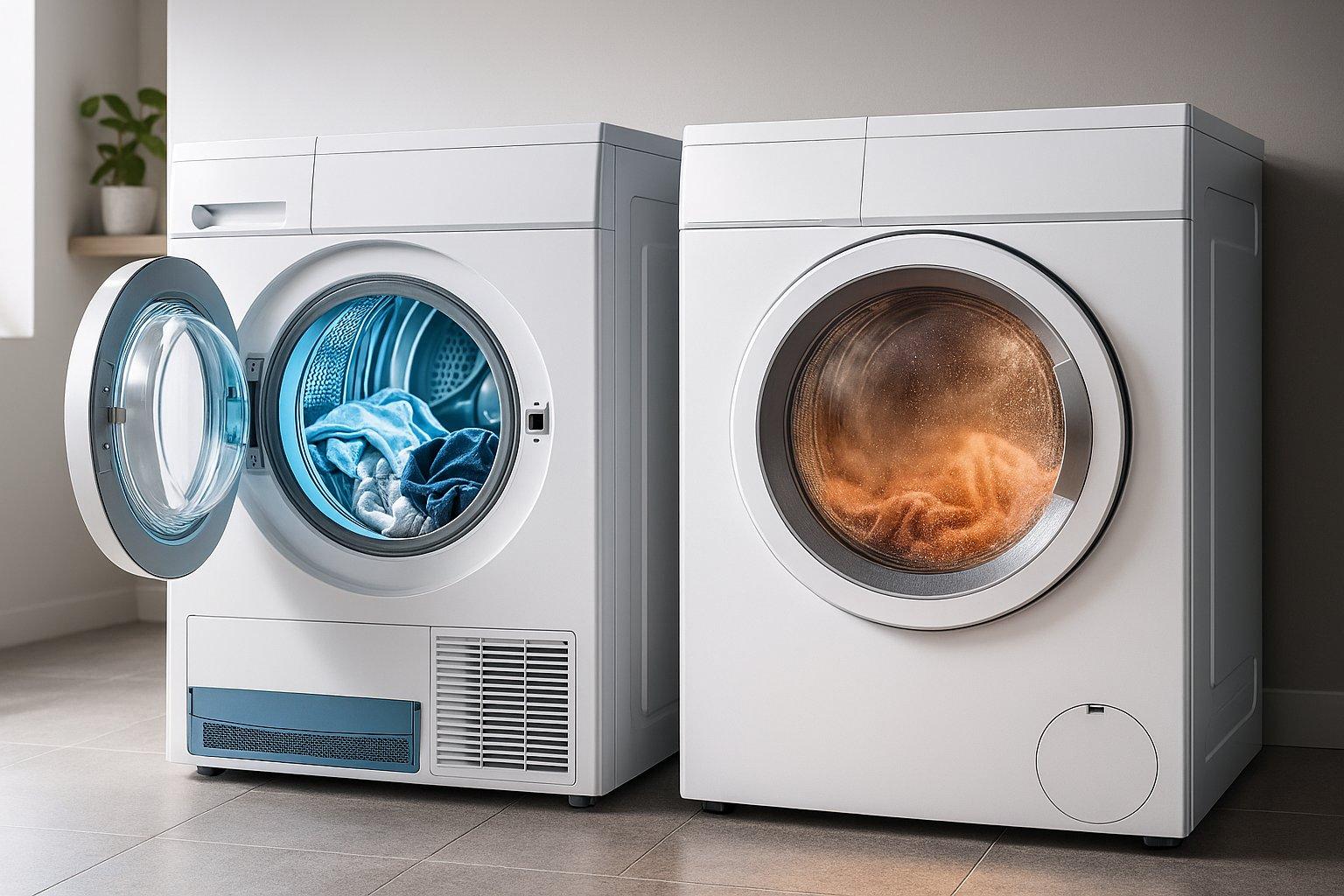
If you’re in the market for a new tumble dryer, you’ve probably noticed two main types: condenser dryers and heat pump dryers. Both are ventless, both collect moisture in a tank and both promise convenience. But when it comes to energy savings, which one really wins?
With UK energy prices still high and rising in 2025, this choice matters more than ever. Let’s break down the differences so you can make the best decision for your home and your wallet.
What is a condenser tumble dryer?
Condenser dryers are a bit more traditional. They use a heating element to warm air, which passes through your clothes and removes moisture. That moisture is condensed into water and collected in a reservoir (or drained away if you plumb it in).
Do you need external venting? Nope - just plug it in and go.
Energy rating? Most condenser dryers sit around B rating, which means they’re no slouch but less efficient than heat pump models.
Pros:
Lower upfront cost
Faster drying times
Cons:
Higher running costs
Hotter drying temperatures (can be tougher on fabrics)
If you’re curious about the mechanics, check out what is a condenser tumble dryer? Or skip the explainer and browse condenser tumble dryers.
What is a heat pump tumble dryer?
Heat pump dryers are the energy-saving champions. Instead of blasting hot air, they use a closed-loop system that recycles warm air whilst running at a lower temperature - around 50°C instead of the standard 70–75°C.
And that means…
They use up to 60% less energy than a condenser dryer
Gentler on clothes, so fabrics last longer
Lower carbon footprint
The trade-off? Heat pump tumble dryers usually cost more upfront, and clothes can take a little longer to dry. But if you use your dryer often, the savings can add up fast.
Check out our full range of heat pump tumble dryers.
Heat pump vs condenser dryers: key differences
Here’s a quick side-by-side comparison:
| Feature | Condenser Dryer | Heat Pump Dryer |
|---|---|---|
| Drying Method / Mechanics | Uses a heating element to warm air which passes through laundry, moisture is condensed into a reservoir. | Uses a heat exchanger + refrigerant system to recycle warm air and condense moisture at lower temperature. |
| Upfront Purchase Cost | Lower | Higher (premium models) |
| Drying Time | Usually faster (e.g. 150 mins for Bosch Series 4) | Sometimes slower (e.g. 178 mins for AEG Sensidry) |
| Heat / Temperature Impact | Higher temperatures (70-75°C); faster but harsher on fabrics | Gentler drying (max ~50°C); better for delicates and fabric longevity |
| Noise Level | Moderate | Moderate to slightly quieter depending on model |
| Ventilation / Installation | Doesn’t require external venting; just a power point | Same - no venting needed |
| Condensate Handling | Collects water in reservoir or plumbed drain | Also collects condensate or plumbed drain; sometimes more efficient condensation |
| Maintenance Costs | Filter cleaning, reservoir upkeep | Filter cleaning, periodic heat exchanger check |
| Suitability | Good for occasional or budget-conscious users | Best for frequent use, energy-conscious buyers, smaller homes |
| Long-Term Value | Lower upfront cost, higher energy use | Better ROI over time via energy savings (e.g. £88/year vs £209/year) |
Best heat pump dryer picks
Miele T1 EcoSpeed TWH780 WP
Premium build with A+++ energy rating, EcoDry and PerfectDry tech for efficient, gentle drying. Tested for 20 years of use—ideal for long-term savings.
Bosch Series 6 WQH246D9GB
Smart, energy-efficient drying with self-cleaning condenser and AutoDry sensors. WiFi-enabled for easy control via the Home Connect app.
Samsung Series 5 AI Energy DV90CGC0A0ABEU
AI-powered drying that cuts energy use by up to 20%. Quick Dry and app control make it perfect for busy, tech-savvy households.


Best condenser dryer picks
Hotpoint C HD C82
Dry clothes fast with Hotpoint’s Rapid 30 cycle — just 30 minutes and you’re done. Need a quick refresh? The Refresh function banishes musky smells so your favourite top feels like new. Plus, Delay Start lets you time your cycle to suit your schedule.
Beko DTKCE80021W
Sensor drying stops cycles when clothes are ready, while Anti-Creasing keeps laundry smooth. A solid choice for small households.
Indesit C YD C82
Indesit’s Iron Dry Mini gets two shirts ready fast, while Xpress cycles dry clothes in just 10 minutes. Sensor Dry stops early to save time and energy, so no more over-dried outfits.


So, if you’re asking which saves more energy, the answer is clear: heat pump dryers win hands down.
Which one is right for you?
Here’s a quick guide:
Budget buyers: Condenser dryer (cheaper upfront)
Large families: Heat pump dryer (saves more over time)
Small flats: Heat pump dryer (cooler, no steam)
Occasional users: Condenser dryer (cost-effective if rarely used)
Environmental concerns: Heat pump dryer (uses less energy)
Final verdict: which should you choose?
If energy savings matter most → Heat pump dryer
If you’re on a tight budget upfront → Condenser dryer
If you want eco-friendly + gentle drying → Heat pump dryer
FAQs
Are heat pump tumble dryers cheaper to run than condenser dryers?
Yes - by a big margin. Heat pump dryers use a closed-loop system that recycles warm air, so they consume up to 50–60% less energy than condenser dryers. On average, a condenser dryer costs around £209 per year to run, while a heat pump dryer costs about £88 per year (based on UK energy prices for 2025). If you use your dryer regularly, those savings add up quickly.
Do heat pump dryers take longer to dry clothes?
Generally, yes. Heat pump dryers work at lower temperatures (around 50°C), which is gentler on fabrics but means drying can take a little longer—think 20–30 minutes extra per cycle compared to a condenser dryer. The upside? Your clothes last longer because they’re not exposed to harsh heat.
Can I put a heat pump dryer in a garage or cold room?
It’s not ideal. Heat pump dryers rely on a heat exchange system, and very cold environments can affect efficiency and drying times. If your garage is unheated and drops below 10°C, you might notice slower performance. For best results, place the dryer in a room that stays reasonably warm.
Do condenser dryers cause damp?
Not if they’re working properly. Condenser dryers collect moisture in a tank or drain it away, so they don’t release steam into the room like vented dryers. However, if the door is left open during cycles or the seals aren’t tight, you might get some humidity. Regular maintenance helps prevent this.
Are heat pump dryers worth the extra cost?
If you use your dryer often, absolutely. While heat pump models cost more upfront, they pay for themselves over time through lower energy bills. They’re also better for the environment and gentler on clothes—so if you value long-term savings and fabric care, they’re a smart investment.
Which type of dryer is best for large families?
Heat pump dryers win here. Large households do more laundry, so energy efficiency matters. Even if drying takes a little longer, the savings on electricity and the protection for clothes make heat pump dryers the better choice for frequent use.
Do I need to plumb in a heat pump or condenser dryer?
No plumbing required. Both types collect water in a reservoir that you can empty manually. Many models also offer the option to connect a drain hose for convenience, but it’s not mandatory.
Need more help?
If you like to do your own research, our Tumble drying buying guide should break down everything you need to think about when buying a new machine. Or if you prefer a conversation, either pop in-store or talk to a Tech Expert on ShopLive.