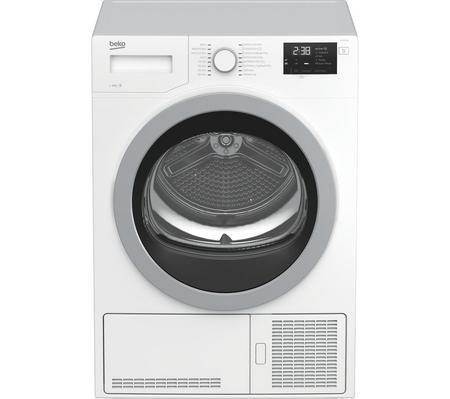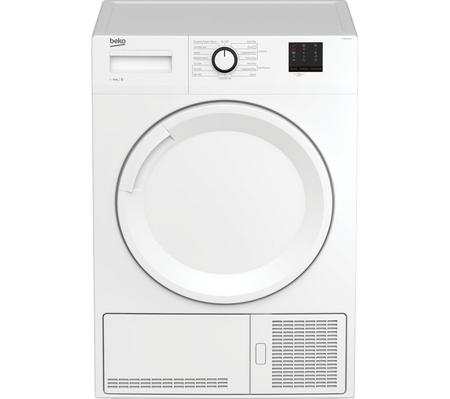


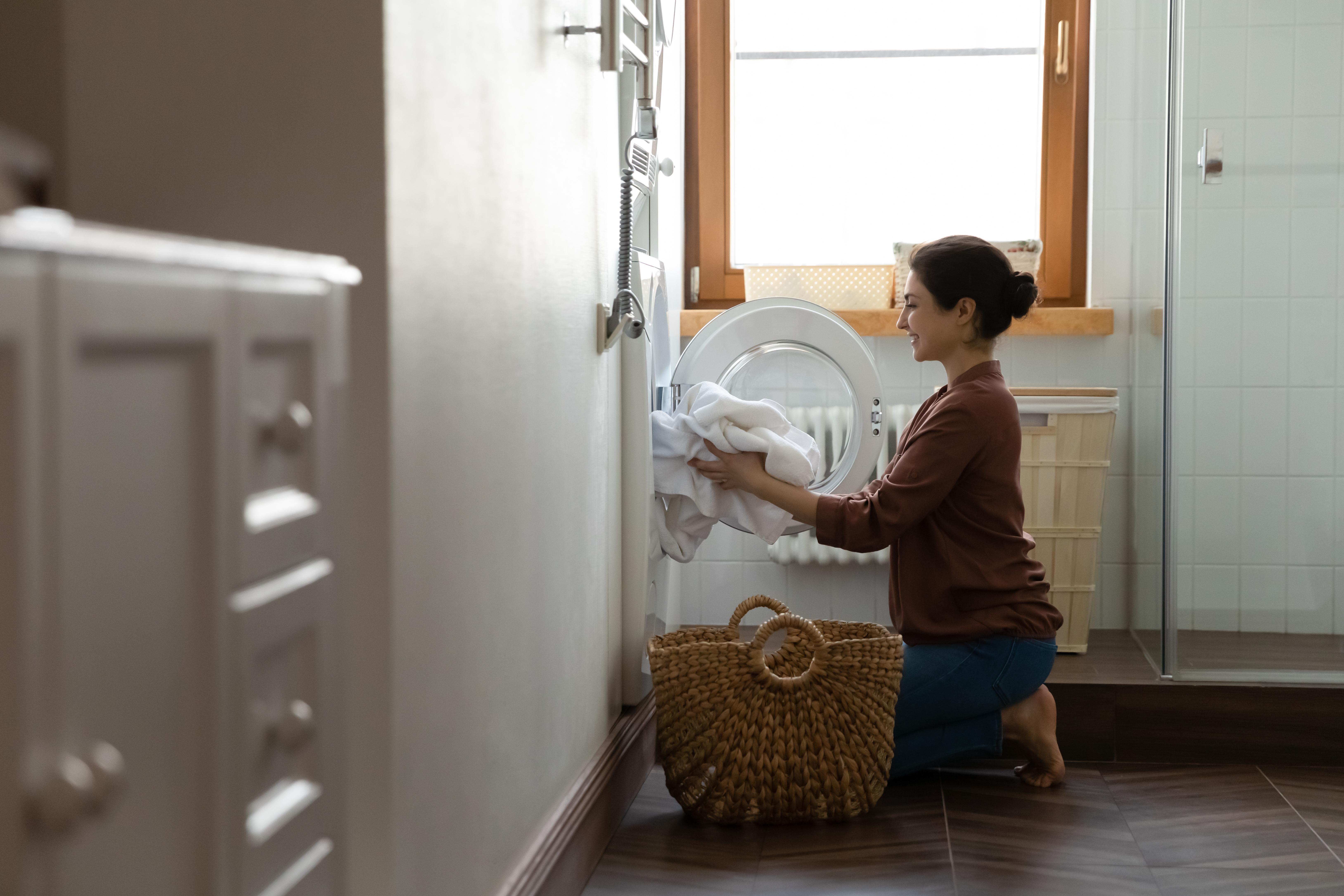
Looking for a tumble dryer but not sure where to start? We’ve got you. Laundry appliances aren’t an everyday purchase, and all the jargon can make things a bit complicated.
The first thing you’ll see when looking for a tumble dryer is that there are three main types: vented, heat pump and condenser. So what’s the difference? Vented tumble dryers remove all the moisture they collect through a hose that leads outside. In other words, you’ll need a decent space to place it near a window or door.
Heat pump tumble dryers separate the water from the warm air circulating in the drum. They then re-pump the air back in to dry your clothes faster. Condenser tumble dryers collect the water vapour in a container, so they’ll need emptying. But that also means you can place them virtually anywhere at room temperature. That makes them ideal for homes where it's difficult to vent a dryer to the outside. They’re pretty good for the environment too.
Plus, once you know how to maintain your condenser dryer, you’ll get great results every single time. Easy. We’ll show you how:
How does a condenser dryer work?
Condenser tumble dryers remove humidity using two separate airflows. Air re-circulates inside the machine and is heated, then it’s passed through the damp clothes where it picks up the moisture.
The damp air is then passed through the condenser in one direction while the room air is passed through the condenser in the other. This causes the moisture in the air to condense into water - which is then pumped to the water tank, or out through the hose (if you choose to have the dryer plumbed in).

Sensor drying
Most new condenser tumble dryers feature sensor drying technology. That means instead of a simple timer, where you choose how long the cycle lasts, the dryer is smart enough to know exactly when the clothes have reached the optimal dryness level.
Sensor dryers have different cycles to suit the fabrics you’re drying. Many dryers have a load of different cycles for jeans, cottons, towels, and even for laundry that’s going to be ironed. The sensors know exactly when to stop, which keeps your clothes good as new and your energy bills low.
What about any extra humidity?
Ideally, you should fit a condenser dryer in a well-ventilated room that lets some of the warm air escape. The air from the dryer can raise the room temperature and condense air moisture onto cold surfaces like walls and windows. If the air can circulate around the room, that shouldn’t happen.

Is the lint/dust filter clean?
Make sure to clear out the lint after each cycle. Around 70% of the wear on clothes is due to general wear - but 20% is from washing, with the remaining 10% attributed to drying. Removing the lint every time means that hot air can escape, so the dryer won’t overheat.
How full is the water tank?
When the tank is full, your machine will interrupt the cycle to keep your tumble dryer running smoothly. So, be sure to empty the water after every cycle.

What fabrics are in your load?
Here’s a super useful tip - drying similar types of clothing together will help. If the load contains a mixture of cotton and synthetics, the synthetics will dry much faster than a cotton-only load. The sensors will also detect that the load is dry and finish the cycle. However, cotton clothes may still be damp.
What is the size of your load?
If the load is too large, you might not get the best results. A load that’s too big for the drum cannot be completely dried because there isn’t enough space for the air to circulate. That can also trip the overheating thermostat, so don’t rush to pile all your laundry in at once. You’ll know when there’s too much there.
Plenty of condenser dryers with sensor drying tech also have a timed cycle option. When you use this, the sensing circuit is disconnected. So, don’t leave your clothes to dry longer than they need!
How to use a condenser tumble dryer efficiently
To save some energy – and get the best results from your condenser dryer – here’s a few handy tips…
Don’t overload it – Your dryer needs space to tumble clothes properly. If it’s too full, things won’t dry evenly.
Spin clothes first – Before drying, make sure your washing machine has done a good spin. The drier the clothes go in, the less time they’ll need in the dryer.
Clean the filters – After every cycle, clean the lint filter. A clogged filter makes the dryer work harder and use more energy.
Empty the water tank – Most condenser dryers collect water in a tank. Empty it regularly so the dryer keeps running smoothly.
Use the right setting – Choose the right program for your clothes. Delicate fabrics need less heat, while towels need more.
These small steps can make a big difference in how well your dryer works, and how much it costs to run.
Condenser dryer vs. vented dryer: what’s the difference?
In the battle of the dryers, condenser and vented are the two big contenders. Here’s a quick breakdown…
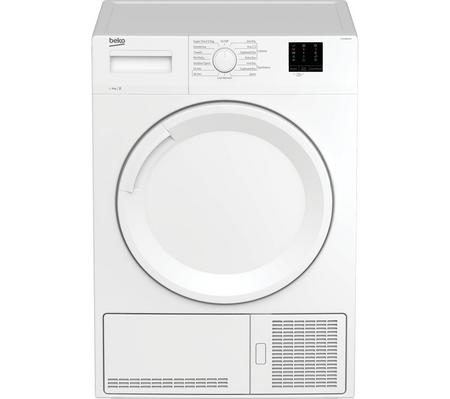
Condenser dryer – A condenser dryer collects moisture from your clothes and stores it in a water tank. You don’t need a vent or hose to the outside, so it’s great if you don’t have a window or wall vent nearby.
Vented dryer – These push hot, damp air outside through a hose. Meaning it needs to be put near a wall vent or a window. They usually dry clothes a bit faster and use slightly less energy too.
In short - no vent? Go for a condenser dryer. Want faster drying and have a route to the outside? A vented dryer is probably the better option.

Where should you place a condenser dryer in your home?
One of the best things about a condenser dryer is that you can put it almost anywhere. But here’s some suggestions on how to find the best spot:
Flat, stable surface – Pop the dryer on a level floor. That way, it won’t shake or move about when it’s on.
Good airflow – Even though it doesn’t need a vent, it still needs some space around it to breathe. Don’t cram it into a tight cupboard!
Easy access to a plug – An obvious but important one. Like any appliance, it needs electricity. So, place it near a power socket.
Somewhere you can empty the tank – You’ll need to remove and empty the water tank every so often. If it’s not easy to reach, this’ll be a pain – so, make sure you can actually get at it.
Even if you're used to using a vented dryer for years, it only takes a few simple adjustments to adapt to condenser drying. Give it a go - you won’t regret installing one.
And make sure to visit ShopLive too. Our in-store experts can give you a load of great info on all things tumble dryers. And you won’t even have to leave the sofa to get it.