

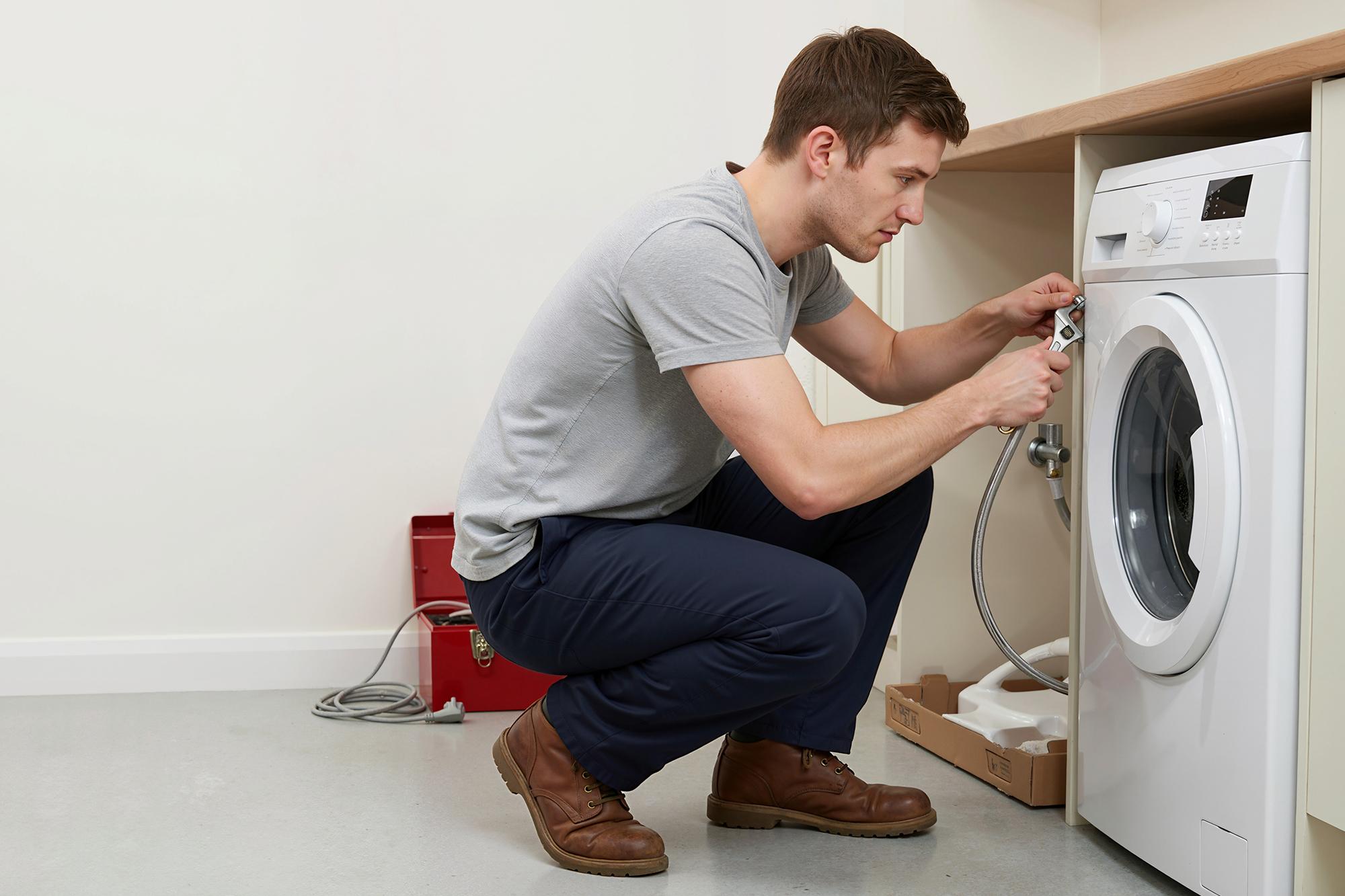
Got a new set of laundry appliances on the way? There’s good news – installing a washing machine and tumble dryer is often a lot easier than you think. With a bit of care (and the right set of tools), most people can manage to do it themselves. That said, if you’d rather not end up with a load of leaks or faults from the off, our experts can install new tech in your home for you!
Preparing your home for installing a washer and dryer
Before you start tearing open that big cardboard box, make sure your place is good to go. A little bit of prep now will save you a lot of hassle later on…
Check your connections – You’ll need a cold-water supply, a waste pipe connection and a power socket within easy reach of the machine.
Measure up – Grab a tape measure to see if the new appliance will fit your space. You’ll have to include enough room for hoses and proper airflow too.
Unplug the old appliance – Unplug it from the mains first. Then turn off the water, pull it away from the wall and start to unhook any pipes.
Look out for spillages – There might be excess water from the tap. So put a bucket or cloth underneath to pick up any spare drops.
Clear the area – Get rid of your old appliance and give yourself some space to work safely. We can even remove and recycle them for you if you want.
Look at the flooring – A flat, solid floor helps to stop the machine from moving about when it’s running. And it’ll also mean less noise.
Access matters – Think about how you’ll get the appliance into position. Tight corners can be tricky. And washers and dryers aren’t exactly light.

Is it easy to install a washing machine yourself?
The short answer is yes – if you’re confident with basic DIY. And have a toolbox with all the right gear to get the job done.
Most freestanding washing machines are designed to be fairly easy to set up. If you can follow instructions and tighten up a hose, you’re probably alright to crack on yourself.
Here’s a quick rundown of what’s easy to get fitted, and what’s not…
Beginner-friendly – Freestanding washers and condenser dryers.
Trickier installs – Integrated models, stacked units or vented dryers.
If you’re unsure, or just short on time, calling in the pros can save you a whole lot of stress. Plus, you’ll avoid making any potentially costly mistakes.
How to install a washing machine
Let’s run through how to get your new washing machine up and running:
Unpack and position – Carefully remove the packaging and slide the machine into place. Remember to leave some space at the back for any hoses.
Remove transit bolts – These bolts hold the drum in place while it’s being delivered. Unscrew them and keep them somewhere safe in case you decide to move the machine later on.
Connect the cold water inlet hose – Attach one end to your washing machine and the other to the cold-water supply (the one with the blue tap). Then tighten it up but make sure you don’t completely over tighten it. Otherwise, it’ll be a pain to unscrew if you ever decide to replace your appliance. If you can, get yourself some pliers called a ‘mole grip’. They’ll make this step a lot easier.
Attach the wastewater drain hose – Hook the hose into a standpipe or connect it under the sink. Check that it’s secure and not kinked.
Level the machine – Adjust the feet with a spanner until the appliance is sitting flat (and double check with a spirit level). It’ll help to reduce noise and stops it from moving around during a cycle. If it’s wobbling all over the place, you could end up causing a lot of damage to the drum. To check if it’s going to move, try gently rocking it from opposite corners.
Plug in and test – Turn on the water supply. Then plug in the machine and run a quick cycle to check for leaks or other issues.
Get washing - Once that’s all done, congrats. Your washer is ready to tackle that huge stack of dirty clothes!
Tech tip: Washing machines and tumble dryers are very, very heavy. We’d recommend that you have another person to help when you’re shifting an old or new appliance around. Make sure not to push or pull them along the ground as you could scratch or rip your flooring.
How to install a tumble dryer
Now for the tumble dryer. Just follow these steps and it’ll be ready for a first load in no time:
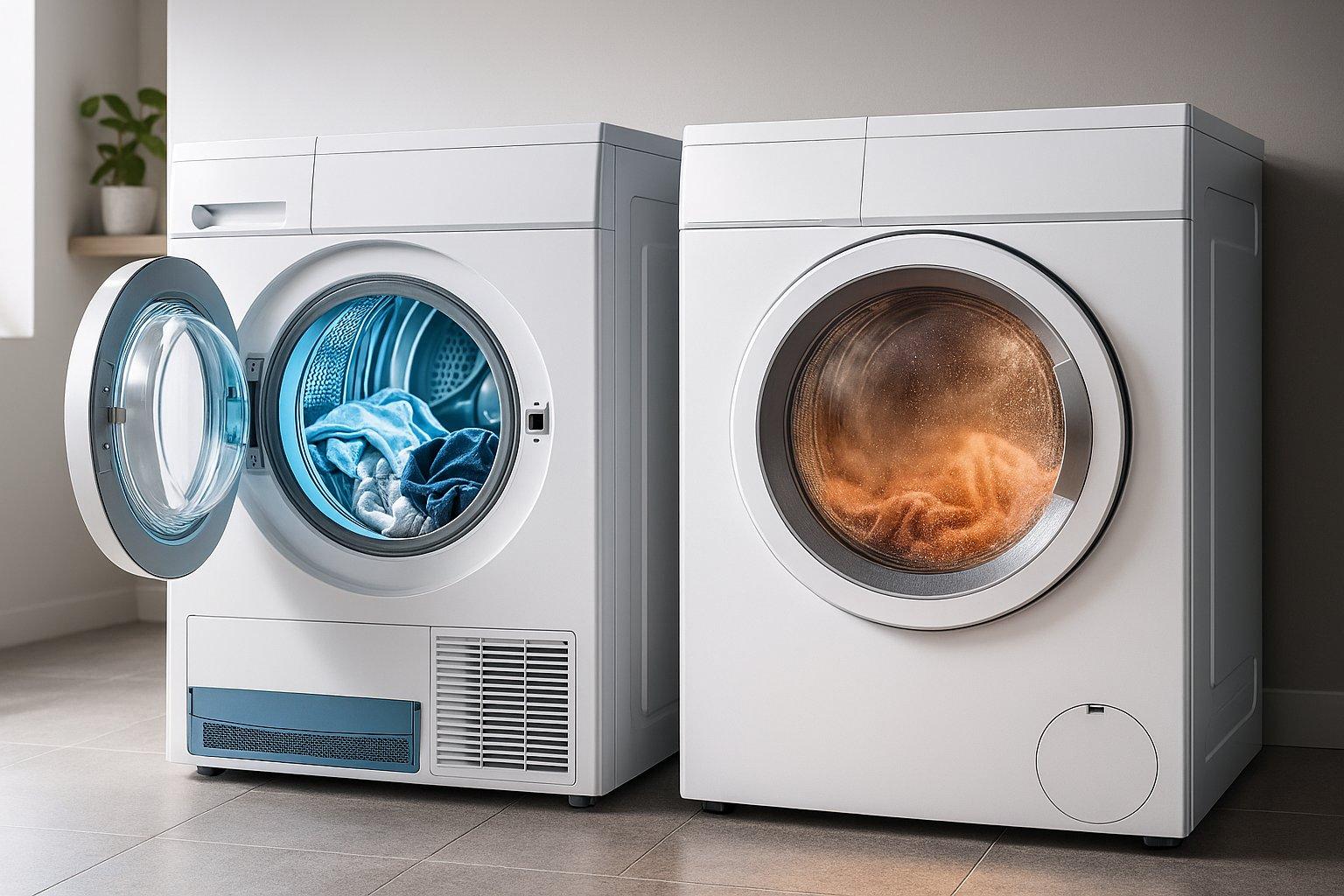
What dryer do you have? – Each kind has a slightly different setup. Vented models need a hose to vent air outside. Condensers collect water in a tank. While heat pump machines are the most energy efficient and don’t need a vent.
Remove all the packaging - Most tumble dryers have polystyrene inside to keep the drum from moving about when it’s transported.
Position your dryer – Pop it on a flat surface with enough space around it for ventilation.
Set up ventilation (if needed) – If you have a vented dryer, attach the hose and run it outside through a wall vent or window.
Prepare water collection (if necessary) – For condenser or heat pump models, make sure the water tank is fitted, or connected to a drain if that’s supported.
Plug it in and test – Switch it on and start a short cycle to see if everything is working properly.
Start drying - If there’s no issues, you’re ready to get drying.

Troubleshooting and repairs (when to call the pros)
We’ve all been there – even an install that seems pretty simple at first can quickly go wrong. Here’s some of the most common issues you might come across during and after a fitting…
Big or small leaks – Usually from loose hose connections.
The machine isn’t draining – Because of a blocked or incorrectly placed drain hose.
Lots of noise or movement – It’s likely that the machine isn’t sat level.
Dyer not drying properly – Due to poor ventilation or a full water tank.
If something seems off, or you’re dealing with electrics, plumbing or built-in units, it’s better to call a professional. They’ll always know what they’re doing. And it’ll save you time (and possibly money) in the long run.
FAQs
How do you plumb a washing machine waste pipe?
Connect the drain hose to a standpipe or waste connection (it’ll probably be under your sink). Check that the hose sits at the correct height to stop any backflow, then fit it firmly. This’ll prevent leaks and slipping while the washing machine is running.
How do you install a tumble dryer vent?
Attach the vent hose to the back of the dryer and guide it outside through a wall or window. Keep the hose straight and short to allow hot air to escape properly and stop moisture from building up indoors.
Do you need to install a heat pump tumble dryer?
That’s up to you. But heat pump dryers are generally the easiest to install. They don’t need external venting – so, you just put them where you want them, plug them in and make sure that the water tank is in place. Or at least connected to a drain if that’s supported.
How do you fit an integrated washing machine?
Slide the machine into your cabinet space. Then secure it with brackets and attach the cupboard door. You’ll still need to connect water and waste pipes, but lining everything up is key. Especially if you want that clean, built-in finish.
How do I attach a washing machine drain hose?
Push the hose firmly onto the outlet or secure it to your waste connection with a clip. Make sure there’s no kinks and that the hose sits at the right height. That way, you’ll avoid any poor drainage or nasty leaks.

Need more advice?
So, now you know how to install a washing machine and how to install a tumble dryer. Still haven’t bought either yet? Check out our washing machine buying guide and tumble dryer buying guide here. We’ll run you through everything you need to know before you buy.