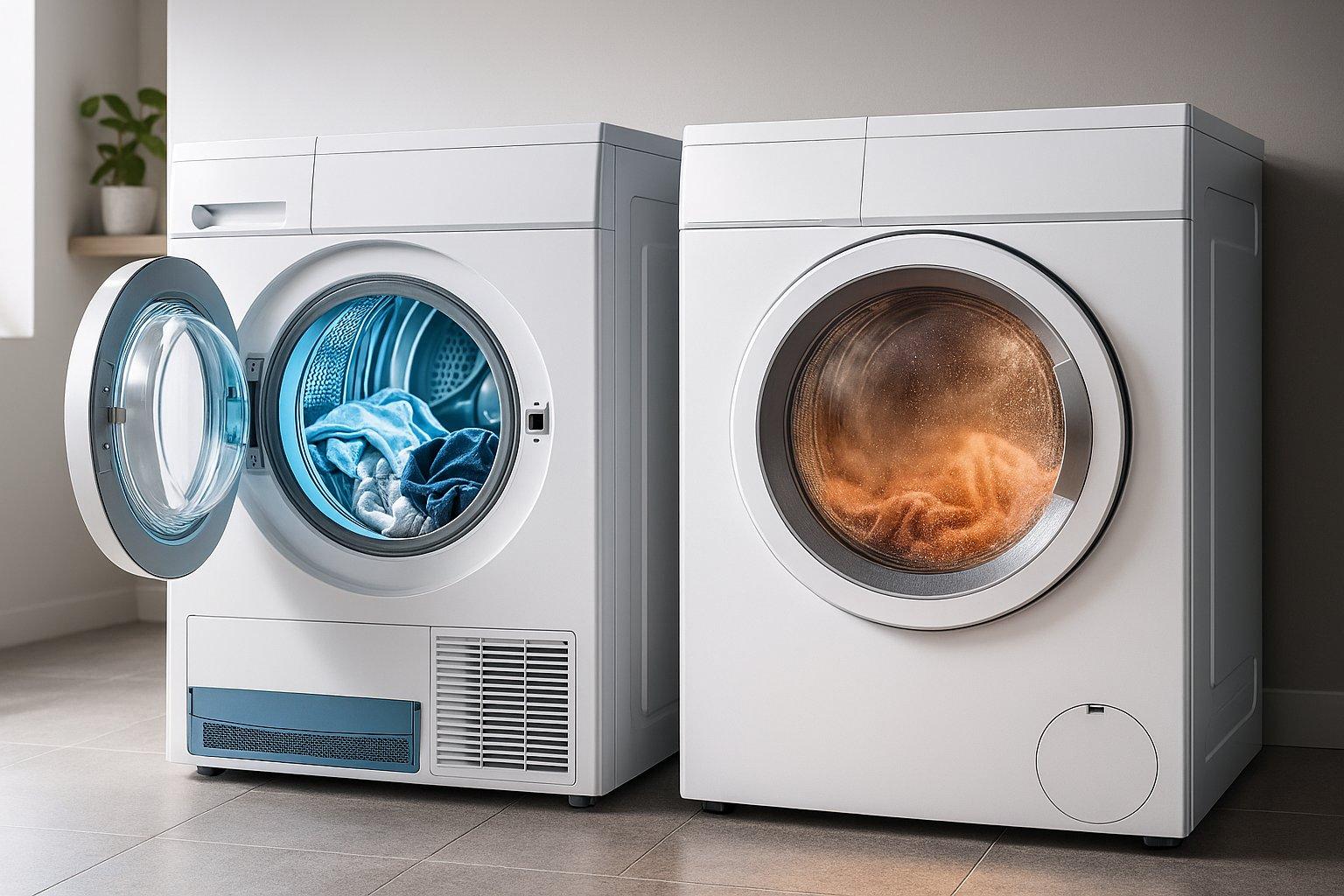


Here’s the thing that all tumble dryers share in common: they’re appliances that dry your clothes. With that out of the way, let’s talk about the differences.
So what’s the best type of tumble dryer? Let’s list them: heat pump, condenser and vented tumble dryers. Each type has its pros and cons. Heat pump tumble dryers are the most efficient but can have a higher upfront cost. Vented tumble dryers cost less initially but need to be hooked up to a pipe. But we’ll get into that.
This guide breaks down the different types of tumble dryer in plain English. giving you all the info you need to choose the right model.
Tumble dryer types explained: heat pump vs condenser vs vented dryer
Here’s the short version…
Vented dryers push hot, damp air outside through a hose
Condenser dryers collect water in a tank
Heat pump dryers recycle warm air for maximum efficiency
The good news is that all of these tumble dryer types are good at drying clothes. But the way they handle heat and moisture makes a big difference to installation, running costs and performance.
Here’s the more detailed version…
Vented tumble dryer
Vented tumble dryers are the oldest tumble dryer technology. In fact, the electric vented dryers we have now work similar to tumble dryers of the 1930s.
The principle remains unchanged. Vented dryers heat air, pass it through your clothes in the drum to remove moisture. Then the damp air is vented outside through a hose. And it works well!
Pros
Usually the most affordable upfront
Faster drying cycles
Simple, proven technology
Cons
Must be placed near a window or external wall
Less energy-efficient than newer designs
Installation can be restrictive
Best for: homes with easy outdoor vent access and buyers on a budget.
Condenser tumble dryer
Condenser tumble dryers came along starting in the 1970s. Since they don’t need external venting, this solved a problem for people in denser housing such as flats. Condenser dryers cool the moist air inside the machine, turning it into water that's collected in a removable tank.
You can learn more in our guide: what is a condenser tumble dryer. But if you just want to cut to the pros and cons, here they are…
Pros
No hose needed, so you can place it almost anywhere
Easier installation than vented dryers
Cons
Tank needs emptying (unless plumbed in)
Less efficient than heat pump dryers
Can release some warmth into the room
Best for: Flats or households that want more flexibility around where the tumble dryer’s stored.
Heat pump tumble dryer
If you’ve been thinking about switching to a heat pump tumble dryer you won’t be the only one. In fact, from 19 January 2027, only energy-efficient heat pump tumble dryers will be sold new in the UK.
The main reason for the law change is that heat pump tumble dryers are the most energy-efficient option. They work by recycling warm air already inside the drum – which dries clothes at lower temperatures and uses less electricity.
Pros
Lowest running costs
Gentler drying (great for clothes longevity)
No vent required
Cons
Higher upfront price
Longer drying times
Best for: energy-conscious households and anyone doing frequent laundry loads.
What is the best place to put a tumble dryer?
Placement depends on the type of dryer you choose:
Vented dryers:
· Near a window or wall vent
· Avoid tight cupboards (needs airflow)
Condenser dryers:
· Kitchens, utility rooms, or garages
· Ensure airflow to prevent heat build-up
Heat pump dryers:
· Flexible placement — even in smaller or enclosed spaces
· Works well in cooler environments like garages
General tips:
· Avoid damp or unheated extremes
· Keep space around the appliance
· Ensure a level surface
Freestanding tumble dryer meaning
A freestanding tumble dryer is a standalone appliance that isn’t built into cabinetry. It gives you maximum flexibility to position, move, or replace it — ideal if your layout might change or space is limited.
The alternative is a neat and sleek integrated tumble dryer. They’re obviously great if you want to slot your dryer discreetly into your kitchen set up - but expect to pay a bit more.
What type of tumble dryer is best for me?
The short answer: it depends on what you prioritise. Here’s how to decide:
Busy households: Heat pump dryers save money on your bills in the long-term
Smaller homes or flats: You can put condenser or heat pump models pretty much anywhere you like. Avoid vented if you can’t run a hose outside.
Tight budgets: Vented dryers keep upfront costs low, though are more expensive to run in the long term
Clothing care focus: Heat pump dryers use cooler temperatures so are gentler on your clothes
Space constraints: Consider a small tumble dryer or compact model
Ok, so that’s a lot of the practical information you need around types of tumble dryer. And you can jump into our tumble dryer buying guide if you want to dig a bit deeper and start exploring other features.
But if you’ve already decided on a tumble dryer type, here is a good example of each:


Best vented tumble dryer
Vented dryers may be the oldest tech of the three types, but they can still do a great job of drying. Even entry level models can come equipped with sensor drying and delay timers.
LOGIK 7 kg Vented Tumble Dryer
A well-reviewed choice (currently 4.5 stars from over 3,850 reviews) with:
4 programs handling everything from bed linen to delicates
Postpone your drying cycle by 3, 6 or 9 hours
1-hour quick drying cycles are handy for those hectic school mornings
Best condenser tumble dryer
Go for a condenser dryer and you will see running costs drop over a vented dryer. And you’ll get much more flexibility over where you can set up your dryer.
HOTPOINT C HD C82 8 kg Condenser Tumble Dryer
Another popular pick (currently 4.6 stars from over 1,500 reviews) with:
Rapid 30 half an hour drying cycle is very quick for a tumble dryer
15 drying programs includes Refresh – tackling musty clothes
Wool Care is great – especially over winter months
Best heat pump tumble dryer
Here’s where the energy savings get serious! Get a vented tumble dryer and you’re looking at a C energy rating. Go heat pump and you can bump that right up to A+++.
HISENSE 3S Series DH3S802BB3 WiFi-enabled 8 kg Heat Pump Tumble Dryer
This heat pump tumble dryer has a top rating for energy efficiency and currently a 4.9 from customers:
A+++ energy efficiency
Smart drying sensors
Allergy Care program uses hot air to take on bacteria, germs and other allergens.
Want to explore more tumble dryer options?
Whether you’re interested in a heat pump tumble dryer, a vented tumble dryer or a condenser tumble dryer, check out our Tumble dryer buying guide for loads more choice.
Installation advice
And when you get it home, find out how to install your tumble dryer or get one of our home installation experts on the case instead.
Tumble dryer FAQs
What are the 3 types of tumble dryers?
The three types of tumble dryers are vented, condenser, and heat pump. Vented dryers expel air outside, condenser dryers collect moisture in a tank, and heat pump dryers recycle warm air for higher efficiency and lower running costs.
Do heat pump tumble dryers need a vent?
No, heat pump tumble dryers do not need a vent. They reuse warm air internally, meaning there’s no need to expel moisture outside, making installation far more flexible than vented dryers.
Do heat pump tumble dryers need to be plumbed in?
Not usually. Most heat pump dryers collect water in a tank that you manually empty, though some models can be connected to a drain for automatic water removal if preferred.
Are condenser tumble dryers better than vented?
Condenser tumble dryers are more flexible and easier to install than vented models, but they can cost more to run. Vented dryers are cheaper upfront but require external venting and are less energy efficient.
Are heat pump tumble dryers better than condenser?
Heat pump dryers are more energy-efficient and cheaper to run than condenser models. However, they have higher upfront costs and longer drying times, so the “better” choice depends on your priorities.
Can you put a condenser tumble dryer in a cupboard?
Yes, you can place a condenser tumble dryer in a cupboard, but you must allow for airflow to prevent overheating. Heat pump models are often better suited for enclosed spaces due to lower operating temperatures.
Do all tumble dryers need a hose?
No, only vented dryers need a hose to expel humid air outside. Condenser and heat pump dryers don’t require external venting, making them far easier to position anywhere in your home.