

When the summer heat kicks in, it can be quite the mission keeping your house cool. Especially here in the UK, where most of our homes are built to retain heat for those chilly winter months.
But portable air conditioners are a great solution. They offer a flexible, fuss-free way to lower the temp in specific rooms — all without having to commit to a full installation. Just plug one in, and you’ll get instant relief from the heat right where you need it.
In this article, we'll explore the ins and outs of these appliances and reveal how much it costs to run them. Plus, we’ll highlight some extra features portable AC units have and provide tips for keeping them clean.
What is an air conditioner?
An air conditioner is a system that’s designed to cool an indoor space. It does this by removing heat and humidity from the air and pumping colder, drier air back into the room. Many modern air conditioners have filters which can clean the air too, with some even offering heating functions that make them useful all year round.
What’s a portable air conditioner?
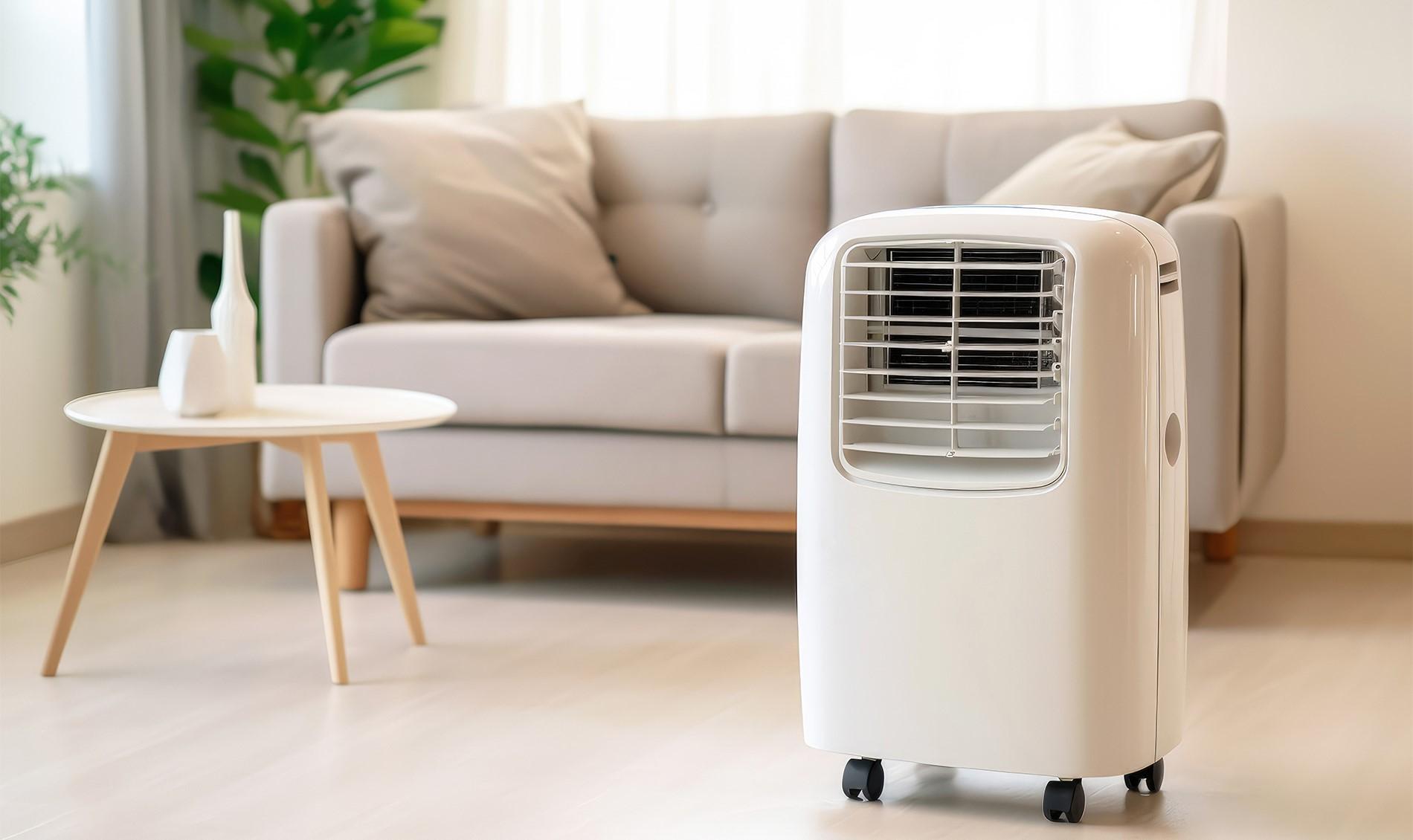
Portable air conditioners are basically just compact versions of traditional AC units. They’re perfect for small homes and flats, with their built-in castors letting you easily move them from room to room. Working from home on a hot day? Just wheel one into your office and plug it in to stay cool. Then when it’s time to sleep, roll it into your bedroom for a more comfortable night.

How do portable air conditioner units work?
Here’s a simple breakdown of how a portable air conditioner does its job:
Pulls in warm air: The unit draws in hot, humid air from the room through an intake vent located on its back or side.
Cools the air: Inside, the warm air passes over evaporator coils containing refrigerant. These then absorbs the heat from the air, making it cooler.
Vents hot air outside: All that removed heat needs to go somewhere. That’s why portable air cons come with exhaust hoses (you usually place out of a window) to push the warm air outside.
Removes moisture: As it cools the air, the unit also pulls some moisture from it (like a dehumidifier). This gets pumped out through the exhaust hose along with the hot air.
Circulates cold air: The cooler, drier air is blown out through the front of the unit via a fan — lowering the room temperature.
Portable air conditioner features
Some of the best portable air conditioner models come with handy features that give you more control:
Adjustable thermostat: This lets you set your ideal temperature, so the unit automatically turns on or off to maintain it. It not only saves you from constant fiddling, but helps save energy too.
Programmable timer: You can schedule the air conditioner to turn on before you get home or shut off after you fall asleep.
Multiple fan speeds: Gives you control over how fast the AC’s air circulates. Turn it up for a quick cool-down or keep it low for a gentle breeze.
Dehumidifier mode: Many models can also remove excess moisture from the air, perfect for those sticky summer days.
Remote control: Some portable air con units come with remote controls that let you turn them on or off (or adjust settings) from across the room.

What size air conditioner do you need?
Making sure you choose the right size air conditioner is important. If it’s too small, it’ll struggle to lower the temperature of the room it’s put in. And if it’s too big, it’ll take up more space and just waste energy.
Here’s a short guide to help you figure out what size you’ll need:
Measure your room: Start by calculating the square footage of the space you want to cool (length x width = area in square feet). The beauty of portable air conditioners is that you can move them though, so measure the room you reckon you’ll use it in the most.
Use the BTU rule of thumb: The rating of an air conditioner is measured in BTUs (British Thermal Units). Below is a simple table which tells you the BTUs required for different room sizes (in square feet). Just match the size of your space with the right rating:
| Room size (in square feet) | Recommended BTUs |
|---|---|
| 100-150 | 5,000–6,000 |
| 150–300 | 7,000–8,000 |
| 300–450 | 10,000–12,000 |
| 450–600 | 13,000–14,000 |
| 600–800 | 15,000–16,000 |
You do have to keep a few other things in mind when selecting the right air con size. If your ceilings are high, then you might need a more powerful unit to cool that extra air. And the same applies if you’re planning on putting one in a room that lets in a lot of sunlight and heats up quickly.
How much does a portable air conditioner cost to run?
The cost of using a portable air con depends on several factors:
Wattage (or power consumption): Most small air conditioners use between 900 to 1,500 watts per hour. And the higher the BTU (cooling power), the more energy it uses.
Electricity rate: This is how much your energy company charges per kilowatt-hour (kWh). In the UK, the average rate is around £0.26 per kWh (but it changes often).
Usage time: How many hours per day you run the unit can make a big difference. Using it for eight hours will obviously cost more than running it for just two or three.
Keeping those things in mind, let’s provide an example calculation of how much it’d cost to use a 1,200-watt portable AC for eight hours a day:
1,200 watts = 1.2 kW
1.2 kW x 8 hours = 9.6 kWh per day
9.6 kWh × £0.26 = £2.50 per day
So, running a portable air conditioner daily for eight hours could cost you around £75 per month.

How do you clean an air conditioner filter?
Cleaning your air conditioner’s filter keeps your cool air fresh and your air con running smoothly. Follow this step-by-step guide to sort yours out:
Turn off the unit: Always switch off and unplug your air conditioner before doing any kind of maintenance. Safety first!
Find the filter: Most air con filters are located behind a front panel or grille. Check your user manual if you're not sure where it is.
Remove the filter: Gently slide or lift the filter out, being careful not to bend or damage it by accident.
Vacuum the dust: Use a vacuum cleaner with a brush attachment to remove loose dust and debris from the filter.
Wash with warm, soapy water: Fill your sink or a container with water and some mild detergent. Then let the filter soak for 10–15 minutes. You can gently scrub it with a soft brush if there’s any stubborn dirt too.
Rinse the filter: Thoroughly wash the filter under a running tap to make sure there’s no soap residue left behind.
Let it dry and reinstall: Allow the filter to air dry completely before putting it back in your AC. Also secure any panels or covers you had to remove to refit it.
Turn your AC unit back on: Plug it in, power it up, and enjoy the cool clean air. Ah…
Tech tip
Clean your air conditioner’s filter every 2–4 weeks during heavy use in the summer, or monthly as a general rule. If you have pets or allergies, cleaning it more regularly might help your nose feel less stuffy.
FAQs
Can an air conditioner give you a cold?
No, it can’t infect you with a cold. Colds are caused by viruses rather than cool air. But air conditioners can dry out your nasal passages a little, which might make you more prone to catching a cold. An AC unit that’s not properly maintained can harbour and spread viruses too. So, make sure to follow our tips above to keep yours clean and free of mould.
Are portable air conditioners any good?
Portable air conditioners can be easily moved around to lower the temperature in whatever room needs cooling. Just plug it in, and let it works its magic. But they can be louder than central air con systems and use a lot of electricity. So, always check their noise levels and energy ratings when shopping for one.
Do air conditioners dehumidify?
Air conditioners can help dehumidify the air a little, but it's more of a bonus feature that comes with their main job of cooling. Some models are designed to do both well though, like the Logik LAC07C25 portable air conditioner & dehumidifier.
If you're looking for a more effective way of removing moisture from a room or space, dedicated dehumidifiers are the way to go. Check out the following guide to learn more about these appliances: What does a dehumidifier do?
How long can an air conditioner last?
With proper care, portable air conditioners can last around 8 to 10 years. Central systems can go for a bit longer, typically lasting 20 to 25 years.
What temperature should I set an air conditioner to in the summer?
Around 18–22°C is ideal in summer months. This strikes a nice balance between comfort and energy efficiency. If you're sleeping or away from home, you can bump it up a few degrees to save on electricity. Just don’t have it too low, as that can overwork the unit and spike your energy bills without making you feel much cooler.
Need more help?
We’ve got loads more kitchen and home advice here on TechTalk. Like our best cooling fans and air conditioners in 2025 guide — it’s full of top tech to help you beat the heat. And speaking of super cool tech, find out how Dyson fans work.