

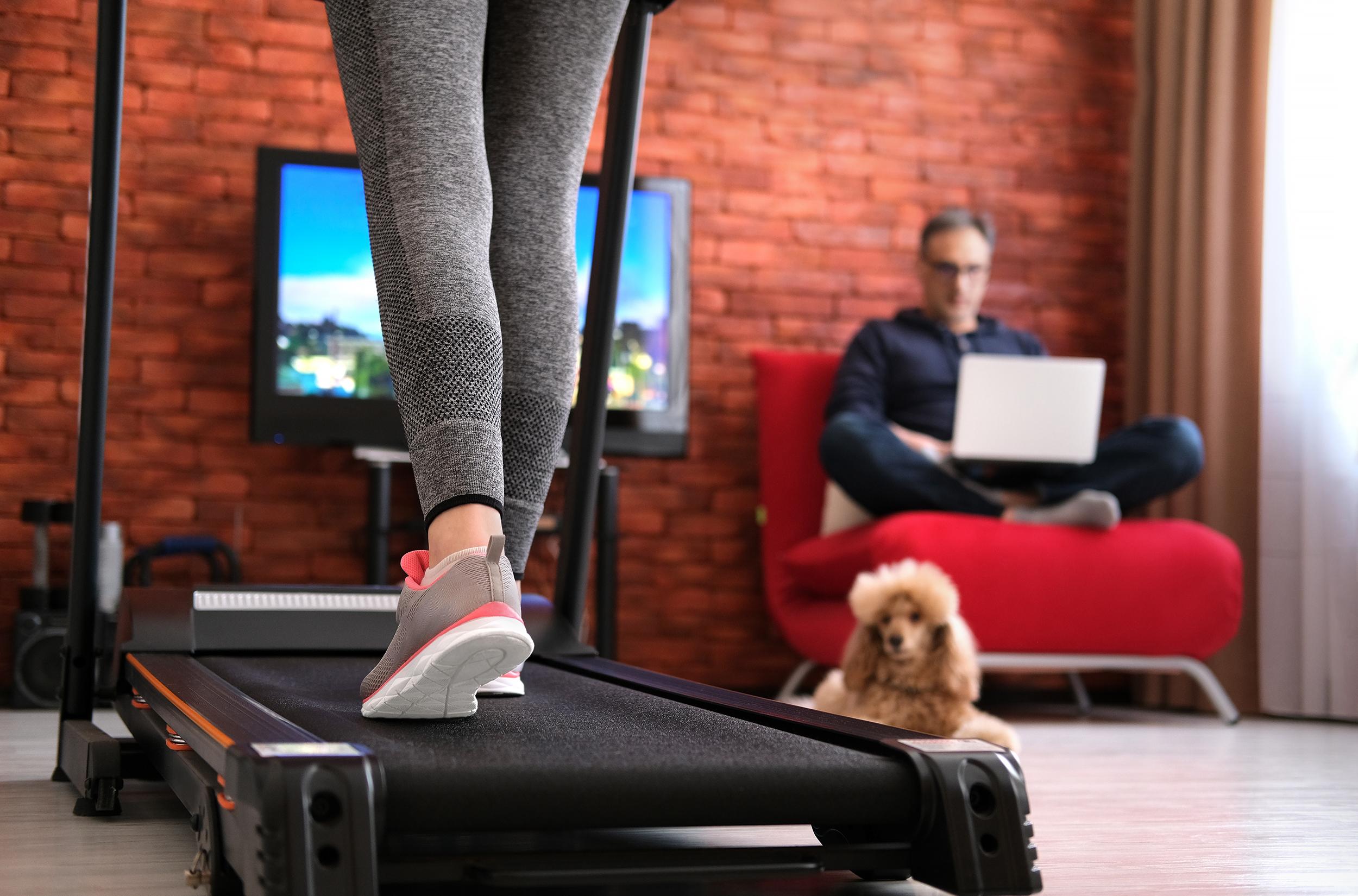
The best treadmills for home really depends on how you'll use them. If you mainly want to walk while you work, a flat walking pad will do the job and take up very little room. If you're training for runs, you'll want a proper running machine with a longer belt, a more powerful motor and some incline. And if you're somewhere in between, a folding treadmill covers most bases without dominating the room.
We'll run you through some of the best treadmills to suit the most common setups - from compact folding models for flats to incline treadmills for regular runners. The aim is to help you narrow things down based on how you actually exercise and the space you've got to work with.
How to choose a treadmill for home use
When you’re shopping for a treadmill, a few details make a bigger difference than the rest. Here's what to check before you decide.
Walking vs running. This is the first thing to settle. Walking pads are low, flat and quiet - but their top speed usually caps at around 3.7 mph. So, not really built for running. You can walk on a treadmill, but you can’t run on a walking pad. If you want to jog or run, look for a treadmill that reaches at least 10 mph.
Motor power. The motor has to move both the belt and you. A 2.0 horsepower motor is fine for walking and light jogging. If you'll run regularly or you're on the taller side, a more powerful motor (around 3 HP or above) will feel smoother and cope better with longer sessions.
Top speed. Match this to what you'll actually do. Most home treadmills top out between 10 and 12.4 mph (16 and 20 km/h), which is plenty for most home runners.
Running surface / deck. If you're planning to run regularly, it's worth paying attention to deck size. A longer running surface generally gives you more room for your stride. Around 130 cm is a good starting point for running, whereas shorter decks are fine for walking.
Incline. An incline lets you add more effort without going faster, which is useful for walking workouts and hill training. Most powered treadmills offer up to 10–12% incline. Some go further with more levels.
Folding and footprint. If you plan to fold the treadmill away after every workout, it's worth checking both the folded size and the weight. A foldable frame with wheels is much easier to live with in a shared space. And if you'll use it upstairs, measure your ceiling height - especially if you'll use the incline.
Max user weight. Every treadmill has a stated maximum. It's worth getting one that can easily handle your weight for a more stable feel.
Cushioning. Most running treadmills have some form of cushioned deck to soften the impact on your joints. Some let you adjust how firm or soft it feels.
Apps and subscriptions. Many treadmills work with training apps like iFIT, Zwift or Kinomap. These can add guided sessions and virtual routes, but they usually need a separate subscription. Check what's included and what costs extra.
Noise and flooring. Treadmills transmit vibration through floors, so a treadmill mat is a worthwhile addition if you're upstairs or in a flat. Walking pads with brushless motors tend to be the quietest option.
Best treadmills for home at a glance
| Best for | Model | Max speed | Incline | Folding | Running deck size | Training apps | Max user weight |
|---|---|---|---|---|---|---|---|
| Home overall | NordicTrack T Series 16 | 12 mph (20 km/h) | 0–12% | Yes | 51 x 152 cm | iFIT | 150 kg |
| Incline running | Reebok Z-Tech AC | 12.4 mph (20 km/h) | 18 levels | No | 43 x 150 cm | Zwift, Kinomap | 150 kg |
| Training programmes | Reebok GT40z | 11.2 mph (18 km/h) | 12 levels | Yes | 45 x 130 cm | Zwift, Kinomap | 110 kg |
| Small spaces | Viavito StrideMate 2-in-1 | 7.5 mph (12 km/h) | None | Yes (folds to 10 cm) | 42 x 120 cm | None | 120 kg |
| Under-desk walking | Kingsmith WalkingPad C2 | 3.7 mph (6 km/h) | None | Yes (180° fold) | 40 x 120 cm | KS Fit | 100 kg |
| Budget | ProForm Sport Smart WiFi | 10 mph (16 km/h) | 0–10% | No | 46 x 140 cm | iFIT | 102 kg |
Best treadmill for home overall
Model: NordicTrack T Series 16 Smart Bluetooth Treadmill
Best for: A capable all-round running treadmill with a big touchscreen and app support
Pros:
16" tilting colour touchscreen for following iFIT workouts
0–12% incline and speeds up to 12 mph (20 km/h)
SelectFlex cushioning you can adjust from soft to firm
Cons:
- iFIT membership is sold separately, so the full experience costs extra
If you want one treadmill that handles walking, jogging and proper running, the NordicTrack T Series 16 does it all. The 0–12% incline and 12 mph (20 km/h) top speed cover most home training. Plus the foldable frame with wheels helps when you need the space back.
The 16" tilting touchscreen is what you'll use most. Tilt it to your height and follow iFIT sessions, with the app able to adjust the treadmill's speed and incline to match the workout. Plus, the SelectFlex cushioning lets you tune the deck from soft to firm. Go softer for a more cushioned feel underfoot, or firmer for a more road-like running experience.


Best incline treadmill for running
Model: Reebok Z-Tech AC Smart Bluetooth Treadmill
Best for: Regular runners who want a powerful motor and serious incline range
Pros:
5 HP AC motor, a type of motor often used in commercial gym equipment
18 incline levels for plenty of hill training options
Works with Zwift and Kinomap for virtual routes and races
Cons:
- It doesn't fold, so you'll need a permanent spot for it
With its combination of motor power and incline range, the Reebok Z-Tech AC is among the best treadmills for running. The 5 HP AC motor reaches 12.4 mph (20 km/h) and the 18 incline levels give you a wide range of hill running. The clever Energy Transfer Cushioning softens the deck underfoot.
It comes with 36 built-in fitness programmes, including heart rate control and custom workouts - so there's plenty to follow without an app. If you do want app-based training, it's compatible with Zwift and Kinomap. The frame is fixed rather than folding, and it weighs 128 kg, so think about where it will live before you buy.
Best treadmill with training programmes
Model: Reebok GT40z Folding Smart Treadmill
Best for: People who want lots of guided workouts and the option to fold away
Pros:
43 workout programmes, including pre-set and custom options
Compatible with Zwift and Kinomap for guided sessions and virtual routes
Soft Drop folding system for easier storage
Cons:
- The 2.0 HP motor is best suited to walking, jogging and steady running rather than fast sprints
If you like following structured sessions, the Reebok GT40z has 43 built-in programmes to choose from, covering pre-set workouts, heart rate control and custom options you can set yourself. That's a lot of variety before you even look at an app, and it's one of the best treadmills with training programs for people who want guidance built in. Zwift lets you run virtual routes and races with other people, while Kinomap offers real-world filmed routes to follow.
The 45 x 130 cm running deck is a comfortable size for running, and the 12 levels of powered incline add plenty of variety. The Soft Drop folding system means the deck lowers gently rather than crashing down, and the whole thing folds up between workouts.


Best compact folding treadmill for small spaces
Model: Viavito StrideMate 2-in-1 Walking Pad & Treadmill
Best for: Flats and home offices where space is tight and storage matters
Pros:
Folds down to just 10 cm high, so it slides under a bed or sofa
Removable handrail, so you can use it as a walking pad or a small treadmill
Low-noise motor and remote control for quiet, easy use
Cons:
- No incline, and the short deck isn't really suited to running
The Viavito StrideMate is designed for small spaces. It folds down to about 10 cm high, which is thin enough to slide under a bed, sofa or desk. At 28 kg with built-in wheels, it's one of the easier treadmills to move around a flat. If you're after the best treadmill for small spaces that genuinely disappears when you're done with it, this is the one to look at.
The removable handrail is the clever part. With it attached, you've got a small treadmill with handrail support. Take it off and you've got a flat walking pad. In walking mode it goes up to 3.7 mph (6 km/h) and in treadmill mode up to 7.5 mph (12 km/h). The low-noise motor is a plus if you've got people working or sleeping nearby. And the remote lets you change speed without bending down.
Best under desk walking pad treadmill
Model: Kingsmith WalkingPad C2 Folding Smart Bluetooth Treadmill
Best for: Getting steps in while working from home
Pros:
180° folding system folds it neatly away for storage
FootSense technology adjusts your speed based on where you walk on the belt
Quiet brushless motor suitable for use while you work
Cons:
- Top speed of 3.7 mph (6 km/h) means it's for walking only, so there’s no evolution to running
The Kingsmith WalkingPad C2 has a top speed of 3.7 mph (6 km/h) and is designed for walking while you work or watch TV. That makes it the best walking pad treadmill for anyone who wants to get steps in without leaving their desk, and a strong pick if you're looking for the best under desk treadmill too.
What makes it suited to a home office is the combination of size and quietness. The 180° folding system folds it in half, and at 28 kg with a slim folded profile it stores away easily. The brushless motor keeps noise down, which matters when you're on calls or sharing a room. FootSense technology is a nice touch: walk towards the front of the belt and it speeds up, walk towards the back and it slows down - so you can adjust your pace without touching anything.
Best budget treadmill
Model: ProForm Sport Smart WiFi Treadmill
Best for: A reliable treadmill with app support at a lower price point
Pros:
Speeds up to 10 mph (16 km/h) with 0–10% incline
iFIT compatible for guided workouts
CoreShox cushioning for a more comfortable run
Cons:
- Max user weight of 102 kg is lower than most of the others here
The ProForm Sport Smart WiFi covers the basics well, and it's a strong pick if you're after a great affordable treadmill. It reaches 10 mph (16 km/h) and offers 0–10% incline, which is enough for walking, jogging and steady running. The LCD display keeps your stats visible and CoreShox cushioning softens the deck.
It's iFIT compatible, so with a subscription you can follow guided workouts that adjust the treadmill's speed and incline for you. You can also sync your stats with apps like Strava, Garmin and Apple Health. At 48 kg, it's one of the lighter treadmills here, and the 2-year guarantee gives some reassurance. It's a sensible best budget treadmill for beginners who want something simple to get started with.
Is it worth buying a treadmill for home?
Yes, if you'll use it regularly. A home treadmill saves travel time, lets you train in any weather and fits around your schedule. The trade-off is the upfront cost and the floor space it takes up. If you're unsure whether a treadmill is the right machine for you, it's worth reading up on the treadmill vs exercise bike comparison first.
What is the best brand of treadmill for home?
NordicTrack and Proform lean on iFIT for guided workouts, so they suit people who want app-based training. Reebok's treadmills tend to focus on built-in programmes and Zwift or Kinomap compatibility. Kingsmith specialises in walking pads for small spaces. The best approach is to pick the brand whose strengths match how you'll use the machine.
Which treadmill should you choose?
The right treadmill comes down to how you'll use it and where you'll put it. If you want one machine that does everything, the NordicTrack T Series 16 covers walking, running and guided workouts. If space is the priority, a folding model like the Viavito StrideMate or a walking pad like the Kingsmith WalkingPad C2 will fit into far smaller rooms. And if you're mainly running, the Reebok Z-Tech AC's motor and incline range are built for it.
Once you've narrowed it down, it's worth browsing the full range of home gym equipment for flats and fitness equipment to see how a treadmill fits into your wider setup.

FAQs
How much space do you need for a treadmill at home?
You'll need the treadmill's footprint plus safety clearance, roughly 2 metres behind and 0.5 metres either side. If you'll use the incline, measure your ceiling height too, as you rise slightly when the deck tilts up. Taller runners on a steep incline can get surprisingly close to the ceiling.
Can you put a treadmill upstairs?
Yes, as long as the floor is sound. The main things to think about are the treadmill's weight, vibration and noise for anyone below. A treadmill mat helps absorb vibration and protect the floor. It's worth checking the max user weight too, since that adds to the load on the floor.
Does a treadmill use a lot of electricity?
No, running a treadmill is relatively cheap. The actual power draw depends on the motor's horsepower, the speed and incline you use and your weight. A walking pad uses very little, while a powerful running treadmill at top speed and full incline will use more.
What is the best treadmill for a beginner runner?
Look for a reliable entry-level folding treadmill with simple console controls, good deck cushioning to protect unconditioned joints, preset beginner programmes and speeds up to 10 mph (16 km/h). The Reebok GT40z and ProForm Sport Smart WiFi both fit this description, and either works as the best treadmill for beginners who want to build up gradually.
Can you do couch to 5k on a treadmill?
Yes. Use the manual speed controls to switch between walking and running intervals, and set a small incline (around 1–2%) to mimic the resistance you'd feel outdoors from wind and uneven ground. Most treadmills let you save custom intervals once you've found a pattern that works.