

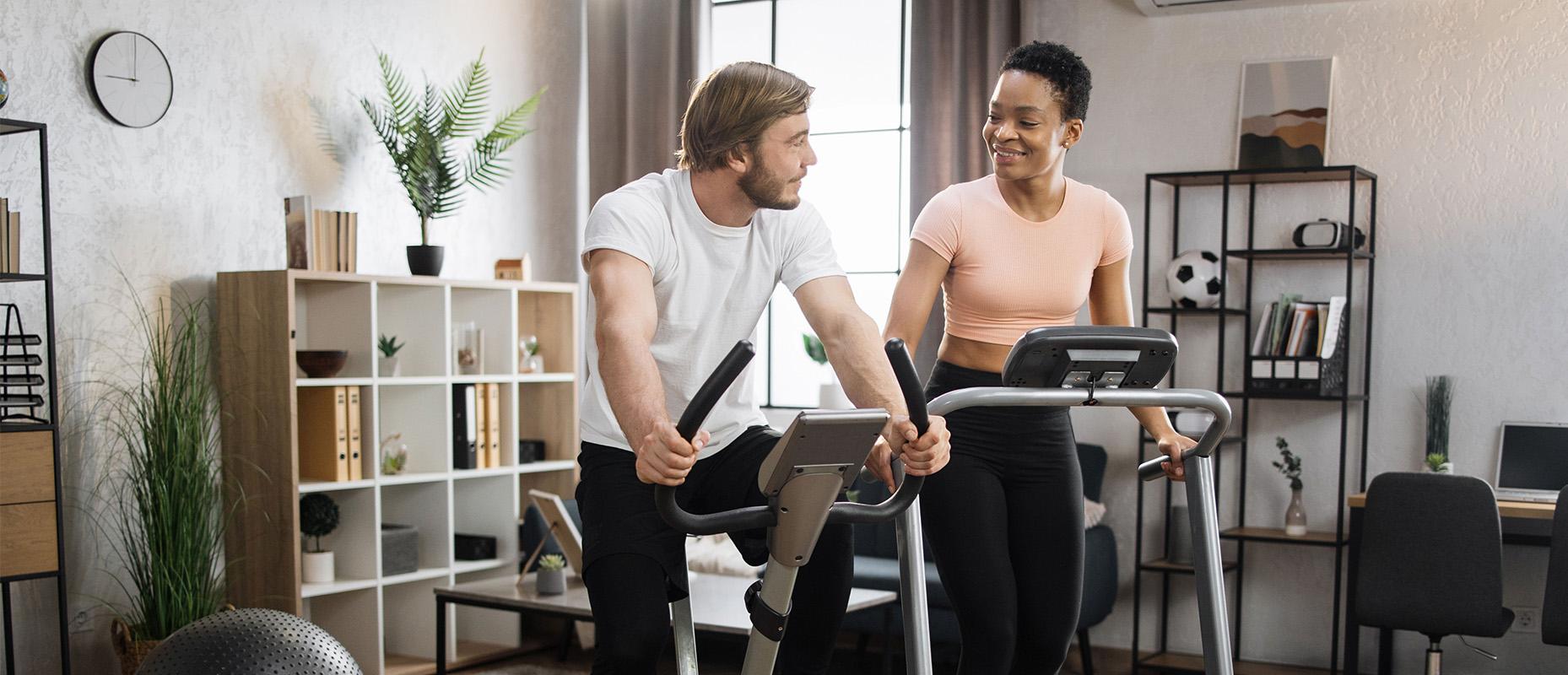
Home fitness looks set to boom in 2026. Between unpredictable weather, tight schedules and easy-to-use home gym equipment, more of us are choosing to get our cardio done at home. And when it comes to at‑home cardio, two machines dominate the conversation: treadmills and exercise bikes.
Both can help you build endurance, burn calories and feel fitter - but they deliver those benefits in different ways, with trade‑offs in space needed, cost and physical impact.
So, let’s unpack the exercise bike vs treadmill debate, helping you pick the right tech for your goals, your home and your routine.
Treadmill vs exercise bike: key differences & types explained
Let’s start with the basics. A treadmill replicates walking or running indoors with a moving belt. An exercise bike simulates cycling with a seated, pedal‑driven motion. Both are proven aerobic workouts - but they load the body differently.
Running is weight‑bearing and generally demands higher energy cost per minute than seated cycling. So, it’s a great calorie burner. But cycling has big advantages too. Most importantly, it delivers low‑impact movement that’s easier on knees and hips.
Treadmill types
Motorised treadmills: The gym classic! Belt speed is set by the motor, and you can adjust speed and incline to dial up or dial down the effort.
Non‑motorised/manual treadmills: The belt moves only as you run. Many runners rate these highly, since they work posterior muscles harder and close the gap to a more outdoor feel.
Incline/decline capable treadmills: Running on a level surface is relaxing, but you have an incline or decline helps work more muscles and give you those hilltop highs without leaving home.
Exercise bike types
Upright: These are closest to a road bike position and engage the core and upper body stabilisers.
Spin/indoor cycle: These come with heavier flywheels and are built for the more intense out‑of‑saddle and interval rides. Forget Sunday cycling!
Recumbent: The reclined seat with backrest gives you the most joint‑friendly and accessible exercise bike. Perfect for longer, lower‑intensity sessions.
Those posture and design shifts change the biomechanics of your workout. Put simply, upright and spin bikes increase core demand and allow standing climbs. Whereas recumbent bikes prioritise comfort and stability.

Benefits & drawbacks of treadmills for home workouts
Why treadmills shine
Because you have precise control of speed and incline, it’s easy to get into training zones (intense, peak etc) and make predictable progress in your fitness.
Weight‑bearing workouts support bone health compared with non‑impact cardio alone - especially when combined with resistance training.
Smart treadmills (like iFit-enabled treadmills) integrate classes, scenic routes and auto‑adjust coaching.
What to consider
Joint impact is higher, especially when running and especially when on a treadmill. If you have knee or hip issues, cycling often provokes less pain and may be preferable day‑to‑day.
There’s always the risk of tripping, especially if you get distracted. And while treadmills have lots of safety features – like handrails or auto stop – but even a minor tumble could lead to an injury.
If a treadmill’s your pick, check out our range from top brands like NEW IMAGE, NordicTrack, ProForm and Echelon.


Benefits & limitations of exercise bikes for indoor fitness
Why bikes get likes
Because feet stay planted on the pedals, it’s a low-impact, joint-friendly exercise. The circular motion lubricates joints and reduces strain – so it’s a good choice of work out for people with joint issues.
Like treadmills, the control you get make your workout predictable and targeted. By adjusting resistance and speed, it’s easy to measure intensity, RPE (i.e. how hard a workout feels), heart rate and more.
Indoor cycling builds aerobic capacity and endurance. And like treadmills, it’s convenient and weather‑proof.
What’s limited.
Bone loading is lower than running. In the long‑term, cyclists can show reduced bone density unless they add impact or resistance work. So it’s a good idea to pair your rides with strength training to protect bone health.
Upper‑body muscle stimulus is minimal unless you program cross‑training sessions.
Considering a bike? Check out ProForm exercise bikes, NordicTrack exercise bikes, Echelon exercise bikes, Reebok exercise bikes and SPIRIT exercise bikes.


Space, noise & setup compared: which cardio machine fits your home?
Footprint
Treadmills generally eat more floor space and need more ceiling clearance – i.e. consider your height on top of a treadmill. While folding frames help, you still need to make room for safe use and storage. You can get compact treadmills, but these are more for walking.
Exercise bikes - especially uprights and many recumbents - are generally more compact and easier to tuck into a corner.
Noise
The main concern with treadmills in flats is the vibration from foot strikes. There are obviously ways to dampen this. Thick rubber isolation mats are great. And if they’re set up near load‑bearing walls, the noise transmitted through the building can be significantly less. This is a much less of a problem in a house.
Bikes are usually quieter. Resistance changes are subtle and there’s no foot‑strike thump, making them friendlier for small apartments or late‑night workouts.
Storage
Foldable treadmills and walking pads exist - handy if you mostly walk or do light jogs. The Kingsmith WalkingPad C2 folding smart treadmill is one to consider if you need a compact treadmills.
Although recumbent exercise bikes are larger and less foldable, exercise bikes in general are much easier to dismantle and store.
Treadmill vs exercise bike: cost, value & smart features compared
Up‑front pricing
Entry‑level exercise bikes tend to cost less than treadmills. As you add features (auto‑adjust, heavier flywheels and interactive classes) the cost difference starts to diminish. Subscription platforms – think Peloton, iFIT, Zwift - can transform your experience but add ongoing costs.
Subscriptions
As of late 2025, Peloton’s All‑Access membership (required for Peloton Bike/Tread owners) is about £45 a month at time of writing. App‑only tiers are cheaper but the trade-off is more limited features.
Durability & warranty
Heavier frames, quality motors/flywheels and service plans are worth the price if you train often. Compare brand warranties and look for brands that have UK-based repair networks.

Which should you choose? Expert tips for every fitness goal
If your main goal is weight loss
Running or brisk treadmill walking typically burns more calories per minute than moderate cycling - because it’s weight‑bearing and involves more muscle mass. But it’s all about the effort you put in. An intense interval ride can beat a casual walk. The “best” option is the one you’ll keep doing.
If joint comfort is your priority
Stationary cycling is widely recommended as low‑impact cardio. Studies show that cycling can reduce pain and improve function for people with knee osteoarthritis.
If you’re short on space or need quiet
Pick a bike. It’s smaller, simpler to move and quieter than most treadmills. If you must have a treadmill, choose a compact or folding model and invest in isolation mats.
If you’re chasing an outdoor “feel.”
Runners may find treadmills less realistic than road running. Cyclists often feel indoor bikes replicate the effort of cycling pretty well - especially with smart resistance.
If you’re a beginner
Both machines work. Many beginners prefer bikes for confidence and joint comfort. Others enjoy the natural movement of walking. Start at moderate intensity (so you can talk, but not sing) for 20 - 30 minutes, 3 - 5 days per week and build gradually.
If you’re older or returning from injury
Recumbent bikes can be easier to mount, more stable and kinder to backs and knees. That means they’re great for long, consistent sessions. Combine cycling with light strength work for bone health.
Want more purchase guidance? Head to our Sports and fitness buying guide.
Bottom line: why consistency matters more than the machine
Here’s what really matters: Consistency beats perfection. Whether you choose a treadmill or an exercise bike, the habit of regular cardio - plus a touch of strength work - drives the biggest health wins. Better cardiovascular fitness, mood, sleep and metabolic health. Public health guidelines suggest 150–300 minutes moderate or 75+ minutes vigorous. So, pick the machine that fits your space, body and motivation
Before you decide, ask yourself these questions:
Which movement do I enjoy more right now?
What fits my room and noise tolerance?
Will smart content/subscriptions genuinely help me stick with it?
How will I cover bone health (impact/strength) and mobility alongside cardio?
FAQs
Which burns more calories: treadmill or exercise bike?
Running or fast walking on a treadmill usually burns more calories per minute than moderate cycling because it’s weight‑bearing and uses more muscle mass. However, high‑intensity cycling sessions can match or exceed lower‑intensity treadmill walks. It’s all about your effort and duration.
Is a treadmill or exercise bike better for beginners?
Both are beginner‑friendly. If you’re concerned about joint comfort or balance, start with a stationary bike at moderate intensity for 20–30 minutes, 3–5 days per week. If walking feels more natural, begin on a treadmill at a comfortable pace and add short inclines over time.
Which is safer for joints: treadmill or bike?
Generally, exercise bikes are more joint‑friendly because cycling is low‑impact and keeps your feet on the pedals. Many arthritis resources and rehab reviews recommend stationary biking to reduce pain and improve function. For bone health, add resistance or impact work alongside cycling.
Do treadmills or bikes help more with weight loss?
Treadmills often give you higher per‑minute energy expenditure, especially with running or incline walking. Choose the machine you’ll use consistently and pair it with nutrition habits you can sustain.
Can I get a full‑body workout from a treadmill or bike?
Both are primarily lower‑body and cardiovascular. Treadmill running engages more whole‑body stabilisers than cycling, but neither replaces strength training. Add 2–3 brief strength sessions per week to cover upper body, core and bone loading.
Which is better for small homes: treadmill or exercise bike?
Exercise bikes typically take up less space and make less noise. If you need a treadmill, consider compact or folding options and use isolation mats to reduce vibration.
Are smart treadmills and bikes worth it?
If coaching and community keep you engaged, subscriptions like Peloton or iFIT can be worth the monthly fee. Just remember to include that cost long‑term.
Still deciding?
It’s a lot to think about, we know! So if you’d rather talk to a Tech Expert about it all, feel free to use ShopLive for that personal shopper experience. They’re always happy to advise. And if you’re looking for workout equipment that does more than just cardio, be sure to check out the latest home gym equipment for smaller spaces.