

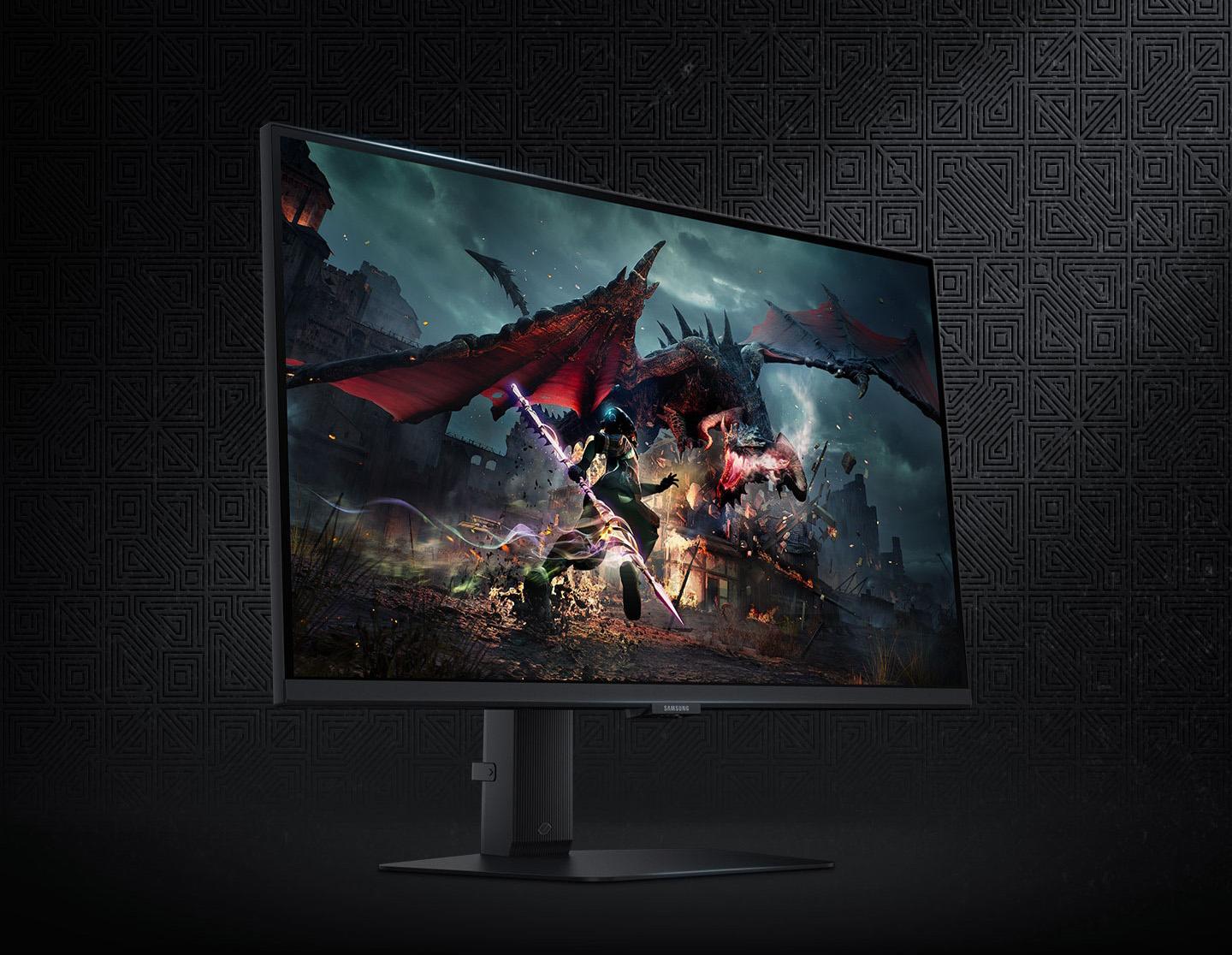
If you’re shopping for a gaming monitor this year, you’ve probably already fallen into the familiar rabbit hole. One minute you’re comparing refresh rates, the next you’re deep in Reddit threads debating VA vs IPS vs OLED gaming monitors, wondering why two “144Hz” monitors can look nothing alike.
A lot of gamers feel stuck at this exact point - especially if you're buying a new gaming monitor to pair with your PS5, Xbox Series X or to get more from your new GPU. What matters more? Colour? Contrast? Resolution? And is OLED really worth the hype?
The good news: once you understand what each panel type is actually doing, the decision becomes much clearer. So, let’s break it down in a practical way - no computer science degree required. Then you can just pick the panel that fits your gaming style.
What is a monitor panel and why does it matter for gaming?
A monitor’s panel is the underlying screen tech that controls everything you see - and everything you feel when you play. Colour accuracy, contrast, motion clarity, viewing angles, response time… it all comes from the panel.
It’s also the reason two monitors with the same refresh rate can behave totally differently. A 144Hz VA monitor and a 144Hz IPS monitor can both be smooth, but one might show deeper blacks while the other looks brighter and more consistent from different angles.
In short: refresh rate tells you how fast the image updates, panel type tells you what that image actually looks like.
If you want to open a new tab and do some monitor scrolling as you read, you can explore the full range of gaming monitors.
VA panels for gaming — deep blacks on a budget
VA (Vertical Alignment) panels are the storytellers of the monitor world. If you love single‑player epics, late‑night horror games or anything atmospheric, VA’s high contrast makes a noticeable difference. Blacks look deeper and richer, shadows feel more cinematic and worlds feel more immersive.
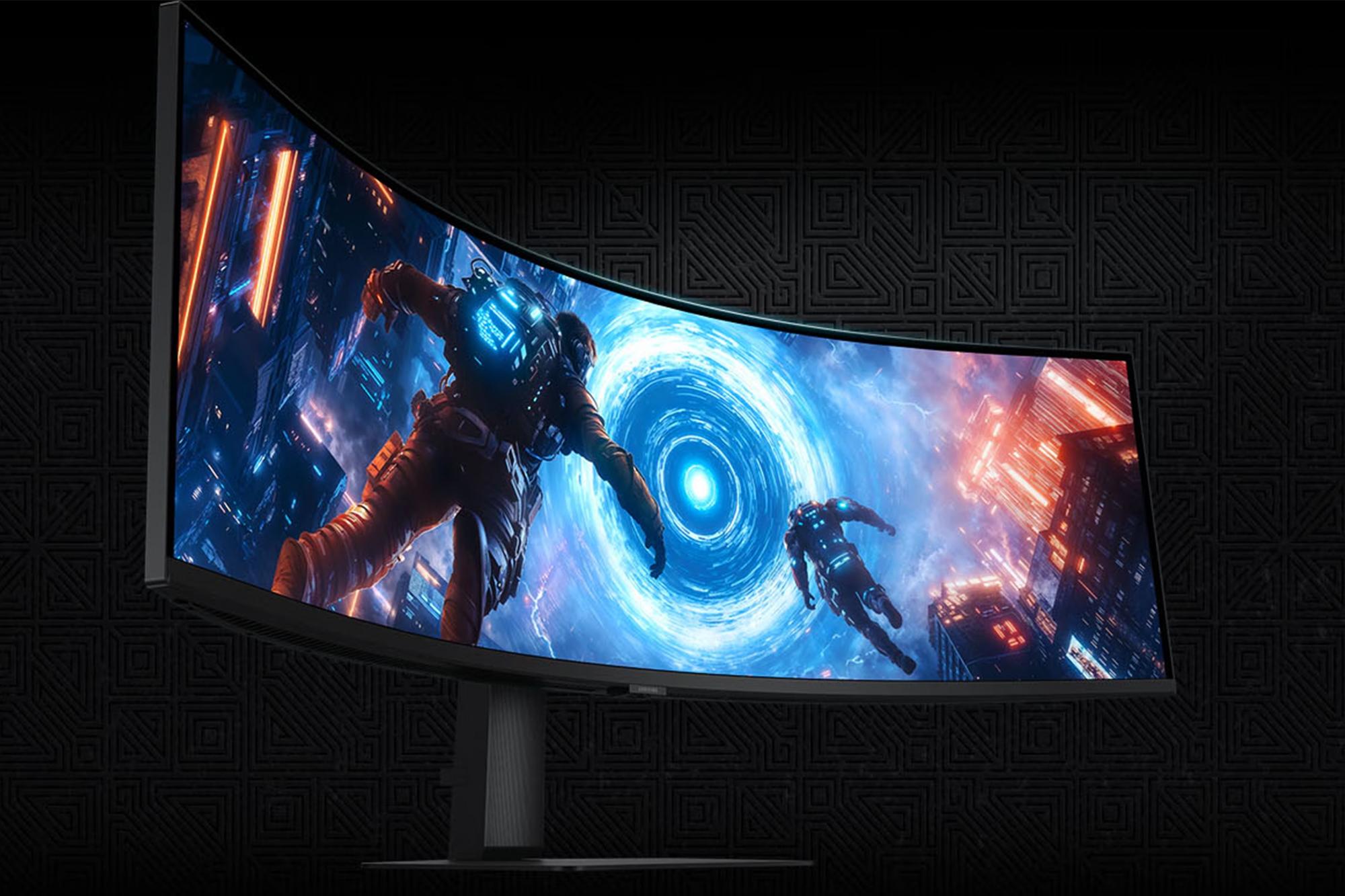
They’re also fantastic value for size, especially if you’ve been eyeing up a curved monitor. A big 32‑inch or 34‑inch VA screen often costs far less than its IPS or OLED equivalent, which makes it an easy pick for players who want impact without the premium price tag.
That said, VA isn’t flawless. Some models show a bit of smearing in darker fast-paced scenes. You might notice it more in twitchy shooters than in RPGs or open‑world games. Viewing angles also aren’t as forgiving as IPS, so colours can shift slightly if you’re not sitting front‑and‑centre.
Why VA is worth considering:
Deep blacks and strong contrast that work well with dark or cinematic games
Great value, especially for large and curved displays
Immersive visual depth that IPS can struggle to match at the same price
Things to watch out for:
Slight smearing or ghosting in dark fast-moving scenes on some models
Viewing angles that aren’t as wide or colour-stable as IPS
If VA sounds like your style, take a look at models like the AOC CQ32G4VE, the ultrawide AOC CU34G4, MSI’s curved MAG 27C6X or Acer’s 4K Nitro XZ323QKP1 — all strong examples of why VA is so popular among immersive‑game fans.


IPS panels for gaming - colour accuracy meets speed
IPS (In‑Plane Switching) monitors are the true all‑rounder. These screens are known for vibrant, accurate colour and consistently fast response times. That’s why you’ll find IPS panels in many esports monitors.
If you're someone who hops between Apex, Baldur’s Gate 3 and a bit of video editing or work, IPS feels balanced and dependable. Colours stay consistent even if you’re off to the side, and motion stays clean enough for competitive play.
Its main weakness is contrast. Blacks aren’t as deep as VA, especially in a dark room. But outside of those moody late‑night sessions, most gamers barely notice.
Why IPS appeals to so many players:
Bright, accurate, reliable colour
Wide viewing angles (great for multi-monitor setups)
Fast response times ideal for competitive games
Where IPS falls short:
Blacks can look more “dark grey” than truly black
Contrast is noticeably lower than VA or OLED
If you want to explore the best of IPS, the GIGABYTE GS27U, the fast ADX A2710R25 and the Samsung Odyssey G5 IPS variant are all great examples - bright, versatile and responsive.


OLED panels for gaming - the ultimate visual experience
If VA is cinematic and IPS is balanced, OLED monitors are the showstopper. It’s the panel tech that makes people go: “Oh. Oh.” One look at an OLED screen and it’s obvious why. Every pixel lights itself, meaning blacks are truly black, not “almost black.” HDR scenes burst with detail and depth.
Motion clarity is outstanding thanks to near-instant pixel response, making OLED feel incredibly sharp during fast movement. Whether you're exploring neon-lit worlds, diving into single‑player epics or playing fast shooters, everything just looks like an upgrade.
But there are always reasons why an OLED might not be for you. You’re going to need deeper pockets, brightness varies by model and, for PC players, you may not have a system that can comfortably push to 4K.
Plus, burn‑in still a consideration for players. It’s nowhere near the issue it once was, but it still can happen. Especially if you’re leaving your monitor on for long periods.
Why OLED is exceptional:
Perfect blacks and infinite contrast
Outstanding HDR that LCD panels can’t replicate
Virtually instant response time for razor-sharp motion
Before you buy one:
Expect premium pricing
Burn‑in is much rarer now, but still a factor
Peak brightness isn’t always as high as the brightest LCDs
If you're curious, models like the MSI MAG 271QPX QD‑OLED, the GIGABYTE MO27Q2, and LG’s UltraGear GX7 show exactly why OLED is dominating premium gaming setups in 2026. You can browse the full range of OLED gaming monitors too.


VA vs IPS vs OLED: the side‑by‑side comparison
Here’s the quick, useful breakdown — without overloading you:
VA: Deepest blacks, best contrast, brilliant for immersion.
IPS: Fast, bright, consistent — the most balanced choice.
OLED: Best of the best for picture quality and motion clarity.
Put simply:
VA = cinematic
IPS = competitive + versatile
OLED = premium + stunning
All three have their place. It just depends what you value.
| Feature | VA | IPS | OLED |
|---|---|---|---|
| Panel Technology | Vertical Alignment liquid crystals | In-Plane Switching liquid crystals | Self-lit organic pixels (no backlight) |
| Contrast Ratio | High (typically 2500:1–4000:1) | Moderate (typically 1000:1–1200:1) | Infinite (true blacks) |
| Black Levels | Deep blacks | Greyish blacks in dark rooms | Perfect true blacks |
| Colour Accuracy | Good | Excellent (very colour accurate) | Outstanding (vibrant and precise) |
| Viewing Angles | Moderate (some colour shift) | Wide (minimal colour shift) | Very wide (no noticeable shift) |
| Response Time | Good (1–4ms typical) | Very good (1ms common) | Near-instant (0.03–0.1ms) |
| Motion Clarity | Can show dark smearing | Smooth with minimal ghosting | Exceptional, virtually no blur |
| Refresh Rate Availability | Up to 240Hz | Up to 360Hz | Up to 240Hz (increasing in 2026) |
| HDR Performance | Good (strong contrast helps) | Good (limited by contrast) | Outstanding (true HDR impact) |
| Brightness | High peak brightness | High brightness possible | Moderate peak brightness |
| Best For | Cinematic gaming, RPGs | Competitive FPS, mixed use | Premium immersive gaming |
| Competitive FPS Performance | Good, slight smearing | Excellent (esports standard) | Excellent (fastest pixels) |
| Console Gaming | Great for immersive titles | Great all-rounder | Exceptional visuals |
| Typical Price Range | ££ (mid-range) | ££–£££ (mid to upper-mid) | ££££ (premium) |
| Overall Strength | Best contrast for the price | Balanced performance & colour | Ultimate picture quality |
| Overall Weakness | Motion blur in dark scenes | Lower contrast than VA | Higher cost & burn-in risk |
Which gaming monitor panel should you choose in 2026?
A handy rule of thumb:
Go VA if you want the richest blacks for the lowest price and mainly play story-driven games or RPGs.
Go IPS if you want a dependable, vibrant all‑rounder that’s great for competitive titles as well as everyday use.
Go OLED if you want the best visuals money can buy and you're running a high‑end PC or next‑gen console.
At the same time, there are generalisations here. For example, not all VA monitors are the same. We’ve been talking about VA LCD monitors, but you can also get VA Mini-LED monitors too. They give a boost to brightness, HDR performance and really help cut down ghosting and smearing. But, unsurprisingly, they also come with a higher price tag.
And if you're shopping with a budget in mind, here's a quick steer:
Under £300: VA or IPS
Best for esports: IPS (or OLED if you’re going top-tier)
Best for PS5 Pro or cinematic AAA titles: OLED by a mile
FAQs
Is IPS or VA better for gaming?
IPS for competitive speed. VA for atmospheric immersion.
Is OLED the best panel for gaming in 2026?
If you care about picture quality and motion clarity, yes.
Do OLED gaming monitors suffer from burn-in?
It’s possible, but far less common thanks to modern protection.
Which panel type is best for FPS games?
IPS or OLED — both are fast and clean.
Is VA good for PS5?
Absolutely, especially for cinematic games.
What panel do pro gamers use?
Almost all pros still use IPS.
Does panel type affect input lag?
A little, but refresh rate and processing matter more.
What’s next?
Find out more about how to choose a monitor or TV for gaming or (if you’re a PC fan) read more with our PC gaming buying guide.