

Reformer Pilates uses a sliding machine, called a reformer, to add support or resistance to Pilates exercises. And it’s become a seriously popular workout, with around 14% of adults in England now taking part in yoga or Pilates. But if you're thinking of giving it a go, is it better to pay for classes or get Pilates equipment of your own?
This guide covers what reformer Pilates is, the differences between home and studio sessions and what to look for if you want to get started at home.

What is reformer Pilates?
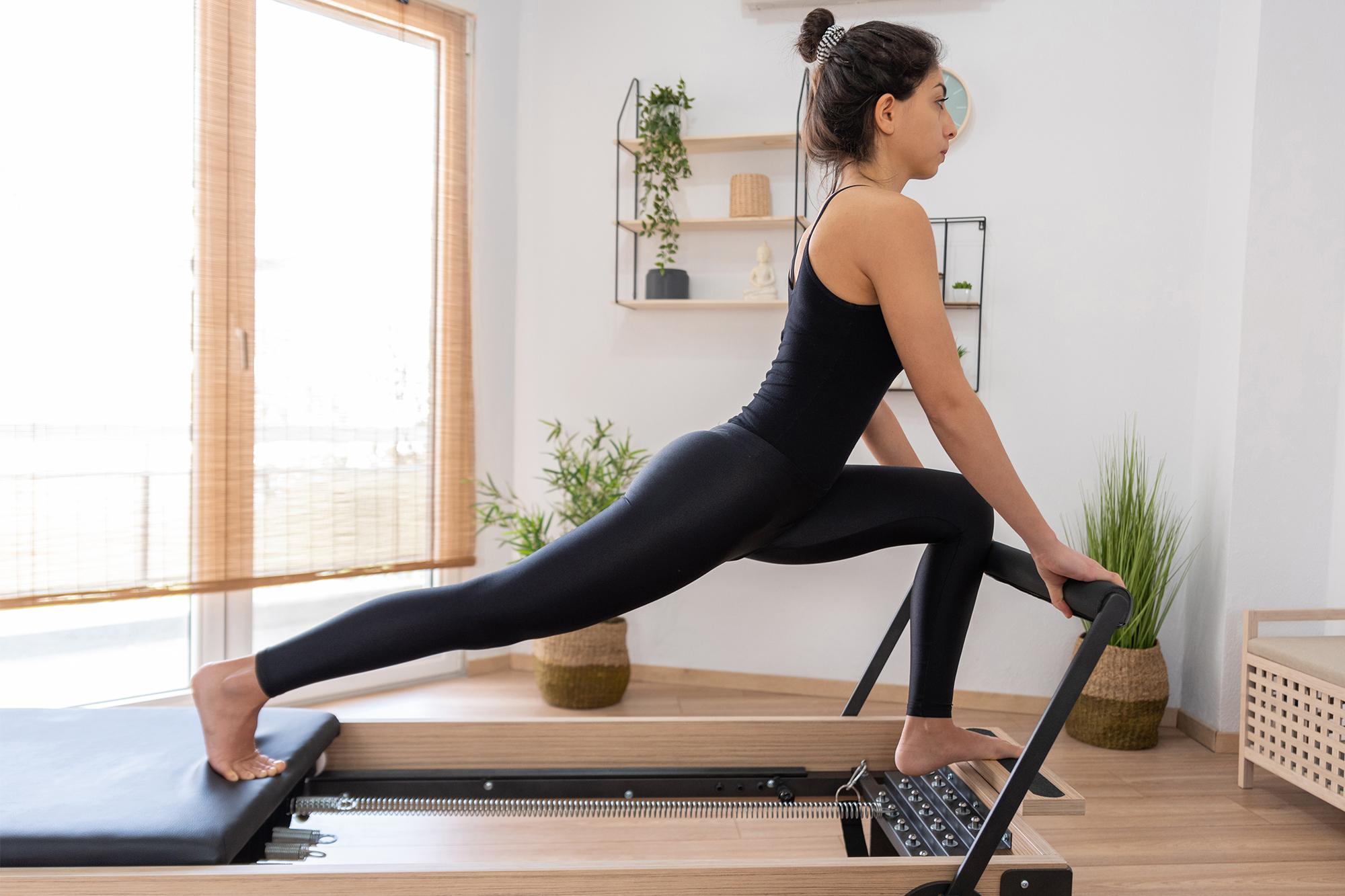
Pilates is a low-impact form of exercise that uses slow, controlled movements to build strength and improve flexibility. Reformer Pilates puts these exercises onto a sliding machine. A reformer has springs, ropes, a sliding platform and a footbar, which all help guide your movements.
Unlike mat Pilates which uses your body weight for resistance, the reformer gives you extra support at the start and more of a challenge as you get stronger. That's why it's popular with everyone from complete beginners to experienced exercisers.
Benefits of reformer Pilates
Reformer Pilates can help improve core strength, flexibility, balance and posture – all without putting too much stress on your joints. Plus, its adjustable resistance means you can match it to your fitness level.
Like any fitness routine, results don’t appear overnight. But you should start to feel stronger after a few weeks of regular practice. If you have an injury or health condition, it's a good idea to check with your GP or physio before starting.
Reformer Pilates at home vs in a studio
Studio sessions are a great way to get your bearings, with instructors on hand to guide your technique. At home, you don’t have that real-time feedback, but you get the freedom to exercise whenever you want.
A home reformer can also work out cheaper over time if you'd otherwise be paying for regular classes. And even though most home machines can't fully replicate a studio experience, apps and guided workouts can be a big help. If you're creating a dedicated workout space, check out our guide to the best home gym ideas for inspiration.

Is a home reformer worth it?
If you're already taking regular reformer classes, a home machine could save you money in the long run. Classes often cost between £20-£45 each, which can soon add up.
That said, a reformer is a big piece of equipment, so you'll need the space and the motivation to use it regularly. Most reformers are roughly the size of a single bed when set up, so you'll need enough room to move around the machine comfortably. Some models fold away once you’re finished, which can make them a better fit for smaller homes.
If you don't live near a studio or know you'll stick with it, a home reformer can be a good purchase. But if you're completely new to Pilates, it might be worth trying a few classes first.
Ask yourself:
Do I have space for a reformer at home?
Will I use it more than once a week?
Would I prefer working out on my own or with an instructor?
If you answered yes to the first two, a home reformer could be worth considering.
What to look for in a home reformer machine
Adjustable resistance - One of the most important features. Being able to change the spring or cord resistance lets you progress as you get stronger and adjust for different exercises.
Frame type - Wood frames are more like what you’d find in a studio and tend to feel sturdier. Aluminium frames are usually lighter and easier to move around.
Smooth carriage glide - The carriage should roll smoothly and quietly, helping exercises feel controlled.
Foldability and storage – If space is tight, look for a foldable Pilates reformer. These can fold in half or store upright when not being used. Fixed-frame models are usually sturdier but need a permanent spot in your home.
Footbar and shoulder rests - Adjustable supports can help you find a more comfortable position and fits different body sizes.
Weight capacity and user height – Check the maximum user weight and the height range the reformer allows. Most standard reformers suit users up to around 136 kg and heights from roughly 136 cm to 196 cm, but it varies by model.
Accessories and app access – Some reformers come with extras like jump boards, rebounders or workout apps. App access can be useful for beginners who want guided sessions, but some apps need a subscription.
Price - Expect to spend anywhere from a few hundred pounds to over £1,000. Entry-level models cover the basics. On the other hand, premium reformers often have smoother movement, more adjustments and extra workout features.
For more on building a home setup, browse our range of home gym and exercise equipment.

Best home reformer Pilates machines
AEROPILATES Reformer 435 Plus Pilates Machine
Go for this model if you're looking for a strong mid-range choice. It has four resistance cords with 11 adjustable levels and can fold away for easy storage. It also includes a cardio rebounder for adding cardio-focused workouts to your routine. The included workout library and wall chart give you plans to follow without relying on an app subscription.
ECHELON ECH-MER-RFM Meridian Reformer Machine
If you're after the closest thing to a studio experience at home, this is the one to look at. It works with the Echelon Fit app for guided workouts and progress tracking, and the built-in tablet holder makes it easy to follow along. Plus it comes with a jump box and jump board, so you can switch up your workouts. It's also foldable, but at over 57kg it's best to keep it in a dedicated space instead of moving it after every session.
Getting started with reformer Pilates at home
Before each workout, check the carriage moves smoothly, the springs or cords are securely attached and the reformer is set up on a flat, stable surface. If you can, try an introductory studio class first. An instructor can show you the correct technique and help you feel more confident when practising on your own later.
If you're new to reformer Pilates, start with short 15-20 minute beginner sessions and follow guided workouts to learn the basics. Focus on getting comfortable with the movements and spring settings before moving on to more advanced exercises. A fitness tracker or smartwatch can also help you stick to it by tracking your workouts, heart rate and recovery.

FAQs
How often should you do reformer Pilates to see results?
To see results from reformer Pilates, most people aim for two to three sessions a week. But consistent practice is more important than long workouts.
Can reformer Pilates help you lose weight?
Reformer Pilates can support weight loss by helping you stay active and build strength. For best results, combine it with a balanced diet and other forms of exercise.
Is reformer Pilates suitable for people with back pain?
Reformer Pilates can be suitable for some people with back pain because it's low impact and focuses on controlled movement. But be sure to check with your GP or physiotherapist before getting started.
Is reformer Pilates good for people over 50?
Yes, reformer Pilates can be a good exercise option for people over 50. The adjustable resistance makes it easy to tailor workouts to different fitness levels.
How do you clean and maintain a home Pilates reformer?
To maintain a home Pilates reformer, wipe it down after use and regularly check the springs, cords and moving parts for wear. Always follow the manufacturer's care instructions.