

The Government's advice for households to keep three days’ worth of basic emergency supplies at home has got us all thinking about stockpiling.
Obviously, there’s no need to panic. The announcement is about bringing us in line with our European neighbours, who regularly plan for everything from storms to cyber-attacks. It’s just about being prepared, self-reliant and keeping emergency services free for people who really need them.
But while tins, bottled water and pet food might make the headlines, it’s good to have tech to reach for in a crisis.
With that in mind, here’s what we’d suggest you keep at home to help you stay connected and comfortable when you need it most.
1. Power banks & portable power stations
If mains power goes down or grid infrastructure fails, keeping phones, torches and small devices charged is essential.
High-capacity power banks (10,000 mAh – 20,000+ mAh): Compact power banks (from brands like Anker or Belkin) can keep a couple of smartphones charged for 3–5 days.
Portable power stations from EcoFlow or Jackery can run small appliances for cooking, power laptops or recharge multiple devices simultaneously during extended blackouts.


2. Battery-powered & portable radios
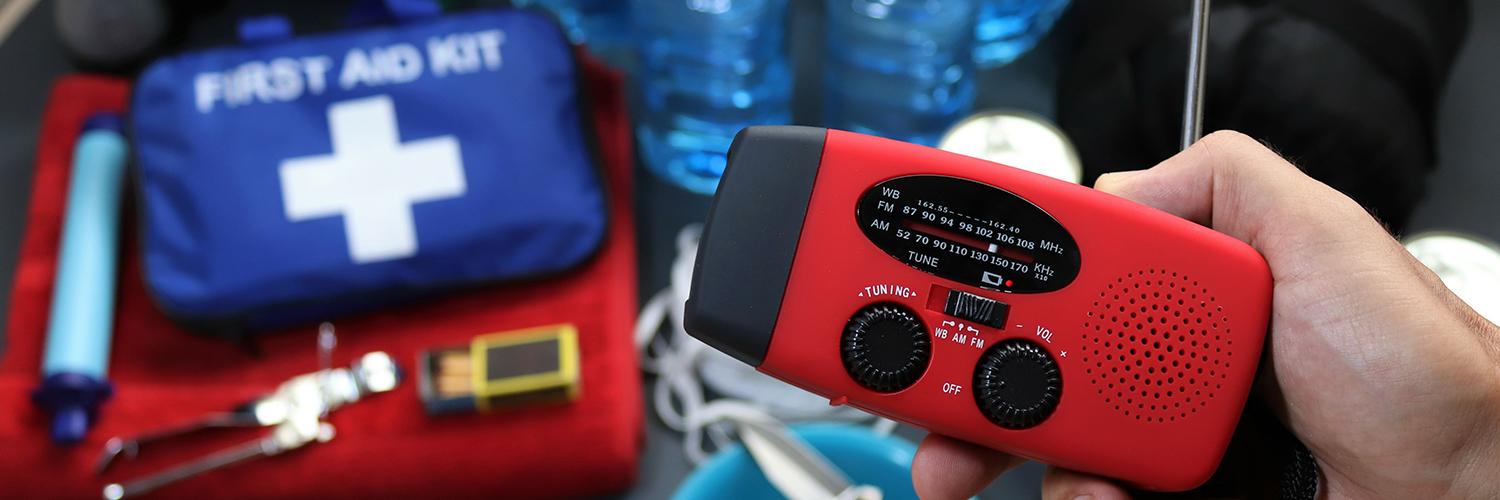
When mobile networks or home broadband drop out, traditional DAB/FM signals are still the main way official emergency broadcasts and local updates reach the public.
DAB+/FM battery radios: Compact, battery-operated digital or analogue radios mean you can tune into local news without relying on data. Look for models that run on standard AA/AAA batteries or have internal rechargeable packs.


3. LED torches & portable lighting
Using open flames (like gas lamps or candles) during power cuts are a potential fire hazard, so battery-powered or rechargeable electric lighting is strongly recommended.
LED head torches & lanterns: LED lanterns or multi-mode torches offer bright light with very low battery draw compared to traditional bulbs.


4. Backup connectivity & networking
In local power outages where home broadband routers switch off, a backup connection can keep essential services running.
4G/5G Portable Wi-Fi Dongles (MiFi): A battery-powered portable router (e.g. TP-Link or MSI) can share a cellular data signal to multiple laptops or tablets if your home fibre broadband drops out.


5. Spare batteries & charging accessories
Multipacks of alkaline batteries: Have plenty of AA and AAA batteries to keep radios, torches and other critical tech running.
Durable charging cables: Most of us have drawers full of cables, but can you rely on them when needed? Braided USB-C cables ensure reliable connection when topping off devices from power banks.


6. Portable solar chargers
If a power outage or infrastructure disruption extends beyond a few days, standard power banks and portable stations will eventually run out of stored energy and need a way to recharge without mains electricity.
Foldable solar panels & solar power banks: Compact, folding solar panels (or power banks with integrated solar panels) provide an off-grid way to trickle-charge smartphones and smaller power packs using daylight alone. That way you’re not totally dependent on the grid returning.


7. Low-power appliances
When power is limited, having efficient appliances can help you preserve and prepare food without draining portable power sources too quickly.
Mini fridges: Compact mini fridges use less electricity than full-size fridge freezers and can keep essential food, medicines or drinks chilled while using relatively little power.
Electric cool boxes: Many thermoelectric cool boxes can be powered from mains electricity, a car's 12V socket or some portable power stations.
Air fryers: Air fryers can cook meals faster than a conventional oven and only heat a small cooking chamber, making them a practical option when electricity is at a premium.


8. Walkie talkies
If mobile networks are unavailable or congested, walkie talkies provide a simple backup way to communicate without relying on phone signal, Wi-Fi or mobile data.
A solid set of walkie talkies can help family members communicate up to 8km away from each other, whether checking on neighbours or travelling between locations.


Your emergency essentials shopping list
| Category | Recommended gear | Why? |
|---|---|---|
| Emergency power | High-capacity power bank (e.g. Anker 20,000mAh) | Keeps 1–2 smartphones charged for multiple days. |
| Emergency information | Portable battery FM/DAB+ radio | Access official emergency broadcasts when phone networks fail. |
| Lighting | Battery-powered LED torch or lantern | Provides safe, long-lasting light during blackouts. |
| Power storage | AA/AAA alkaline batteries | Powers radios, torches and other battery-operated devices. |
| Off-grid backup | Portable solar charger or solar power bank | Helps recharge small devices if power outages last longer than a few days. |
| Food preservation & preparation | Mini fridges, cool boxes & air fryers | Keeps food fresh and helps heat meals without draining power too quickly. |
| Communication | Walkie talkies | Stay in touch even if internet and mobile networks are unavailable. |
Preparing for emergencies isn't about expecting the worst. It's about making sure you can cope comfortably if the unexpected happens.
Food, water and basic supplies should always come first. But a few carefully chosen bits of tech can help you stay informed, connected and powered up when you need them most.