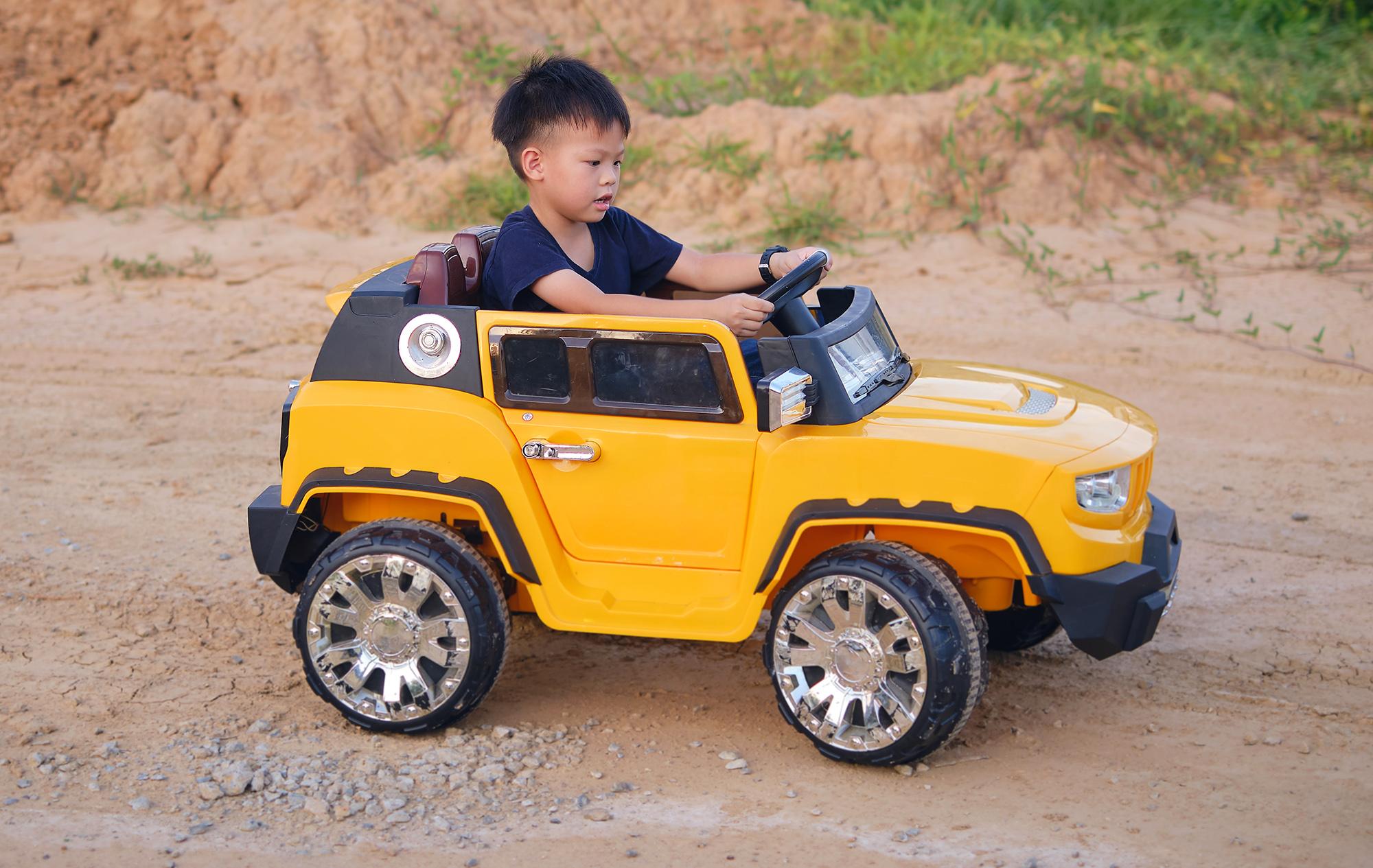

Builders
For the ones who want to get creative, one brick at a time.
LEGO
LEGO is a building system made from lots of different interlocking pieces. They have sets covering everything from LEGO DUPLO for toddlers (from 18 months) to complex sets designed specifically for adults (18+).
Kids who love making, rebuilding and imaginative play. Plus older builders who like getting creative or want something cool they can put on display.
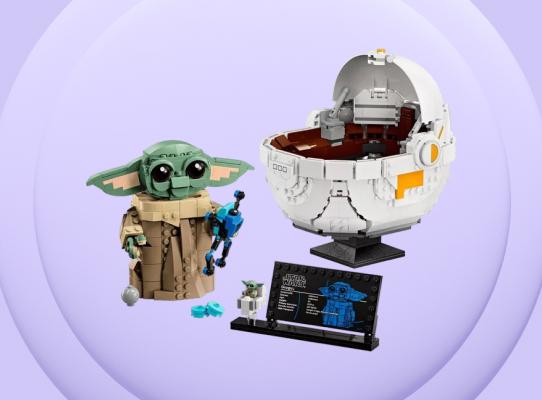
LEGO Star Wars 75403 Grogu with Hover Pram Set
- Best for
- Star Wars fans aged 10+ who want a longer build that doubles as a display piece when they’re finished.
- Why it stands out
- The 1048-piece Grogu can sit inside or outside his hover pram, with a posable head and ears.
- Not ideal for
- Really young or inexperienced builders who’d have more fun with a smaller, simpler LEGO set.
- Verdict
- A great pick for anyone who loves Star Wars and gets as much satisfaction from displaying their LEGO as building it.
Which LEGO set should you choose by age?
| Age | What to look for | Typical build | Average pieces | Average price | Worth knowing |
|---|---|---|---|---|---|
| 18 months to 3 years | LEGO DUPLO & larger pieces. | Quick, simple builds (around 10-30 mins). | 20-100 pieces. | £9-£70 | Bigger pieces are easier for little hands to handle. LEGO DUPLO starts from 18 months. |
| 4 to 6 years | Straightforward sets with recognisable models. | Shorter builds (around 20-60 mins). | 50-300 pieces. | £10-£40 | A smaller set can be a better starting point if they’re new to LEGO. |
| 7 to 9 years | More pieces & moving parts. | Medium length builds (around 1-3 hours). | 200-700 pieces. | £15-£80 | Their interests matter just as much as the age number on the box – pick something to match! |
| 10+ years | More complex builds with extra detail. | Longer builds (around 2-6 hours). | 500-1500 pieces. | £30-£150+ | Good for confident builders who enjoy following more involved instructions. |
| 18+ years | Advanced display & collector sets. | Longer, trickier builds (around 3-10+ hours). | 1000-3000+ pieces. | £50-£300+ | LEGO makes dedicated adult sets that take more skill to build. |
Follow the age rating first, then think about the experience. A confident builder will probably enjoy a more involved set. While a complete LEGO newbie might have more fun starting off small.
- Don’t automatically pick the biggest box. A finished build beats a half-built monster taking over the dining table.
- Match the theme to something they love already. Star Wars? Harry Potter? LEGO have all of that and more.
Movers
For the ones who hate sitting still.
Which wheeled toy should I choose?
| Type | Best for | What it helps develop | Worth knowing |
|---|---|---|---|
| Hoverboard | Confident riders with a suitable open private space (aged 8+). | Balance & weight control. | Public-use restrictions limit where you can use one. |
| Kids’ bike | Learning to ride & family outings (aged 3+). | Balance, steering, braking & pedalling. | Make sure the bike fits them (measure their height & inside leg). |
| Kick scooter | Quick, active outdoor play (aged 3+). | Balance, steering & coordination. | Wheel size & the surface you ride on affects comfort. |
| Ride-on | Younger drivers who love vehicles (aged 1-6). | Basic steering and control. | Needs charging regularly & storage space. |
Choose a bike for developing cycling skills, a kick scooter for simple active scoots, a ride-on for driving fun or a hoverboard for balance-based play.
- Think about where it’ll actually be used before choosing. If you haven’t got the private space, a hoverboard isn’t much good etc.
- Don’t forget to grab some protective gear too. A helmet and a set of knee/elbow pads are always a good shout for bikes, scooters and hoverboards.
Hoverboards
A hoverboard has two wheels connected by footpads. It uses internal sensors that help the board to respond as the rider leans forwards, backwards or turns.
Confident, older kids who want to zoom around and practice their balance and coordination.
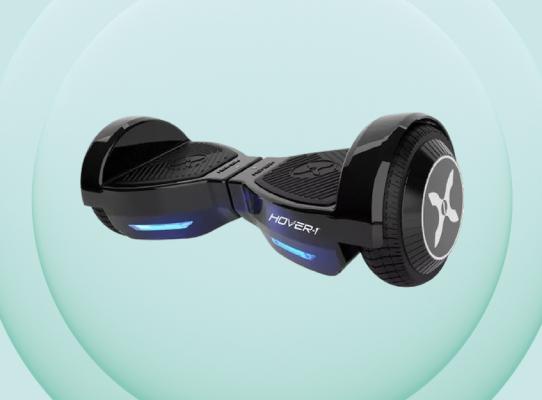
HOVER-1 Dash Hoverboard - Black
- Best for
- First-time hoverboard riders aged 8+ who want something that makes getting started a lot easier.
- Why it stands out
- The self-balancing stabilisation system helps with control, while non-slip footpads give riders a firm footing.
- Not ideal for
- Anyone hoping to use one in a public space. That’s illegal and a big no-no!
- Verdict
- A sensible first hoverboard that puts control ahead of outright speed.
Tech ExplainerIs a hoverboard legal to use in the UK?
Hoverboards are legal here in the UK. But you aren’t allowed to use them on pavements, public roads or cycle lanes. You’ll only be able to ride one on your own private land, or a space where you’ve been given the landowner’s permission.
So, before you spend your hard-earned cash, think where it’ll actually be ridden. A hoverboard isn’t much use if there’s nowhere suitable to practice.
Related guide: What is a hoverboard?
Kids’ bikes
A non-electric bicycle that’s usually sized around the diameter of the wheels. The most common sizes are 12, 14, 16, 20, 24 and 26 inches.
Everything from learning balance and pedalling to family rides and growing confidence outdoors.
Want to go further, faster? We’ve got loads of electric bikes to pick from.
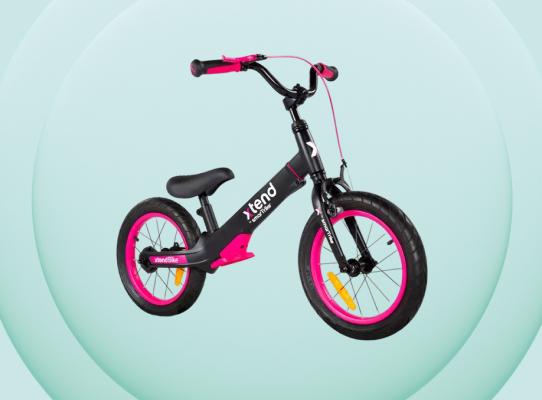
SMARTRIKE Xtend 3 Stage Kids’ Bicycle – Pink & Black
- Best for
- Kids aged 3+ learning to ride who aren’t quite ready to go straight from two feet to two pedals.
- Why it stands out
- It starts as a balance bike, then lets you add the chain and pedals later on when your child’s ready. The frame, saddle and handlebars can also be adjusted as they grow.
- Not ideal for
- The Xtend’s big selling point is its ability to adapt, so that versatility might not be necessary if your kid can already pedal confidently.
- Verdict
- A clever way to take some of the leap out of learning to cycle.
How do I buy the right size bike for children?
| Bike wheel size | Typical age range |
|---|---|
| 12" | 2-4 years |
| 14" | 3-5 years |
| 16" | 4-6 years |
| 20" | 6-9 years |
| 24" | 8-11 years |
| 26" | 10+ years |
Top tip: Age ranges are only a starting point. Children grow at different rates, so measuring their height and inside leg will help you choose a bike that’s safer, more comfortable and easier to control.
Scooters
A simple, non-electric wheeled ride-on that the child powers themselves. It’ll usually have a rear or hand-operated brake depending on the model.
Active outdoor play and children who want something portable that’s easy to hop on and off.
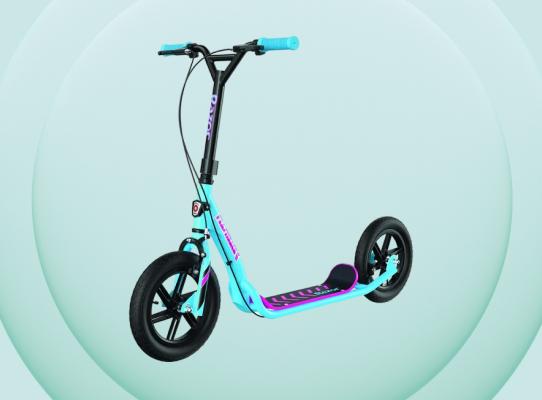
RAZOR Flashback BMX Style Kick Scooter - Blue
- Best for
- Children aged 8+ who want a kick scooter with the feel of a BMX and bigger wheels for tackling less-than-perfect surfaces.
- Why it stands out
- Its chunky 12-inch air-filled tyres help soak up small bumps, while front and rear hand-operated brakes give the rider separate braking control.
- Not ideal for
- Weighing in at 8.11 kg, this is a pretty chunky bit of kit.
- Verdict
- Part kick scooter, part old-school BMX, the Flashback is ace for riders who’d rather go big than small.
Prefer something with a bit more speed? Check out our electric scooters for kids.
Ride-ons
A child-sized powered vehicle designed for play, with different models using different battery voltages.
Kids that love cars and driving-style play, especially where there’s a suitable, flat private outdoor space.
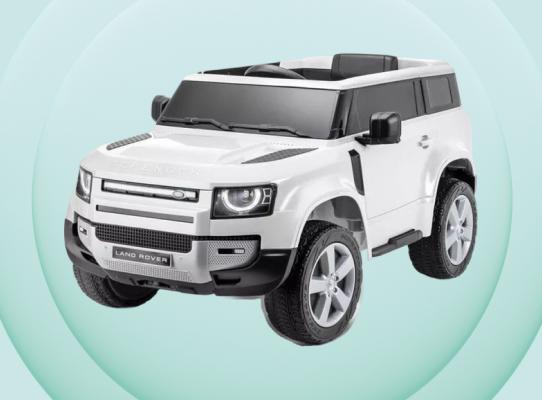
XOOTZ Land Rover Defender Kids’ Electric Ride-on Car - White
- Best for
- Kids aged 3+ that are ready to swap pushing toy cars around the floor for getting behind the wheel themselves.
- Why it stands out
- There’s a remote control that lets parents take over if your little one needs a hand.
- Not ideal for
- Parents who forget to plug things in! It’s got a 12-hour charging time, so this is one you’ll want to charge well before the driving starts.
- Verdict
- A great ride-on for kids who want their first car to feel like the real deal.
What’s the difference between 6V, 12V and 24V ride-on cars?
| Voltage | Best suited to | Performance | Terrain | Worth knowing |
|---|---|---|---|---|
| 6V | Younger or first-time drivers (aged 1-4 years). | A gentler ride. | Smooth, flat surfaces. | A simple introduction to powered ride-ons. |
| 12V | Children ready for a more capable ride-on (aged 3-8 years). | Zippier than a 6V model. | Flat ground & some less-even surfaces (depending on the model). | A good middle ground between speed & safety. |
| 24V | Older or more confident riders, where the manufacturer allows (aged 5-10 years). | A lot more powerful. | Easier to tackle more demanding surfaces (again, depending on the model). | Check the individual age, weight & speed limits carefully. |
Pick a voltage that matches your child’s confidence and the terrain they’ll be tackling. Don’t just go for the bigger number because it sounds better!
- Compare the actual max speed rather than assuming voltage tells you everything.
- Look at the battery runtime and charging time too. Nobody wants to find out the car needs a top up two minutes before playtime.
Related guide: Ride-on voltage explained: 6V vs 12V vs 24V
Explorers
For curious minds who want to find out what’s over there.
Telescopes and binoculars
Binoculars use two optical tubes to give both of your eyes a magnified view. On the flip side, telescopes use a bigger optical setup to gather and focus light from distant objects.
Get some binoculars for portable daytime exploring and getting started with the night sky. For serious astronomy and star gazing, a telescope makes a lot more sense.
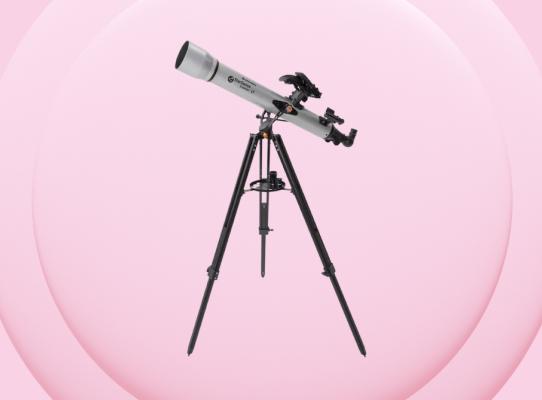
Celestron Starsense Explorer LT 80AZ Refractor Telescope - Silver
- Best for
- Beginner stargazers who’d like some help finding their way around the night sky (instead of reaching straight for a star chart).
- Why it stands out
- Celestron’s StarSense tech uses a compatible smartphone system to analyse the stars overhead and work out where the telescope is pointing. Pick an object in the app, and onscreen arrows guide you towards it.
- Not ideal for
- Anyone looking for a telescope that automatically moves to and tracks objects for them.
- Verdict
- A perfect starter telescope that tackles one of the trickiest parts of stargazing – actually finding the things you want to see.
Tech ExplainerDoes more magnification mean a better telescope?
No, more magnification doesn’t automatically mean it’s a better telescope. Magnification makes the image seem larger, but the telescope still needs to gather enough light and resolve enough detail to make that bigger image useful.
That’s where aperture comes in. Aperture is the diameter of the telescope’s main lens or mirror. Instead of chasing the biggest magnification number, look at aperture, optical quality and the mount. They’re all big parts of the whole package.
And remember, the atmosphere is going to impact things too. Poor viewing conditions can limit how much useful magnification you’ll actually be able to use.
Should I buy a refractor or reflector telescope?
| Refractor | Reflector | |
|---|---|---|
| How it works | Uses lenses to focus light. | Uses mirrors to focus light. |
| Good for | Beginners & simple observation. | Getting a larger aperture for your budget. |
| Maintenance | Generally easy. | Mirrors may need aligning occasionally. |
| Worth knowing | The straightforward design makes for a good first telescope. | The larger tubes can take up more storage space. |
Choose a refractor if you prefer a simple setup. Pick a reflector if you want more light-gathering for your money and don’t mind a little extra maintenance.
- Don’t choose purely by the biggest magnification printed on the box.
- A stable mount matters. A powerful telescope isn’t much fun if every tiny movement makes the view wobble.
- Think about portability too. The telescope you can easily carry outside is more likely to get used.
Remote-control (RC) cars
A powered miniature vehicle that you drive remotely. Models range from simple toys to repairable, upgradable hobby machines.
Kids who want instant racing fun and enthusiasts who love driving, maintaining and improving their car.
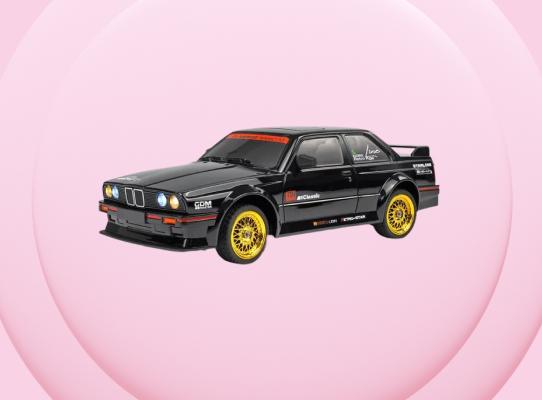
RCG Racing Retro Pro Evo30 Mini Drift Remote Control Car - Black
- Best for
- Beginner RC drivers aged 6+ who want to have a first go at indoor drifting without jumping straight into a more complex hobby car.
- Why it stands out
- It’ll zip down the hallway and around the sofa with a top speed of 15 mph and an electronic gyro that makes drifts smoother.
- Not ideal for
- Anyone mainly planning to drive outdoors over grass and rough ground. It’s built to be used inside, where its drift tyres can make the most of hard, smooth surfaces.
- Verdict
- A great little entry point into RC drifting without watering down the fun.
What’s the difference between toy-grade and hobby-grade RC cars?
| Toy-grade RC | Hobby-grade RC | |
|---|---|---|
| Best for | Casual play & beginners. | Enthusiasts & long-term hobbyists. |
| Controls | Much simpler. | Proportional steering and throttle. |
| Repairs | Replacement components may be limited. | Designed with serviceable components. |
| Upgrades | Very limited. | Parts can often be replaced or upgraded. |
| Setup | Really straightforward. | Involves more maintenance & RC know-how. |
Go for a toy-grade RC car for easy, occasional fun. Pick up a hobby-grade model if the fixing, upgrading and tinkering sound like part of the fun, rather than a chore.
- If you’re investing in a hobby RC car, check whether there are lots of replacement parts available. When they’re hard to come by – or plain expensive – it’s not much fun.
- More speed isn’t necessarily better for a beginner. After all, you don’t want them to smash it up after one session!
- Think about the terrain. A living-room racer and an off-road machine have very different jobs.
Related guide: RC cars – Toy grade vs hobby grade