

A home gym doesn’t have to be crammed with loads of expensive equipment. It can actually be really simple. An exercise mat, some resistance bands and a pair of adjustable dumbbells will cover most people's needs to begin with. From there you can add a weight bench for strength work and a cardio machine - if you have the space and budget.
Whether you're starting from scratch in a spare room or kitting out a garage, the aim is to help you choose the right home gym equipment without buying stuff you’ll never get round to using. Except maybe as an expensive clothes horse. We've grouped things by what they're for - the basics to get started, strength training kit and cardio machines - so you can jump straight to whatever fits best with your goals, space and budget.
Home gym equipment checklist
Here's a quick overview of the main pieces of home gym equipment, what each one is for, and how much space it tends to take up. Think of it as a shopping list you can tick off as you go.
| Equipment | What it's for | Space needed | Priority |
|---|---|---|---|
| Exercise mat | Floor work, stretching, core | Minimal - rolls up | Essential |
| Resistance bands | Strength and mobility work | Minimal - fits in a drawer | Essential |
| Adjustable dumbbells | Strength training, most muscle groups | Small - replaces a weight rack | Essential |
| Weight bench | Support for lifts and seated exercises | Around 1.5m x 0.5m | Nice to have |
| Kettlebell | Full-body strength and conditioning | Small - single item | Nice to have |
| Multi gym | All-in-one strength station | Large - dedicated corner | Nice to have |
| Treadmill | Walking and running cardio | Large - folds but still bulky | Nice to have |
| Exercise bike | Low-impact cardio | Medium | Nice to have |
| Rowing machine | Cardio and upper-body strength | Long - needs floor space | Nice to have |
| Cross trainer | Low-impact full-body cardio | Large | Nice to have |
How much does it cost to set up a home gym?
You can start small and still get a good workout in, then scale up when you want to add to your routine. What you spend depends on what you want to achieve. How much space you have to play with is going to be a big factor too. Here are three rough tiers to give you a sense of what's possible.
Under £100 - A mat, a set of resistance bands and a single kettlebell or pair of fixed dumbbells. This is enough to start a basic strength and mobility routine at home.
Around £500 - Add a pair of adjustable dumbbells and a folding weight bench to the basics above. This opens up a much wider range of strength exercises without needing a dedicated room.
£1,000 and up - At this level you can bring in a cardio machine such as a folding treadmill or exercise bike, alongside the strength equipment. A multi gym also becomes an option if you have the space.
The point is that you don't have to buy everything at once. Start with the essentials, see how you get on and add to your setup when you know what you actually use.

Best home gym equipment
Let’s start to put together a shopping list based on what you actually want to achieve. We’ve put together five profiles: Starter gym, Strength training gym, Cardio gym, Compact gym and All-in-one gym. Hopefully this will give you a good idea of what can go in each. You can of course mix and match, but hopefully this gives you some gym-spiration!
The starter gym
Let’s start with the essential stuff you need to begin your home gym. This stuff is affordable, takes up very little room and will be the most useful for complete beginners and experienced gym bunnies alike.
Exercise mat
An exercise mat is the simplest thing you can buy, and one of the most useful. It gives you a cushioned surface for floor work, stretching and core exercises. It's essential if you follow along with online workouts like at-home mat pilates or yoga.
Think about: thickness
A thicker mat is more comfortable for floor work but can feel less stable for standing poses. A thinner mat gives you a firmer grip but less cushioning. If you're not sure, something around 6mm is a sensible middle ground.
You’ll find a good choice of yoga and gym mats to get you started.


Resistance bands
Resistance bands are inexpensive, light and genuinely versatile. You can use them to add resistance to bodyweight exercises, stretch tight muscles or work specific muscle groups without picking up a single weight.
Think about: resistance levels
Most sets come with a range of resistance levels, usually colour-coded from light to heavy. Light If you're getting started or boosting recovery. Heavy if you’re strength training. A set of loop bands gives you the most options for the least outlay.
See the range of resistance bands to compare styles and resistance levels.


The strength training gym
Once you're ready to get into proper strength training, It’s worth looking at the gear that makes it possible at home. But you don’t have to be a body builder. These weights suit everyone, from beginners learning the basics to experienced lifters who want a serious setup. A good selection of free weights will suit most people. If you have a garage and the room for it, a power rack with a barbell opens up squats, bench presses and pull-ups.
Adjustable dumbbells
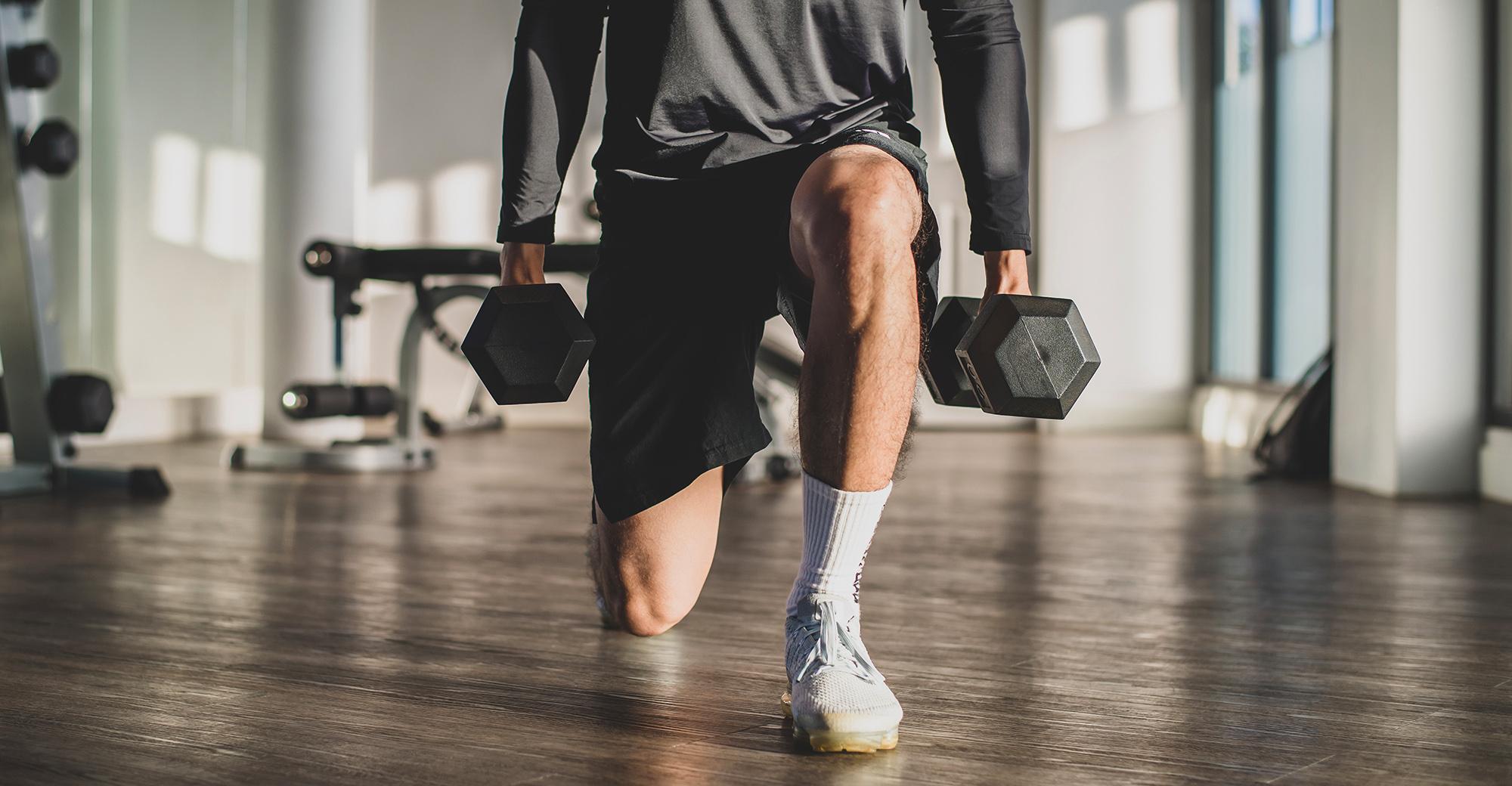
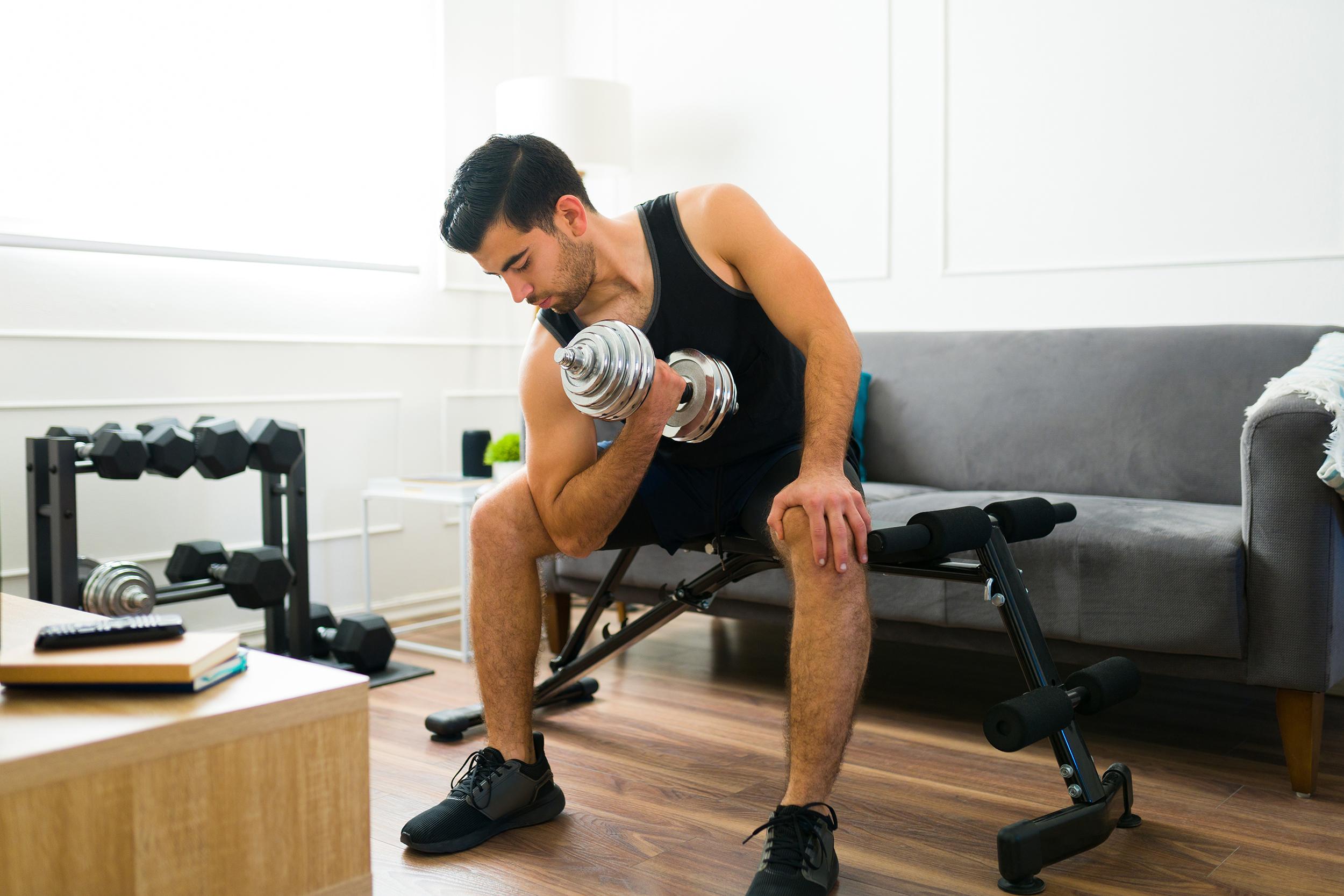
Adjustable dumbbells give you plenty of workout options without taking up much room. By replacing multiple pairs of fixed dumbbells, they're ideal for home gyms where space is at a premium.
Think about: maximum weight
The best adjustable dumbbells aren’t about where you are now. It’s about where you want to get to. Check the maximum weight available before you buy, especially if you're planning to follow a strength programme.
Browse dumbbells to compare adjustable and fixed options.


Kettlebell
A kettlebell is a single weight with a handle that’s great for full-body strength and conditioning. Swings, cleans and presses work several muscle groups at once - which makes a kettlebell a good option if you want a quick, efficient workout.
Think about: technique before weight
Unlike a dumbbell, a kettlebell's off-centre weight changes how it moves through an exercise. That's what makes it so effective, but it’s also why technique matters so much. A lighter kettlebell that lets you learn swings, cleans and presses properly is usually a better choice than a heavier one that's difficult to control. As a rule of thumb, if you can press it overhead comfortably and with good form, it's likely a sensible starting point.
See the range of kettlebells to find the right weight and style.

Weight bench
A weight bench opens up far more exercise options than you might expect. It gives you a stable platform for presses, rows, shoulder work and split squats, helping you train more comfortably and with a greater range of motion than you would on the floor. For many home gyms, it's the piece of equipment that unlocks the most value from a set of dumbbells.
Think about: adjustability
A flat bench is enough for basic exercises, but an adjustable bench gives you much more flexibility. Being able to move the backrest from flat to incline helps you target muscles differently and adds variety to your workouts. If space is tight, it's also worth looking for a folding design that can be tucked away between sessions.
Compare weight benches to find one that fits your space and the weights you plan to use.


The cardio gym
When half the year is overcast or cold, it’s easy to put off that jog. Again. So if you want to get your cardio in without leaving the house, these machines make it possible.
Treadmills
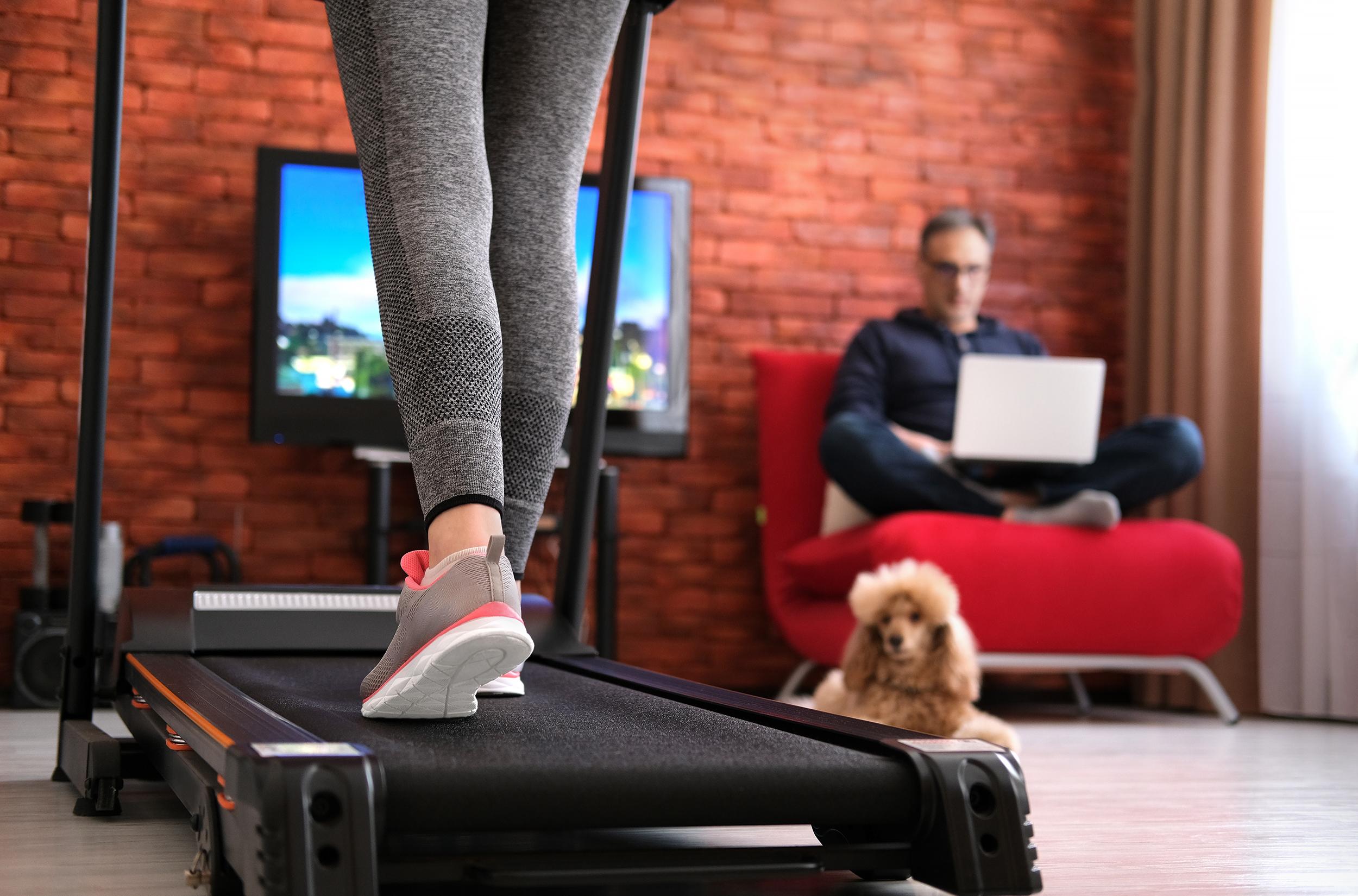
A treadmill makes it easier to fit more movement into a busy week, whether that's a lunchtime walk, a run before work or some extra steps while catching up on your favourite series. For a detailed breakdown of running decks, inclines and smart features, check out our best treadmills and walking pads article. (Fortunately, the author really knows his stuff.)
Think about: space
Treadmills are larger than many people expect. Before looking at speeds and workout programmes, think about where yours is going to live. If space is tight, a folding model can be a great option. Just remember that even folded away, it's still a sizeable piece of equipment.
Browse treadmills to compare incline, folding and motor options. If you're torn between two machines, our treadmill or exercise bike guide may help you decide.


Exercise bikes
An exercise bike is a low-impact way to build cardio fitness and leg strength. Because you're seated, there's little impact on your joints. So, it’s a popular choice for beginners and anyone coming back from an injury.
Think about: comfort
You'll spend a lot of time sitting on it, so comfort matters more than most people realise. Look for an adjustable saddle and handlebars that help you find a comfortable riding position. A bike that fits you properly is far easier to stick with than one that leaves you feeling cramped or uncomfortable after ten minutes.
See the range of exercise bikes to compare upright, recumbent and spin models.


Rowing machines
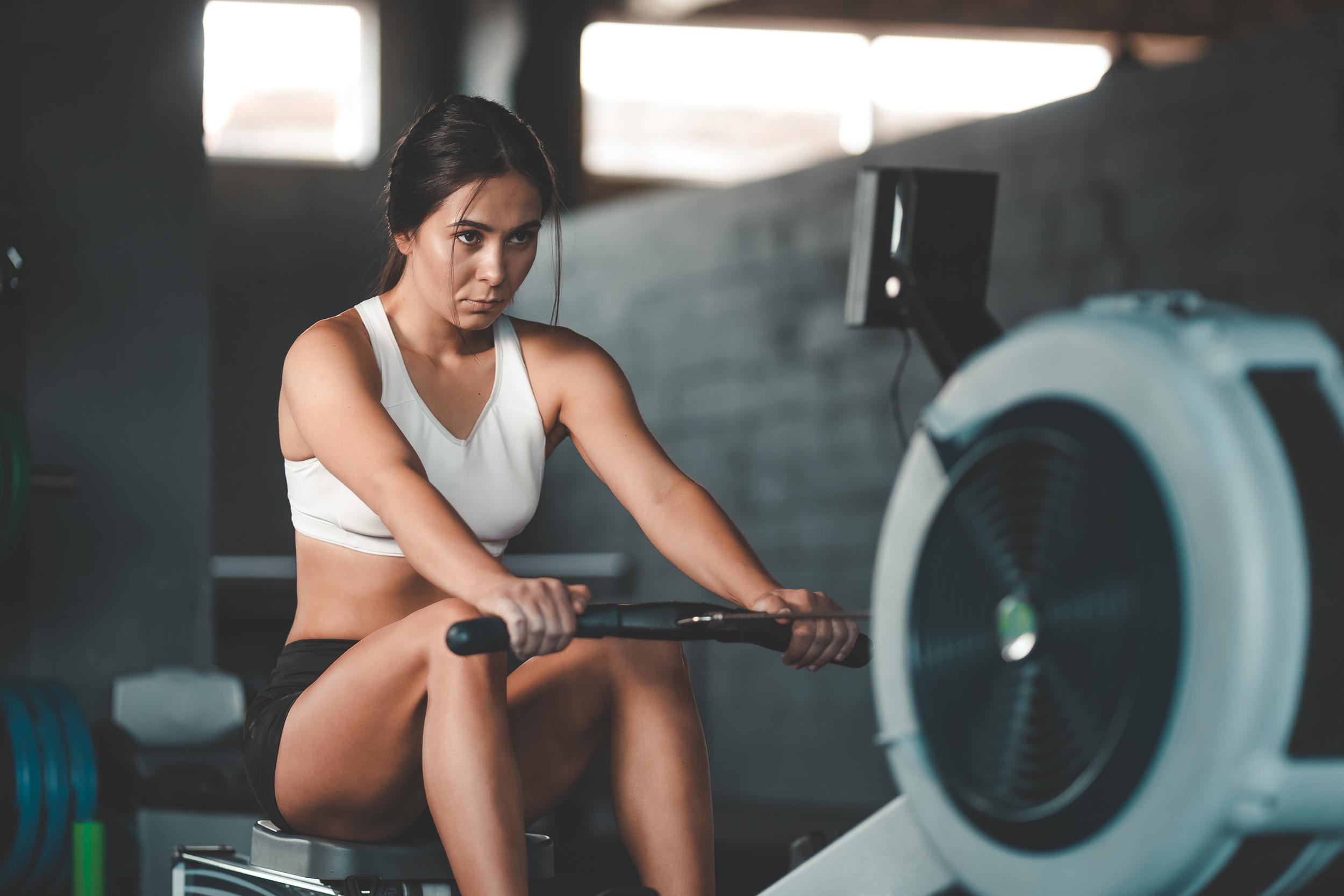
A rowing machine is one of the few cardio machines that works your legs, core, back and arms all at the same time. That makes it a great option if you want a full-body workout without filling your home with lots of different equipment. Our guide to Air vs magnetic vs water rowing machines goes pretty deep on specs etc.
Think about: storage
Rowing machines are longer than many people expect. Before buying one, think about where it'll live when you're not using it. Many models can be stored upright to save floor space, while others fold away for easier storage. If you're planning to move it regularly, check the dimensions and storage options before you buy.
Browse rowing machines to compare resistance types.


Cross trainers
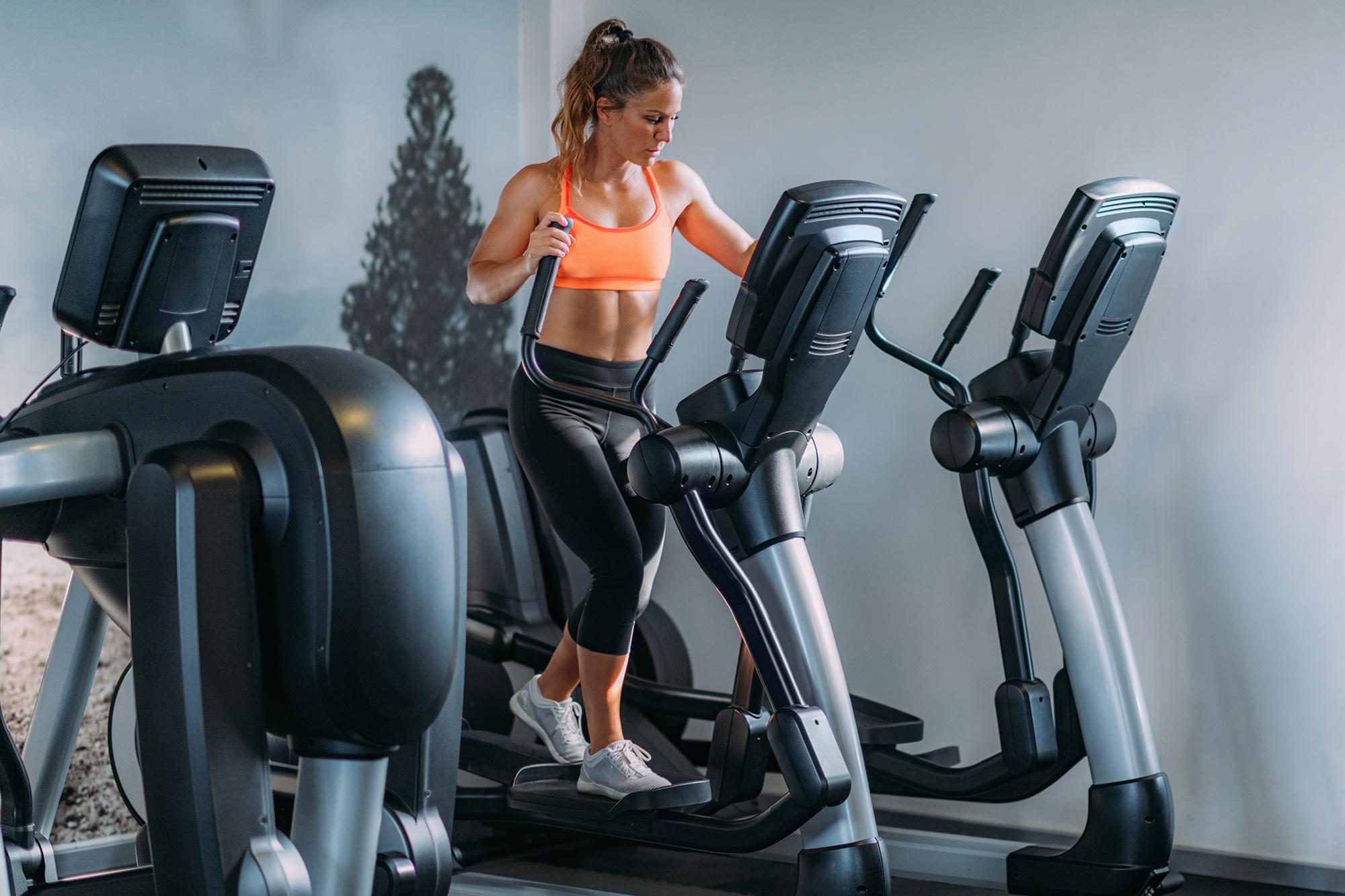
A cross trainer gives you a low-impact workout that's easy on your joints while still getting your heart rate up. Because your feet stay in contact with the pedals throughout the movement, it can be a comfortable alternative to running for longer cardio sessions.
Think about: stride length
Not all cross trainers feel the same. Stride length affects how natural the movement feels, and the wrong one can leave you feeling cramped or overstretched. Taller users will often be more comfortable with a longer stride, while shorter users may prefer something more compact.
See the range of cross trainers to compare models.


The compact gym
If you're working with a flat or a small spare room, you can still put together a useful home gym. A walking pad, folding weight bench, folding treadmill, adjustable dumbbells and resistance bands all take up minimal space when they're not in use.
Think about: getting more from less
A compact gym isn't about squeezing in as much equipment as possible. It's about choosing a few versatile pieces you'll use regularly. Equipment that folds away, adjusts to different exercises or replaces several products often delivers the best value for smaller spaces.
For a deeper look at space-saving options, our guide to the best compact home gym equipment goes into more detail.
The all-in-one gym
A multi gym combines several strength machines into one unit, letting you perform exercises such as chest presses, lat pulldowns and leg extensions from a single station. It's a popular choice if you want a structured strength-training setup without filling a room with separate benches, racks and free weights.
Think about: dedicated space
A multi gym works best when it has a permanent home. While it can save space compared to buying multiple strength machines, it's still a substantial piece of equipment that will become a fixture in the room. Measure carefully and think about how you'll move around it as well as where it'll sit.
Browse multi gyms to compare configurations and sizes.


The best home gym equipment is the stuff you'll actually use. Start with a mat, some bands and a pair of adjustable dumbbells, and build from there based on your goals and your space. You don't need a full gym on day one - you just need enough to get started.
If you're still planning your setup, our home gym ideas guide can help you picture how it might come together.
FAQs
How do you build a home gym on a budget?
To build a home gym on a budget, start with a few versatile basics: an exercise mat, resistance bands and a pair of dumbbells. These cover strength and mobility work for well under £100 and you can add a bench or cardio machine later as your budget allows.
Where is the best place to put a home gym?
The best place to put a home gym is somewhere well-ventilated with enough floor space and a solid, level surface. A spare room, garage or corner of a living room can all work - just make sure the floor can take the weight of any equipment you plan to use.
What is the best flooring for a home gym?
The best flooring for a home gym is something that protects your floor and gives you grip. Interlocking foam or rubber mats are a popular choice because they cushion drops, reduce noise and can be laid over most existing floors without permanent changes.
How much space do you need for a home gym?
How much space you need for a home gym depends on what you're using. A mat and some bands need little more than floor space to lie down, while a treadmill or multi gym needs a dedicated area - so measure your space and check the assembled dimensions before you buy.
What should you buy first for a home gym?
What you should buy first for a home gym is an exercise mat, a set of resistance bands and a pair of dumbbells. These three cover the widest range of exercises for the least money and take up almost no space, making them the most sensible place to start.